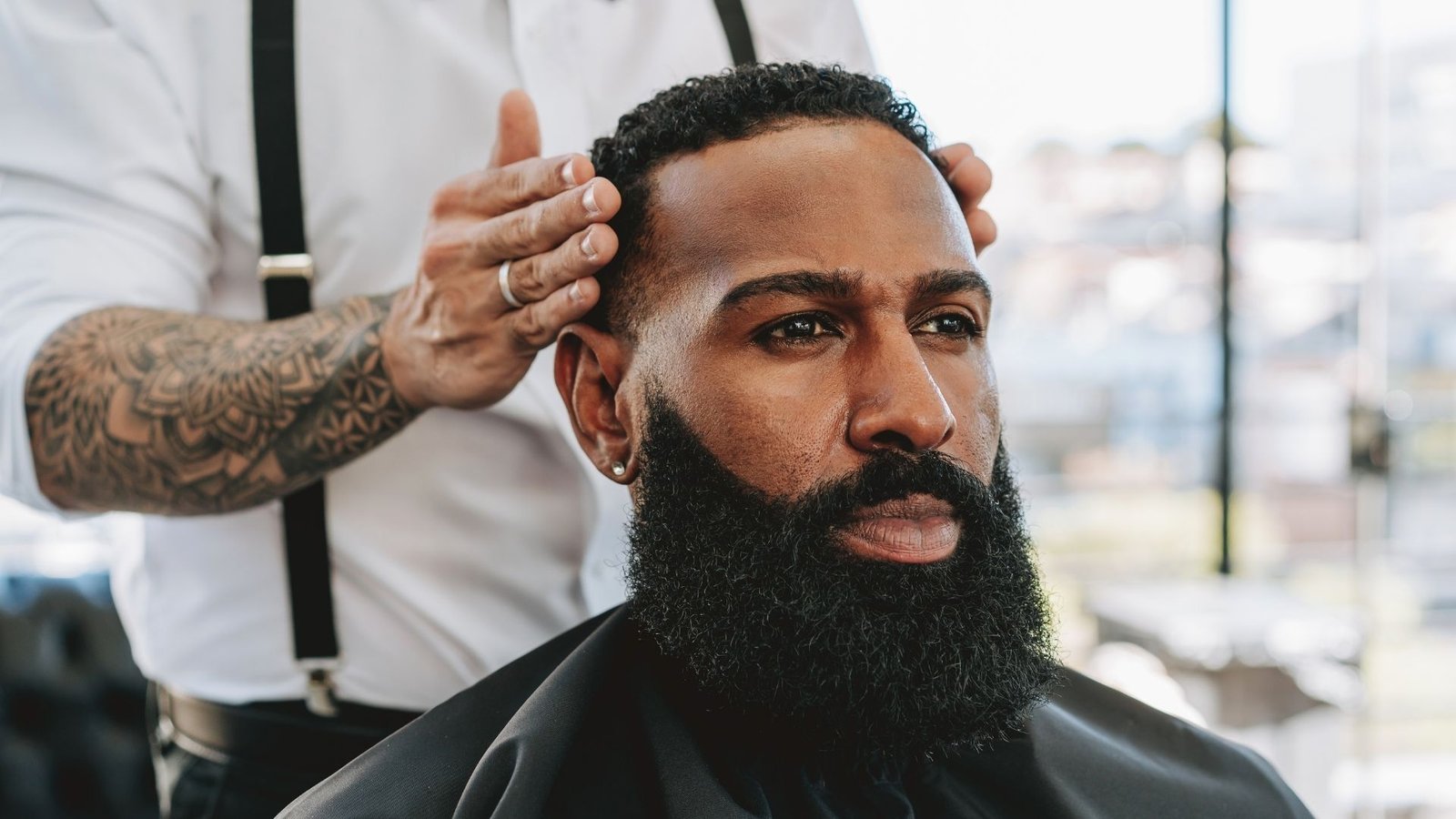
Walk into any drugstore and you’ll find forty different bottles promising thicker, shinier, better-behaved hair. Pomade, clay, sea salt spray, volumizing shampoo. Every one of them is lying to you, at least a little. Here’s the truth a good barber will tell you for free: no product can fix a bad haircut. It can only hide it, and usually not for long. The foundation of great hair isn’t sitting on a shelf. It’s built in the chair, with sharp shears and a steady hand. This article breaks down why the cut itself does the heavy lifting, what products can and can’t actually do, and how to use both together so your hair works with you instead of against you.
Key Takeaways
- A well-structured haircut shapes how your hair falls, moves, and grows back, which no product can replicate.
- Products work with the grain of a good cut. On a bad cut, they’re just damage control.
- Your hair type, face shape, and growth pattern should guide the cut before a single product gets involved.
- Regular trims every 3 to 6 weeks, depending on style, keep a cut looking sharp without relying on heavy product use.
- A skilled barber reads your hair the way a tailor reads fabric, and that skill is worth more than any bottle on the market.
The Shelf Full of Promises vs. The Chair That Delivers
Marketing teams have gotten very good at selling confidence in a tube. Walk down the men’s grooming aisle and you’ll see claims about “instant volume,” “all-day hold,” and “matte finish texture.” Some of these products do what they say. None of them can turn a bad haircut into a good one.
Why Products Can Only Work With What They’re Given
Think of a product like seasoning on a steak. Good seasoning makes a well-cooked steak better. It does nothing for a steak that’s been overcooked and tough. Pomade and texture spray work the same way on hair. They enhance structure that’s already there. If the structure isn’t there, because the cut was rushed, uneven, or wrong for your hair type, no amount of product rescues it.
The Psychology Behind Product Marketing
Grooming brands spend heavily on packaging and claims because repeat purchases are their business model. A haircut, by contrast, is something you pay for every few weeks and then mostly forget about between visits. That’s backwards. The thing you interact with daily, your hair, is shaped far more by the cut than by whatever you rub into it that morning.
What a Barber Sees That a Bottle Can’t
A barber looks at your cowlicks, your hairline, the direction your hair naturally wants to fall, and the shape of your skull before touching a clipper. That diagnostic step is invisible to you but it determines everything about how your hair will behave for the next month. Products have no diagnostic step. They go on the same way regardless of what’s underneath.
A sharp cut sets the terms. Products just follow the rules the cut already laid down. With that foundation in mind, it helps to understand exactly what a good cut is doing structurally.
What a Great Haircut Actually Does For Your Hair
A haircut isn’t just subtraction. It’s architecture. Every pass of the shears or clipper is shaping how hair will sit, move, and grow out over the following weeks.
Creating Weight Distribution
Hair has weight, and where that weight sits determines whether it falls flat, stands up, or holds a wave. A trained barber removes weight from specific sections (usually through techniques like point cutting or thinning) so the remaining hair has room to move the way you want it to. Too much weight left in, and hair sits heavy and lifeless no matter what product you add. Too much removed, and it goes thin and flyaway.
Setting the Growth Pattern
Hair doesn’t grow straight down. It grows at angles determined by the follicle, and a good cut works with those angles instead of fighting them. This is why two men with the same haircut photo from a magazine can end up looking completely different. Their growth patterns are different, and a skilled barber adjusts the cut to account for that instead of copying the picture exactly.
Building in Longevity
A cut that’s built well doesn’t just look good on day one. It’s designed to grow out cleanly over the following 3 to 6 weeks, maintaining shape instead of collapsing into a shaggy mess by week two. This is the difference between a cut that’s “fine for now” and one that actually holds its structure.
| Cutting Technique | What It Does | Best For |
| Scissor-over-comb | Blends length gradually for a soft, natural taper | Classic and textured styles |
| Clipper-over-comb | Creates consistent, faster blending on shorter sides | Fades and tight tapers |
| Point cutting | Removes bulk and softens the ends | Thick or heavy hair |
| Thinning shears | Reduces density without shortening length | Fine-tuning weight and texture |
| Razor cutting | Creates a softer, textured edge | Wavy or curly hair needing movement |
Once the structure is right, the next question is how that structure interacts with your actual hair type, because not all hair behaves the same under the same cut.
How Hair Type Changes Everything About a Cut
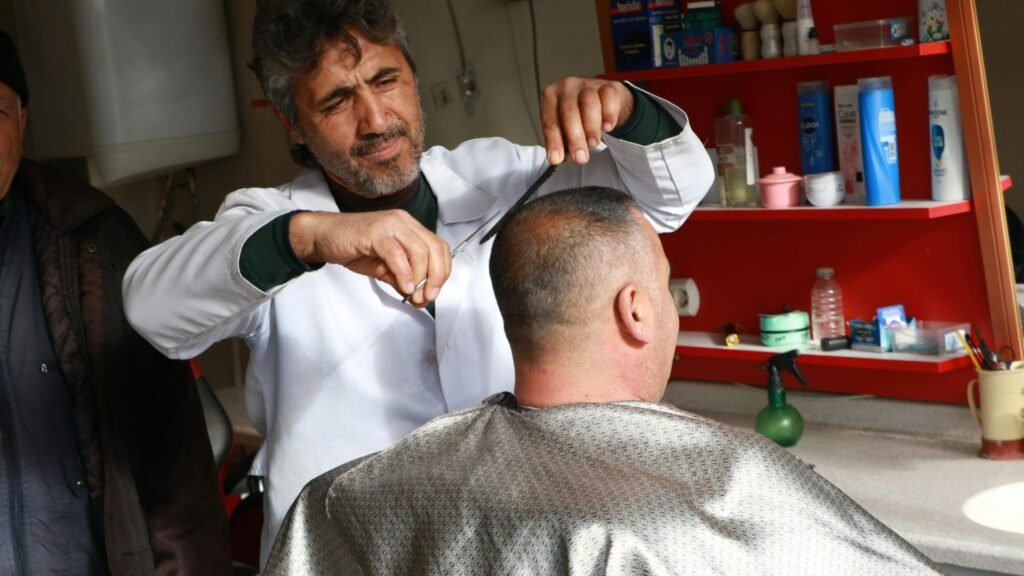
Straight hair, wavy hair, curly hair, and coily hair all respond differently to the same cutting technique. A barber who treats every head the same way is doing a disservice to at least three out of four of his clients.
Straight Hair
Straight hair shows every flaw in a cut because there’s no wave or curl to hide an uneven line. Precision matters enormously here. A millimeter of unevenness along a hairline or neckline will be visible the moment the hair grows a few days past the cut.
Wavy Hair
Wavy hair has natural movement that a barber can either work with or flatten out. Over-thinning wavy hair is one of the most common mistakes, since it removes the very weight that gives the wave its shape. The goal with wavy hair is usually to remove bulk without stripping texture.
Curly and Coily Hair
Curly and coily hair shrinks as it dries, which means cutting it wet can lead to a finished length that’s shorter than expected once it’s dry. Experienced barbers often cut curly hair dry, or cut it wet and account for the shrinkage mathematically, section by section.
| Hair Type | Cutting Consideration | Common Mistake |
| Straight | Requires precise, visible lines | Uneven lengths show immediately |
| Wavy | Needs weight retained for shape | Over-thinning flattens the wave |
| Curly | Cut dry or account for shrinkage | Cutting too short when wet |
| Coily | Shape by curl pattern, not just length | Ignoring shrinkage leads to drastic over-cutting |
Getting the hair type right is half the battle. The other half is matching the style to the shape of your face and head, which is where a lot of men get it wrong even with a technically solid cut.
Matching a Cut to Your Face Shape
A technically perfect fade means little if it’s the wrong shape for your face. Barbers study face shape the way portrait photographers study lighting, because the same haircut can look sharp on one man and awkward on another.
Reading the Jawline and Forehead
A barber will typically look at the ratio between your forehead, cheekbones, and jawline before deciding how much volume to leave on top or how tight to take the sides. More volume on top can lengthen a round face. A tighter, closer cut can balance a longer face.
Working With, Not Against, Asymmetry
Almost nobody has a perfectly symmetrical head. Small adjustments, like leaving slightly more length on one side, can correct for natural asymmetry so the finished cut looks balanced from every angle, not just straight on in a mirror.
Why Photos Only Get You So Far
Bringing in a photo of a haircut you like is useful as a reference, but a good barber will tell you honestly whether that exact style will work on your face shape and hair type, and what adjustments make sense. This conversation, more than any product recommendation, is what separates a great result from a disappointing one.
With the cut dialed in to your hair type and face shape, it’s worth being honest about what products are actually good for, because they do have a real job to do.
What Hair Products Can and Can’t Fix
Products aren’t useless. They’re just limited to a much smaller job than marketing suggests.
What Products Are Genuinely Good At
Products excel at finishing touches: adding shine, controlling frizz, providing hold throughout the day, and protecting hair from heat or environmental damage. A quality pomade can keep a style in place for twelve hours. A good matte clay can add texture to fine hair that needs a little help standing up.
What Products Cannot Do
Products cannot create a hairline that isn’t there, fix a lopsided fade, or make hair that was cut too short grow back faster. They can’t correct weight distribution or fix a growth pattern the cut ignored. Reaching for more product to fix a bad cut is like adding more frosting to a cake that collapsed in the oven. It might look better from across the room, but up close the problem is obvious.
The Over-Reliance Trap
Many men develop a habit of using heavier and heavier product load because their cut isn’t holding shape on its own. This is usually a sign the cut needs adjusting, not that the product needs upgrading.
| Product Type | Primary Function | Cannot Fix |
| Pomade | Hold and shine | Weight distribution |
| Matte clay | Texture and definition | Uneven lines |
| Sea salt spray | Volume and texture | Growth pattern issues |
| Pre-styling cream | Heat protection and smoothness | A rushed or sloppy cut |
| Hair fiber/powder | Density illusion for thinning hair | Structural cut problems |
Understanding this division of labor helps explain why the two, haircut and product, need to be compared directly rather than treated as competing solutions.
Haircut vs. Product: Head to Head Comparisons
It helps to see the differences laid out side by side, because the gap is bigger than most men realize.
Longevity: Weeks vs. Hours
A good cut holds its structure for 3 to 6 weeks. A product’s effect lasts a single wash, sometimes a single day. You’re comparing a long-term investment to a short-term patch.
Cost Over Time: One Expense vs. Recurring Expense
A $35 to $60 haircut lasts a month or more. A $20 bottle of product gets used up in a similar timeframe and needs repurchasing indefinitely. Over a year, many men spend more on product trial-and-error than they would on consistently seeing a skilled barber.
Customization: Tailored vs. Generic
A cut is customized to your specific head, hair type, and growth pattern. A product is formulated for the broadest possible market. It’s the difference between a tailored suit and one off the rack.
| Factor | Haircut | Product |
| Duration of effect | 3 to 6 weeks | 1 day to 1 wash |
| Customization | Fully tailored to your head | Generic formula for mass market |
| Cost over a year | Predictable, recurring service cost | Variable, often higher through trial-and-error |
| Fixes structural issues | Yes | No |
| Enhances existing structure | Indirectly, by maintaining shape | Yes, directly |
This isn’t an argument against using products. It’s an argument for sequencing them correctly behind a solid cut. To understand why the cut carries so much weight culturally too, it helps to look at where the modern barbershop came from.
The History Behind the Barber’s Chair
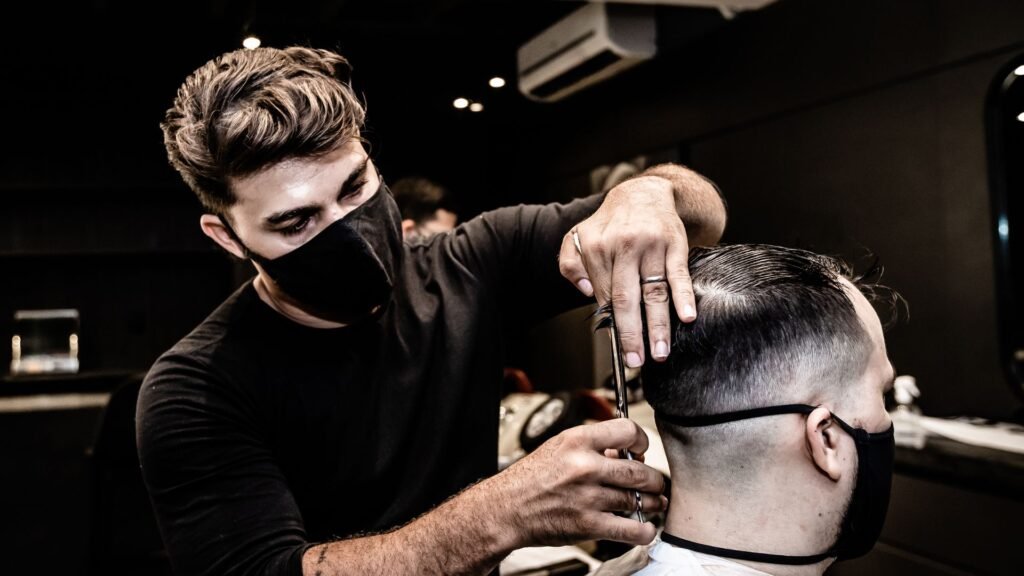
Barbering isn’t a modern invention dressed up with Instagram lighting. It’s one of the oldest trades in human history, and the chair itself carries centuries of ritual.
Ancient Origins of the Trade
Evidence of barbering tools dates back to the Bronze Age, with razors found in Egyptian tombs. In ancient Rome, the barbershop, or tonsor’s shop, functioned as a social hub where men gathered to talk politics and sport while getting groomed, a tradition that’s barely changed in spirit.
The Barber-Surgeon Era
During the medieval period, barbers in Europe performed more than haircuts. They handled bloodletting, tooth extraction, and minor surgery, which is why the red and white barber pole traces its colors back to blood and bandages. The trade’s reputation for steady hands and sharp tools goes back centuries.
The Rise of the Modern Barbershop
By the 20th century, barbershops had become fixtures of neighborhoods and communities, places where fathers brought sons for their first haircut and where regulars had standing weekly appointments. That tradition continues today, with many men still searching “barber near me” to find a shop that feels like a return to that community anchor rather than just a transaction.
| Era | Barbershop Role |
| Ancient Egypt/Rome | Grooming and social gathering |
| Medieval Europe | Grooming, surgery, dentistry |
| 19th century | Community hub, news and conversation |
| 20th century | Neighborhood tradition, father-son ritual |
| Today | Grooming, style expertise, community space |
That history explains why finding the right shop matters beyond just the haircut itself. It’s worth knowing how often you actually need to go.
How Often You Really Need a Haircut
Cut frequency depends heavily on style, hair growth rate, and how structured the cut is to begin with.
Short and Tapered Styles
Fades and tight tapers grow out fastest because the contrast between lengths is sharpest. These typically need attention every 2 to 3 weeks to maintain the clean lines that define the style.
Medium Length and Textured Styles
Styles with more length on top, paired with a moderate taper, can often go 4 to 6 weeks between visits since there’s more room for growth before the shape looks unkempt.
Classic Longer Styles
A looser, longer style, sometimes called a Classic Haircut, with more length throughout can stretch to 6 to 8 weeks between trims, since the overall silhouette is more forgiving of growth.
| Style Type | Recommended Frequency |
| Fade/tight taper | Every 2 to 3 weeks |
| Textured crop | Every 4 weeks |
| Medium length | Every 4 to 6 weeks |
| Longer classic style | Every 6 to 8 weeks |
Sticking to a consistent schedule, rather than waiting until a cut looks visibly overgrown, is one of the simplest ways to reduce product dependence. That consistency also factors into the overall cost picture.
The Cost of Cutting Corners
Skipping regular cuts or choosing the cheapest option available often costs more in the long run, both in dollars and in how your hair looks day to day.
Hidden Costs of Inconsistent Cuts
Letting a cut grow out too far before the next trim means the barber has to do more corrective work, which sometimes means removing more length than you wanted just to get the shape back on track.
The Product Compensation Spiral
As mentioned earlier, a weak cut often leads to buying more product to compensate. That spiral adds up over a year far more than most men realize.
Pricing Factors Worth Understanding
Barbershop pricing varies based on experience level, location, and service complexity. A seasoned barber with years of technical training typically charges more, but the precision and consistency of the cut usually justifies it.
| Pricing Factor | Impact on Cost |
| Barber experience level | Higher skill, higher price |
| Shop location | Urban shops often cost more |
| Service complexity | Fades and designs cost more than simple trims |
| Add-ons (hot towel, beard trim) | Increases total cost |
| Membership/subscription plans | Can lower cost per visit over time |
Understanding these factors makes it easier to evaluate whether a shop’s pricing reflects real value or just convenience. Which brings up the practical question of how to actually choose the right shop.
Finding the Right Shop and Barber
Not every shop is equal, and the search for quality grooming is worth taking seriously.
What to Look for in a Shop
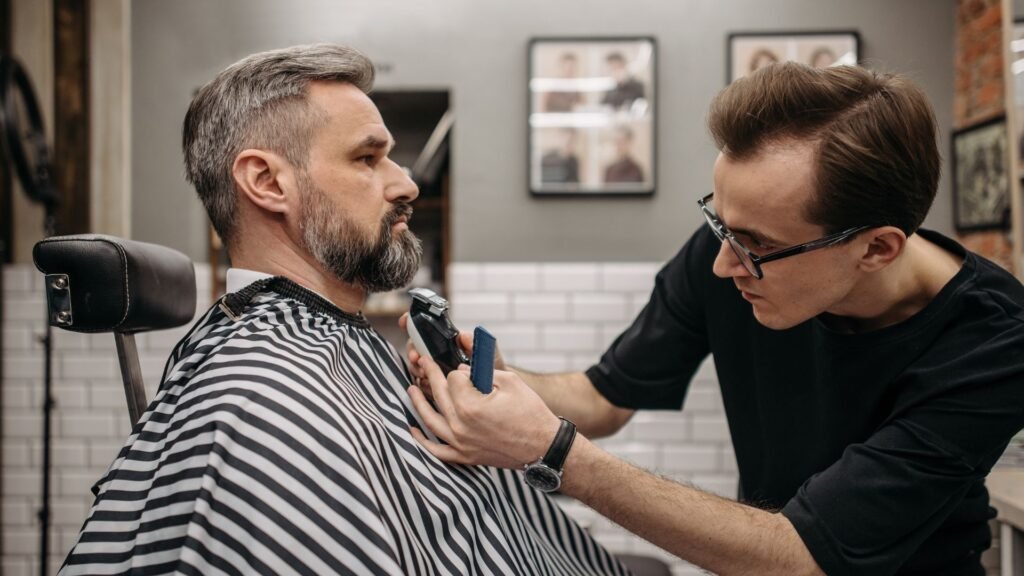
Look for cleanliness, organized tools, and barbers who ask questions before they start cutting. A rushed consultation is often a preview of a rushed cut.
Reading Reviews the Right Way
Reviews mentioning specific techniques, like fades, tapers, or beard work, are more useful than generic five-star ratings with no detail. Look for mentions of consistency across multiple visits, not just a single great haircut.
Trial Visits and Building Trust
The first visit to a new shop is a test. Pay attention to whether the barber listens, explains their approach, and delivers a result that matches the conversation you had in the chair.
Once you’ve found a shop and barber worth sticking with, the real value comes from the relationship you build over repeat visits.
Building a Relationship With Your Barber
A one-time good haircut is luck. A consistently good haircut, visit after visit, is a relationship.
Why Consistency Matters More Than a Single Great Cut
Your barber learns your hair over time, including your cowlicks, how fast it grows, and what you actually like versus what you thought you’d like. That knowledge compounds with every visit.
Communicating What You Want (and Don’t Want)
Being specific helps. Instead of “shorter on the sides,” try “take the sides down to a number two and keep the top long enough to comb over.” Specifics reduce the odds of miscommunication.
When to Switch Barbers
If a barber consistently rushes, doesn’t listen, or delivers inconsistent results visit to visit, it’s reasonable to look elsewhere. Loyalty is valuable, but not at the expense of quality.
This relationship becomes especially meaningful when it extends across generations, which is where fathers bringing in sons comes into the picture.
Bringing Your Son In for His First Classic Haircut
Taking a son for his first real haircut is a small but meaningful milestone for a lot of fathers, and it connects back to the barbershop traditions discussed earlier.
Why the First Cut Matters
A first haircut sets the tone for how a kid feels about grooming for years to come. A patient barber who makes the experience comfortable, rather than rushed, builds a positive association that lasts.
Choosing an Age-Appropriate Style
Younger kids generally do best with simpler, low-maintenance cuts that don’t require daily styling. As they get older, more structured styles, including a Classic Haircut with length on top, become easier to maintain.
Making It a Tradition
Many fathers turn the first haircut, and the ones that follow, into a standing tradition, visiting the same shop together on a regular schedule. It mirrors the community role barbershops have played for generations.
Whether it’s a first cut for a son or a gift for a friend, the value of a great haircut extends well past the mirror check on the way out the door.
Frequently Asked Questions
How much does a good haircut typically cost?
Prices vary by region and barber experience, generally ranging from $25 to $75 for a standard cut, with specialized services like detailed fades or beard work adding to the total.
Can hair products make up for a bad haircut?
No. Products can temporarily hide minor issues like frizz or lack of shine, but they cannot correct structural problems like uneven lines, incorrect weight distribution, or a mismatched style for your face shape.
How do I know if my barber is skilled?
Look for a barber who asks detailed questions before cutting, explains their technique, and delivers consistent results across multiple visits rather than a single lucky outcome.
What’s the difference between a barbershop and a salon?
Barbershops typically specialize in men’s grooming, including fades, tapers, and beard work, while salons often serve a broader range of services for all hair types and genders. Technique focus and training can differ accordingly.
How often should I really get a haircut?
It depends on style. Tight fades need attention every 2 to 3 weeks, while longer, looser styles can stretch to 6 to 8 weeks between visits.
Is it worth paying more for an experienced barber?
Generally, yes. Experienced barbers bring technical precision that reduces the need for corrective visits and heavy product reliance, often making the higher price worthwhile over time.
How do I find a good barber near me?
Start with reviews that mention specific techniques rather than generic praise, visit the shop in person to assess cleanliness and professionalism, and treat your first visit as a trial to evaluate communication and results.
Should I cut curly hair wet or dry?
Many experienced barbers prefer cutting curly hair dry, or accounting carefully for shrinkage if cutting wet, since curly hair can shrink significantly as it dries.
The Bottom Line: Invest in the Cut First
Products have a place. Nobody’s saying throw out the pomade. But the order of operations matters. A great cut is the foundation, and everything else, texture spray, clay, whatever’s trending this year, works in support of that foundation, not as a replacement for it. If your hair isn’t cooperating no matter what you put in it, the fix probably isn’t a new bottle. It’s a conversation with a skilled barber about what your hair actually needs. Book the appointment, be specific about what you want, and give the relationship time to develop. That’s where real, lasting results come from.