

You sit down. The leather chair gives a soft creak. The cape swings around your shoulders, the neck strip goes on snug, and you can smell talc and the faint citrus of the aftershave on the back counter. You probably think the haircut starts when the clippers switch on.
It doesn’t.
It starts a good thirty seconds earlier, while I’m standing behind you with my hands resting lightly on your shoulders, looking at you in the mirror. I’m not daydreaming. I’m reading. I’m noticing how your hair falls on the left versus the right, where your crown spins, how high your ears sit, whether your head is rounder at the back or flatter. I’m noticing whether you’re wearing a work shirt or a hoodie, and whether you keep touching one spot on your hairline like it bothers you.
Most clients never notice those thirty seconds. That’s fine. They’re not supposed to. A good plan, like a good referee, should be nearly invisible when it’s working.
Why Great Cuts Are Drawn Before They’re Cut
Think about a carpenter. He doesn’t walk into your kitchen and start sawing. He measures twice, checks the walls for square, and pencils marks on the board before the blade ever spins. Barbering works the same way, except the board is alive, grows half an inch a month, and has opinions.
Hair is unforgiving in one direction. You can always take more off. You can never put it back. Every snip is a commitment, which is why the best barbers do most of their thinking before they pick up a tool.
There’s also the first impression to consider. Princeton researchers Janine Willis and Alexander Todorov, in a 2006 study published in Psychological Science, found that people form judgments about traits like trustworthiness and competence after seeing a face for just one tenth of a second. Your haircut frames that face. Whether you like it or not, it’s part of the snap judgment every new person makes about you. That’s worth a little planning.
What This Guide Walks You Through
Over the next sixteen sections, I’m going to pull back the curtain on the part of the cut you usually don’t see. We’ll cover:
- The blueprint itself, what it includes and what separates a planner from a barber on autopilot
- The history of how barbers learned to plan, from medieval guilds to phone photos
- The consultation, the questions that matter and how to answer them
- Your head, face and hair, and why each one changes the plan
- Sectioning, tools and order of operations, the step-by-step logic of a cut
- Balance and grow-out, the stuff that makes week four look good
- Mistakes, stories, costs and trends, plus a full FAQ and a checklist you can bring to your next appointment
First, let’s define what a blueprint actually is, because it’s not what most guys picture.
What a Haircut Blueprint Really Is
A Map, Not a Menu
When most men walk in, they order like it’s a diner. “Number two on the sides, leave the top.” That’s a menu item. It’s a starting point, and I’m glad to hear it.
A blueprint is something different. It’s a map of your specific head that tells me where to go, where to slow down, and where the potholes are. Two men can order the exact same menu item and need two completely different maps to get there. One has a flat spot at the back of his head that needs extra weight. The other has a double crown that will stick up if I cut it too short. Same order. Different routes.
I keep that map mostly in my head. Some barbers jot notes. A few sketch. But every good barber builds one, whether he calls it a blueprint or just “looking before you leap.”
The Five Pillars of Every Plan
Every plan I build rests on five pillars. Skip one and the whole structure wobbles.
| Pillar | What I’m Looking At | Why It Matters |
| 1. Your goal | The look you want and the feeling behind it | Sets the destination |
| 2. Your head | Skull shape, crown, ears, neck | Decides where weight goes |
| 3. Your face | Proportions, jawline, beard, glasses | Decides height, width and lines |
| 4. Your hair | Texture, density, curl, growth pattern | Decides tools, lengths and technique |
| 5. Your life | Job, routine, products, visit rhythm | Decides how the cut must behave at week four |
The first pillar comes from you. The next four come from my eyes and hands. The magic happens when all five agree.
Blueprint Barbers vs. Autopilot Barbers
I’ve worked beside both kinds. You can usually tell which one you’ve got within the first minute.
| Factor | Blueprint Barber | Autopilot Barber |
| First move | Asks questions, studies your head | Reaches for the clippers |
| Guard choice | Based on your hair and goal | Based on habit |
| Crown and cowlicks | Planned for in advance | Discovered halfway through |
| Conversation | About your routine and work | About the weather |
| Finished cut | Fits your head shape | Fits a generic head |
| Week four | Still looks intentional | Starts falling apart |
| Next visit | Remembers what you liked | Starts from scratch |
Don’t get me wrong. Autopilot barbers can be fast, friendly and perfectly decent. But a decent cut and a cut that’s built for you are as different as a rental tux and a tailored suit.
So where did this habit of planning come from? It’s older than you might think.
How Barbers Learned to Plan
From Barber-Surgeons to Neighborhood Chairs
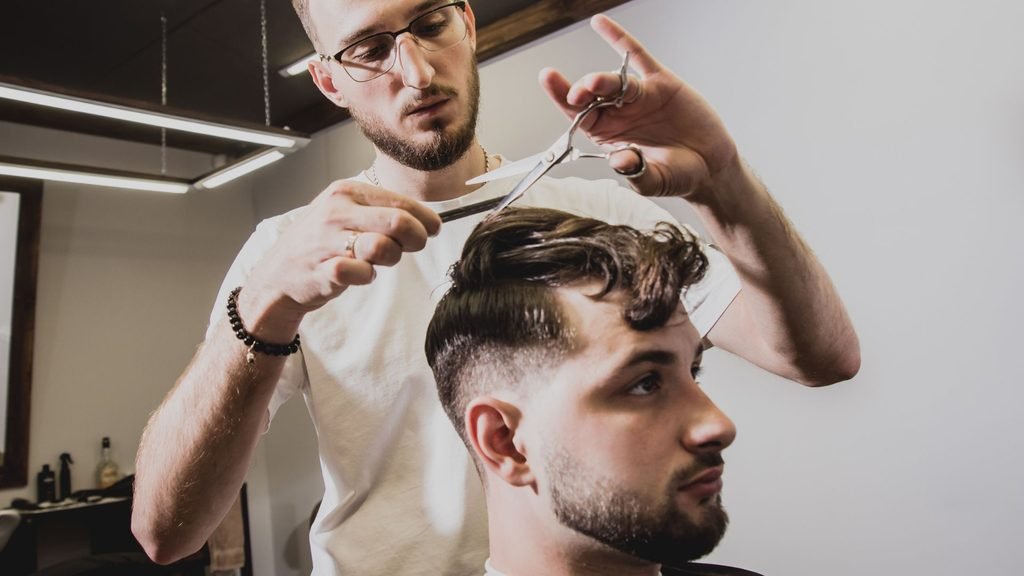
Barbers have been careful planners for centuries, partly because they used to hold much sharper responsibilities than a fade. In medieval Europe, barbers pulled teeth, set bones and performed bloodletting. In 1540, King Henry VIII united the barbers and surgeons of London into a single guild, the Company of Barber-Surgeons. The red and white barber pole you still see spinning outside shops today is widely traced back to that bloody, bandaged era.
When the trades finally split in the 1700s, barbers kept the habits that surgery had taught them: clean tools, steady hands, and a plan before the blade touched skin. Over time, the barber became less a medic and more a craftsman and community anchor. By the early twentieth century, the neighborhood barbershop was where men caught up on ball scores, local gossip and politics, and the barber was the guy who knew every regular’s cut by heart. That memory was a blueprint in its own right.
The First Barber Schools and Licenses
Planning became formal once barbering became a taught trade. In 1893, A. B. Moler opened what’s widely considered the first barber school in America, in Chicago, and published a textbook on the craft. A few years later, in 1897, Minnesota became the first state to pass a barber licensing law.
Today, state boards across the country require hundreds or more often a thousand-plus hours of training before a barber can work on your head, with exact numbers varying from state to state. A good chunk of that time goes into theory: head anatomy, hair structure, sanitation and consultation. In other words, before a barber is trusted with clippers, he’s taught to think.
From Chalkboards to Phone Photos
The tools for planning have changed a lot over the past century, even if the thinking hasn’t.
| Era | How Cuts Were Planned | What Changed |
| 1500s to 1700s | Guild training, apprentice watches master | Planning passed hand to hand |
| 1890s | First barber schools and textbooks | Planning becomes formal theory |
| 1920s | Electric clippers spread through shops | Faster cuts, new guard-based plans |
| 1940s to 1950s | Style charts on shop walls | Clients point at a picture |
| 1960s to 1970s | Longer hair, more scissor work | Plans shift toward shape and layering |
| 1990s | Magazine clippings in wallets | Clients bring their own references |
| 2010s | Phone photos and social media | Endless references, high expectations |
| 2020s | Digital client notes, booking apps | Barbers save plans visit to visit |
I still remember the faded style chart that hung in the shop where I apprenticed. Ten sketched heads with names like “The Ivy League” and “The Princeton.” Men would point and say, “That one, but shorter.” Today they hold up a phone. The pointing hasn’t changed one bit.
History gave us the habit. The consultation is where it comes to life.
The Consultation Conversation
Questions a Good Barber Always Asks
A consultation isn’t small talk. Every question has a reason behind it.
| Question | What I’m Really Learning |
| “When was your last cut?” | How fast your hair grows and how long you stretch visits |
| “What did you like about it?” | What to keep in the plan |
| “What bugged you about it?” | What to fix |
| “How do you style it in the morning?” | How much effort the cut can ask for |
| “Do you use any product?” | How much length and texture to leave on top |
| “What do you do for work?” | Dress codes, helmets, hats, sweat |
| “Any spots that always act up?” | Cowlicks, whorls, thin areas |
| “How often can you come in?” | Whether to cut tight or leave room to grow |
That last one matters more than men think. If you come in every two weeks, I can give you a skin fade that looks sharp every time you leave. If you come in every six weeks, the same fade will look shaggy for half your life. The plan has to fit your calendar.
Reading Between the Lines
What a man says and what he means aren’t always the same.
“Just a trim” might mean half an inch, or it might mean “I’m nervous about change.” “Short on the sides” can mean a number four to one guy and a skin fade to another. “Clean it up” could mean almost anything.
So I listen to the words, then I watch the hands. If a client keeps pushing his hair off his forehead while he talks, the front is too long for him, even if he says it’s fine. If he tugs at his ears, the sides are bugging him. If he runs a hand over the crown and frowns, there’s a whorl that’s been fighting him for weeks.
It’s a bit like a coach watching a player warm up. The kid says his ankle’s fine. The coach watches him favor it on every cut. The body tells the truth.
Photo vs. Description: Which Works Better?
Both help. Neither is perfect alone.
| Factor | Bringing a Photo | Describing in Words |
| Clarity | Shows the exact look | Can be vague (“short-ish”) |
| Hair type match | Model may have very different hair | Based on your actual hair |
| Lighting and styling | Often professionally styled and lit | Reflects real daily life |
| Emotional context | Shows what you admire | Shows what you need |
| Best use | Pointing to shape and length | Explaining routine and problems |
| Biggest risk | Expecting your hair to behave like his | Barber and client picture different things |
The best combination? Bring the photo and tell me what you like about it. “I like how the sides are tight but the top still moves.” That one sentence is worth more than five photos, because now I know which part of the picture to aim for. Then I can tell you honestly how your hair will translate it.
Talking With Kids and Teens
Fathers often book for their sons, and the consultation changes a bit. With little ones, I’m planning for a wiggly head and a short attention span. The plan is simpler, the tools are quieter, and I’ll often cut faster and finish details with scissors rather than buzzing near nervous ears.
Teens are a different story. A fifteen-year-old usually has strong opinions and a dad who has different ones. I try to bring both into the conversation. “What do you want it to look like? Okay, Dad, what does school allow?” Usually there’s a middle ground, a cut with the shape the kid wants and the tidiness the parent needs. Planning, it turns out, is sometimes diplomacy.
Once we’ve talked, I put my hands on your head. That’s where the second half of the consultation begins.
Reading Your Head Like a Map
Skull Shape and the Parietal Ridge
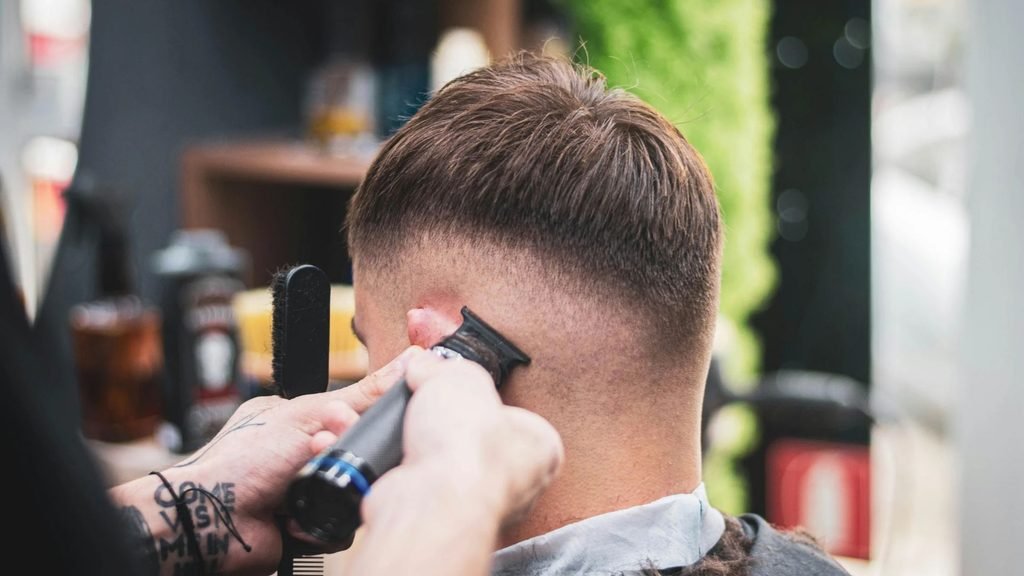
Run your fingers along the sides of your head, about where a ball cap’s crown would curve. You’ll feel the widest point of your skull. Barbers call this the parietal ridge. It’s one of the most important landmarks on your whole head.
Above the ridge, hair sits on top and gets pushed outward. Below the ridge, hair hangs down along the sides. Where I place your fade, taper or weight line in relation to that ridge changes how wide or narrow your head looks. Cut too high above it and the top can look like a mushroom. Cut too low and the sides can look boxy.
Some men have a wide ridge. Some have a narrow one. Some have one side noticeably wider than the other. All of that goes into the plan.
The Occipital Bone and the Back of the Head
Now slide your hand down to the back of your head, just above where your neck begins. That bump is your occipital bone. Some men have a pronounced one, some barely have one at all, and plenty have a flatter area from sleeping on their backs as babies.
The occipital decides how I build the back of the cut. If your head is flat back there, I’ll leave a little more weight above the bone to create a rounder profile. If it’s pronounced, I’ll blend more carefully so it doesn’t look like a shelf. This is the part of the cut you rarely see yourself, and it’s the part everyone behind you in line at the grocery store sees all day.
| Head Feature | What I Notice | How It Changes the Plan |
| Wide parietal ridge | Head looks broad at the temples | Tighter sides, keep weight low on top |
| Narrow parietal ridge | Head looks tall and slim | Leave a little fullness at the sides |
| Flat back | Little curve below the crown | Keep weight above the occipital |
| Prominent occipital | Strong bump at the back | Blend softly, avoid harsh lines |
| Uneven sides | One side fuller than the other | Adjust guard or length per side |
| Pointed crown | Peak at the top-back | Leave length to round it out |
Ears, Neck and Jawline
Ears are rarely level. Seriously. Look closely in the mirror and you’ll likely see one sits a little higher than the other. If I cut your sideburns or your fade using your ears as the guide, I’ll copy that tilt onto your head. So I use other reference points, like the eyebrows, the corner of the eye or the bridge of the nose, to keep lines level.
The neck matters too. A long neck can carry a higher, squared neckline. A shorter neck often looks better with a tapered, natural neckline that doesn’t chop the back of the head off visually. And the jawline tells me whether to sharpen your lines or soften them, which leads us straight to the face.
Face Shape and Proportion
The Facial Thirds
Artists have measured faces for centuries. Leonardo da Vinci famously sketched the human face divided into rough thirds: hairline to brow, brow to the base of the nose, and nose to chin. Real faces rarely split perfectly, and that’s exactly why the thirds are useful.
If your forehead third is long, I might plan a cut with a little fringe or texture that falls forward. If your lower third is long, I might add height on top to balance it. If all three are fairly even, congratulations, you can pull off most cuts without much adjustment. Barbers don’t carry rulers for this. We just learn to see it, the way a good umpire sees the strike zone without drawing it.
Matching Face Shapes to Cuts
| Face Shape | Key Traits | Cut Goals | Cuts That Usually Work |
| Oval | Balanced, slightly longer than wide | Keep balance | Nearly anything |
| Round | Full cheeks, soft jaw | Add height, slim sides | Pompadour, quiff, high taper |
| Square | Strong jaw, broad forehead | Show off or soften angles | Crew cut, textured crop, side part |
| Oblong | Long face, narrow width | Avoid extra height, add side fullness | Fringe, medium sides, side sweep |
| Diamond | Wide cheekbones, narrow forehead and chin | Add width at forehead | Textured fringe, fuller top |
| Heart | Wide forehead, narrow chin | Soften the top, balance the chin | Medium length top, beard to add width |
| Triangle | Wide jaw, narrow forehead | Add volume up top | Fuller top, tighter jaw area |
Here’s the honest truth: very few faces fit one category cleanly. Most of us are a blend, a little round, a little square. I use these shapes as a starting compass, not a rulebook.
Beards, Glasses and Everything Else on Your Face
Your face isn’t just bone. It’s everything you add to it.
A beard changes the plan completely. A full beard adds weight to the bottom of the face, so I’ll often plan more height or structure on top to balance it. The transition from sideburn to beard needs to blend smoothly too, so I plan the fade and the beard together, not as two separate jobs.
Glasses matter more than men realize. The arms of your frames sit right where sideburns and the area above the ears live. If I cut that zone too tight, the arms leave a visible groove. If I leave it too bulky, your hair pushes the glasses out. I’ll often ask clients to put their glasses on mid-consultation just to see where they land.
Earrings, scars, birthmarks and tattoos behind the ear also get noticed. Some men want them shown. Some want them covered. It’s your call, but it’s my job to ask.
The face shapes the outline. The hair itself decides how we build it.
The Science of Your Hair
Texture, Density and Strand Diameter
Hair texture comes down to the thickness of each individual strand. Fine hair is thin, coarse hair is thick, and medium falls in between. Research published by Franbourg and colleagues in the Journal of the American Academy of Dermatology in 2003 documented clear differences in hair diameter and cross-section shape across ethnic groups, with some hair notably thicker and rounder, and some flatter and more oval.
Density is a separate thing. It’s how many hairs grow per patch of scalp. According to the American Academy of Dermatology, the average scalp has around 100,000 hair follicles, and it’s normal to shed 50 to 100 hairs a day. But averages hide a lot. I’ve cut men with fine hair so dense it looked thick, and men with coarse hair so sparse it showed scalp at a number four.
| Hair Profile | What It Does | How the Plan Changes |
| Fine and dense | Soft, lies flat, good coverage | Texture with scissors, light products |
| Fine and sparse | Scalp shows easily | Avoid going too short, keep length on top |
| Coarse and dense | Stands up, bulky | Remove weight, tighter sides |
| Coarse and sparse | Stiff but shows gaps | Medium lengths, even texture |
| Medium and average | Flexible, behaves well | Wide range of options |
Growth Patterns, Whorls and Cowlicks
Every head has a grain, the direction hair naturally grows. Most heads also have a whorl, a spiral near the crown. Geneticist Amar Klar, writing in the journal Genetics in 2003, reported that the large majority of people he studied had a single whorl turning clockwise. Some people have two. Some turn counterclockwise.
Then there are cowlicks, those stubborn sections at the front hairline or crown that stand up no matter what you do.
Here’s why it matters for the plan. If I cut a cowlick too short, it stands straight up like a startled cat. If I leave it a little longer, the weight of the hair helps it lie down. A double crown needs extra length to keep from looking like two tiny tornadoes. I’ll often comb the hair in a few directions before cutting just to see where it wants to go. Fighting the grain is like swimming upstream. You can do it, but you’ll be tired and the river usually wins.
Curl Pattern and Shrinkage
Curly and coily hair adds another layer to the plan. Curls spring up as they dry, a process called shrinkage, and on longer lengths it can make hair look dramatically shorter than its stretched length.
Water plays a role too. In Chemical and Physical Behavior of Human Hair, Clarence Robbins describes how hair can absorb around 30 percent of its own weight in water, swelling and becoming stretchier. That’s why I usually cut curly hair dry or check it dry before finishing. Cut a curl wet and you’re measuring a stretched spring. Let go and it bounces somewhere you didn’t expect.
Curly and coily hair also needs special care at the edges. The American Osteopathic College of Dermatology notes that pseudofolliculitis barbae, commonly called razor bumps, affects an estimated 45 to 83 percent of Black men who shave. Very close cutting along the neckline and edges can trigger similar irritation. So if you’re prone to bumps, the plan might include a guard on the edges instead of going to bare skin.
Hairlines and Thinning
According to the American Hair Loss Association, about two-thirds of American men show some degree of noticeable hair loss by age 35, and roughly 85 percent have significantly thinning hair by 50. If your hairline is moving, you’re in very good company.
Thinning changes the blueprint in a few ways. Long hair on top can separate and show gaps, so I’ll often plan a shorter, textured top that hides the contrast. A receding hairline can look stronger with a cut that brings hair slightly forward rather than sweeping it back. And at the crown, keeping things short and even usually makes thinning far less noticeable.
The goal isn’t to hide anything. It’s to work with what you have so the eye lands where you want it to.
Hair is the material. Your life is what the cut has to survive.
Your Life Shapes the Plan
Work, Helmets and Dress Codes
A cut that looks perfect in my mirror has to keep looking good in your world. That world might include a hard hat, a firefighter’s helmet, a chef’s cap or a corporate boardroom.
| Lifestyle Factor | Challenge | Planning Response |
| Helmets and hard hats | Pressure flattens the top, sweat | Shorter top, tight sides |
| Ball caps daily | Hat lines, flattened crown | Avoid heavy weight at the crown |
| Corporate or client-facing | Needs polish every day | Classic shapes, softer tapers |
| Military or uniformed roles | Regulations on length | Plan to the rule, then refine |
| Athletes | Sweat, quick showers | Low-maintenance lengths |
| Outdoor work | Sun on the scalp | Avoid exposing scalp too much |
| Creative fields | Room to experiment | Texture, bolder lines |
I once had a client who wore a welding hood ten hours a day. Every cut we tried with length on top got crushed into a pancake by lunch. We switched to a short textured crop that looked good flat and looked even better when he ran a hand through it after work. That’s planning for real life.
Morning Routine and Product Habits
Be honest with yourself here. How much time do you really spend on your hair in the morning?
If the answer is “I towel it and go,” I need to plan a cut that falls into place on its own. That means working with the grain, removing bulk in the right spots and keeping lengths that don’t need product.
If you enjoy a little styling ritual, warming clay between your palms, pushing the top back, checking the profile, then I can leave more length and texture to play with.
The mistake is planning a cut for the man you wish you were at 7 a.m. instead of the man you actually are. I’ve seen plenty of great cuts ruined because they needed ten minutes of styling and the owner had two.
Visit Rhythm and Budget
Hair grows about half an inch a month, according to the American Academy of Dermatology. That number is the clock ticking behind every blueprint.
If you come in every two weeks, I can cut tight lines and sharp fades because they’ll be refreshed before they grow out. If you come every five or six weeks, I’ll plan softer transitions that age gracefully. Budget plays into this too. A skin fade can mean frequent visits. A classic taper might give you more breathing room between cuts and lower your yearly spend.
There’s no wrong rhythm. There’s only a wrong plan for your rhythm.
With the plan built in my head, it’s time to divide your head into parts.
Sectioning: Dividing the Head Before Cutting
The Main Zones
Barbers don’t cut a head as one big piece. We break it into zones, each with its own job.
| Zone | Location | Its Role in the Cut |
| Top | From front hairline to crown | Length, style, movement |
| Crown | Top-back where the whorl sits | Shape and roundness at the back |
| Sides | Temples down to the ears | Width and frame for the face |
| Back | Behind the head down to the occipital | Profile and weight |
| Nape | Below the occipital to the neckline | Clean finish and taper |
| Perimeter | Hairline, sideburns, around the ears | Outline and sharpness |
Each zone gets planned separately, then tied together. It’s like a football team. The line, the backfield and the receivers each have their own assignment, but the play only works when they move together.
Guidelines and Reference Points
A guideline is the first section of hair I cut to a set length. Everything else follows it. If the guideline is wrong, the whole cut follows it off the cliff, so I take my time here.
Reference points keep the guideline honest. I use the parietal ridge, the occipital bone, the top of the ear, the corner of the eye and the center of the nose. These are landmarks that don’t move, unlike your hair, which shifts every time you turn your head to check your phone.
When I cut a fade, I’ll often plan the first line at a specific landmark, say about a finger-width above the top of the ear. Then I check it from the front, both sides and the back before I build on it. If you’ve ever seen a barber step back and squint at your head, he’s checking those reference points.
Clipper Plan vs. Scissor Plan
The tool shapes the plan as much as the plan shapes the tool.
| Factor | Clipper-Based Plan | Scissor-Based Plan |
| Best for | Fades, tapers, buzzes, short sides | Longer cuts, layering, textured tops |
| Precision | Uniform, guard-controlled lengths | Custom lengths section by section |
| Speed | Faster | Slower, more detailed |
| Blending | Lever work, guard stepping | Scissor over comb, point cutting |
| Texture | Even and tight | Soft, natural movement |
| Planning focus | Guard order and line placement | Elevation angles and layering |
Most cuts I do use both. Clippers for the sides and back, scissors for the top, then a mix of both where they meet. The plan decides where one hands off to the other, like a relay team passing the baton.
Sectioning tells me where. Tools and order tell me how.
Tools and the Order of Operations
The Station Laid Out
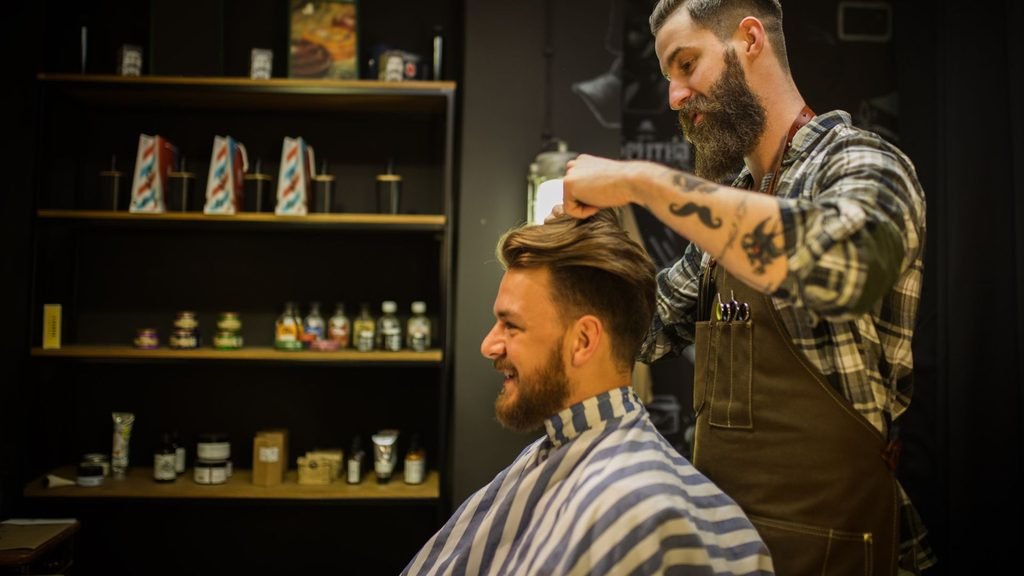
A good barber lays out his station before the client sits down. It’s partly habit and partly respect. You don’t want your barber rummaging through a drawer for the right comb mid-cut.
| Tool | What It Does in the Plan |
| Clippers | Remove bulk, set fade and taper lengths |
| Guards | Control length on clipper work |
| Trimmer or edger | Outline the hairline and neck |
| Straight shears | Cut length and clean lines |
| Thinning shears | Remove weight without losing length |
| Wide and fine combs | Section, lift and check hair |
| Spray bottle | Dampen hair for scissor work |
| Neck brush and talc | Clear clippings, soothe skin |
| Straight razor | Crisp lines and neck cleanup |
| Hot towel | Relax skin and finish the experience |
I check every tool before the day starts. Blades get oiled. Guards get inspected for cracks. Shears get wiped down. It’s the same reason a pitcher checks the ball before he winds up. Small things decide big outcomes.
Wet Start vs. Dry Start
Whether I start with wet or dry hair depends on the plan.
| Factor | Wet Start | Dry Start |
| Best for | Scissor work, straight to wavy hair | Clipper work, curly and coily hair |
| Hair behavior | Lies flat, stretches | Shows natural fall and texture |
| Precision | Clean lines for layering | True length visible |
| Risk | Cutting too short after shrinkage | Harder to section very thick hair |
| Common use | Classic scissor cuts, long tops | Fades, tapers, buzzes, textured hair |
For many cuts, I do both. I’ll clipper the sides dry so I can see how the hair really sits, then mist the top for scissor work, then dry it and refine. That last dry check is where I catch anything the water was hiding.
The Order of Operations, Step by Step
A haircut is a sequence. Do steps out of order and you end up chasing your own mistakes.
- Consult and assess. Goal, head, face, hair, life.
- Remove bulk. A longer guard or rough scissor cut takes off excess length so I can see the real shape.
- Set the guideline. The first line that everything else will follow.
- Build the sides and back. Fade, taper or clipper work section by section.
- Shape the top. Scissor work to set length, layers and texture.
- Blend the transition. Where sides meet top, the most important seam in the cut.
- Detail the perimeter. Outline, sideburns, ears and neckline.
- Cross-check. Comb hair the opposite way to catch stray lengths.
- Dry and style. See how it lands in real life.
- Final check and finish. Hot towel, razor cleanup if needed, a dusting of talc.
Most men only notice steps four, five and ten. The other seven are where the cut gets its quality.
Now let’s talk about the thing that separates a good cut from a great one.
Balance, Weight and Grow-Out
Balance Is the Quiet Goal
If you remember one phrase from this guide, make it Haircut Balance. It means the cut looks right from every angle, in proportion with your head and face, and holds its shape as it grows.
Balance isn’t the same as symmetry. It’s about the eye. When a cut is balanced, nothing grabs attention for the wrong reason. No side sticks out, no crown flips up, no top feels too heavy for the sides beneath it. People just see you, looking sharp.
I think of it like setting a table for Sunday dinner. Nobody compliments the placement of the forks. But if one plate is on the floor, everyone notices.
Weight Lines and Where Bulk Lives
Every cut has a weight line, the point where shorter hair meets longer hair and the bulk begins. Where I place it changes the whole silhouette.
A low weight line, closer to the ears, gives a fuller, more classic look. A high weight line, up near the parietal ridge, gives a sharper, more modern contrast. Thick hair builds bulk quickly, so I’ll often remove weight from inside the hair with thinning shears or point cutting so the cut doesn’t puff up after two weeks.
The trick is to place weight where your head needs it. A flat back gets weight. A wide head gets less at the sides. A long face gets a weight line that doesn’t add more height.
Symmetry vs. Natural Asymmetry
| Factor | Strict Symmetry | Natural Asymmetry |
| Goal | Both sides identical | Both sides look balanced |
| Best for | Even heads, formal styles | Most real heads |
| Risk | Copies uneven ears or skull | Requires sharper eye |
| Technique | Same guard, same lines both sides | Adjust length per side to match visually |
| Looks like | Precise but sometimes off | Natural, polished |
Most heads aren’t symmetrical. One side might be fuller, one ear higher, one temple deeper. If I cut both sides exactly the same, the cut will look uneven. So I cut them to look the same, which sometimes means leaving one side a touch longer. It’s a little like a tailor adjusting one sleeve because your right arm is longer from years of throwing a ball.
Planning for Week Four
Every cut looks good on day one. A planned cut looks good at week four.
| Week | Skin Fade | Classic Taper |
| Week 1 | Crisp, high contrast | Clean, soft |
| Week 2 | Fade line softening | Barely changed |
| Week 3 | Blend lost, shadow growing | Sides softening, still neat |
| Week 4 | Needs a visit | Starting to need one |
| Week 5+ | Looks grown out | Grown but wearable |
This is where the life pillar meets the balance pillar. If you come in every three weeks, a skin fade is a great fit. If you come in every six, I’ll often plan a taper that grows out gently. I’m not limiting your style. I’m making sure the style lasts as long as your calendar says it needs to.
Even the best plan can go sideways, though. Here’s how.
Planning Mistakes on Both Sides of the Chair
Barber Mistakes
I’ve made most of these myself at one point or another. That’s how you learn.
| Mistake | What Happens | Better Approach |
| Skipping the consultation | Cut doesn’t match the client’s life | Ask before cutting |
| Cutting from a photo alone | Ignores real hair type | Translate the photo to the head |
| Using ears as level guides | Crooked lines | Use eyes, brows and nose |
| Ignoring the crown | Cowlick sticks up later | Leave length where hair spins |
| Cutting curly hair wet | Too short after drying | Cut or check dry |
| Not stepping back | Uneven shape | Check from all angles |
Client Mistakes
Clients can trip up the plan too, usually by accident.
- Saying “just a trim” when you want a change. Be direct about what you’re after.
- Washing in heavy product before the visit. It hides your natural fall and gums up the clippers.
- Not mentioning your routine. If you never style it, say so.
- Hiding trouble spots. That cowlick isn’t embarrassing. It’s information.
- Switching barbers every visit. Each new barber has to start the map from scratch.
- Waiting until the cut is completely gone. It’s harder to rebuild a shape than to maintain one.
First Visit vs. Regular Client
| Factor | First Visit | Regular Client |
| Consultation length | Longer, more questions | Short check-in |
| Knowledge of your head | Building from scratch | Already mapped |
| Risk of surprises | Higher | Lower |
| Cut style | Often a bit conservative | Refined and confident |
| Best move | Share everything | Mention any changes |
That’s why the first cut with a new barber is often a little safer. He’s learning your map. By the third visit, the plan is mostly written, and he’s fine-tuning.
Fixing a Plan Mid-Cut
Sometimes the hair surprises you. A hidden double crown shows up under the length. The client’s hair is thinner on one side than expected. A scar appears where you didn’t know it was.
When that happens, I pause and adjust. I’ll tell the client what I’m seeing. “There’s a second crown back here. I’m going to leave it a little longer so it doesn’t stick up.” Most men appreciate the honesty. A good plan isn’t rigid. It’s like a quarterback reading the defense at the line and calling an audible. The play changes because the field changed.
Speaking of real life, let me tell you about a few heads that taught me something.
Stories From the Chair
The Groom Who Wanted Change
He came in three weeks before his wedding with a photo of an actor with a bold, high pompadour. He’d worn the same short side part for ten years.
We talked. His face was oval, his hair was fine, and he admitted he’d never used a blow dryer in his life. A pompadour would’ve needed ten minutes of styling and heavy product. On his wedding morning, with nerves and a tie to deal with, that wasn’t the plan.
So we built a middle ground: a modern textured side part with more length on top and a softer taper. Three weeks later, he sent me a photo from the reception. “Felt like me, just upgraded,” he wrote. That’s the best review a plan can get.
The Boy With Two Crowns
A father brought in his seven-year-old, frustrated. “Every cut makes him look like he slept on a fan,” he said.
I parted the boy’s hair and found it right away: two crowns, spinning in opposite directions. Every previous cut had been short and even, which let both spirals stand up proudly.
We planned differently. I left about an inch of length over both crowns and cut the sides shorter. The weight of the longer hair calmed both whorls. The father ran his hand over his son’s head and laughed. “Why didn’t anyone tell me this before?” Sometimes the fix isn’t technique. It’s just noticing.
The Engineer Who Brought a Spreadsheet
I’m not kidding about this one. He showed up with a printed sheet listing his previous cuts by date, guard number, barber’s name and a rating out of ten.
“The number three on the sides scored a nine,” he said. “The number two scored a five. I don’t know why.”
We looked at his hair together. Fine, light brown, with a pale scalp. At a number two, his scalp showed through more than he liked. At a three, the coverage looked fuller. His spreadsheet had already found the answer. He just needed someone to explain it.
I kept a copy. Honestly, it inspired me to start keeping better notes on all my regulars.
Stories make it personal. Now let’s make it practical, starting with what all this planning costs.
What a Planned Cut Costs and Why It’s Worth It
What You’re Really Paying For
When you pay for a haircut, you’re not paying for the minutes the clippers are running. You’re paying for training, judgment, tools and the plan behind every pass.
| Pricing Factor | Why It Raises or Lowers Cost |
| Barber experience | Senior barbers often charge more for refined planning |
| Cut complexity | Fades and scissor work take longer than buzzes |
| Consultation time | Longer first visits may cost more |
| Location | Big cities usually cost more than small towns |
| Add-ons | Hot towel, razor neck shave, beard work |
| Hair type and length | Very thick or long hair takes more time |
In many American cities, a standard men’s cut runs somewhere around $25 to $50, with premium experiences going higher. Prices swing widely by region and shop.
Quick Cut vs. Consultation Cut
| Factor | Quick Cut | Consultation Cut |
| Time | 10 to 20 minutes | 30 to 45 minutes |
| Price | Lower | Moderate to higher |
| Plan depth | Basic, guard-driven | Custom to head, face and life |
| Best for | Simple buzz, quick touch-up | New style, tricky hair, first visit |
| Grow-out | Unpredictable | Planned to last |
| Long-term value | Cheaper per visit | Fewer redos, fewer bad weeks |
A quick cut has its place. If you’ve worn a number two buzz for ten years, you don’t need a twenty-minute conversation. But if you’re changing styles, fighting a cowlick or tired of cuts that fall apart at week two, a consultation cut is worth the extra few bucks. When you type “barbershop near me” into your phone, look past the stars and check whether reviews mention barbers who listen and ask questions. That’s the signal of a planner.
Gifting a Great Cut
A haircut can be a surprisingly thoughtful gift.
For a son heading to college, a job interview or his first formal dance, a prepaid consultation cut with a trusted barber gives him more than a haircut. It gives him a map of his own hair he can bring anywhere.
For a dad who’s worn the same cut since high school, a gift card for a full service, hot towel, razor neck cleanup and all, can be a small luxury he’d never book for himself.
For a friend going through a big change, a new job, a breakup, a milestone birthday, a fresh plan in the chair can feel like a fresh start. I’ve watched it happen more times than I can count. A man sits down slumped and stands up straighter.
Prices and gifts aside, the craft itself keeps evolving.
Trends and Insights From Behind the Chair
Consultation Becomes the Standard
Over the past decade, I’ve noticed men expect more conversation in the chair. They want to know why I’m choosing a guard, why I’m leaving length at the crown, why their hair acts up on the left side. That curiosity has pushed the whole trade toward better planning.
The U.S. Bureau of Labor Statistics projects continued demand for barbers, hairstylists and cosmetologists in the years ahead, and in my experience, the barbers who thrive are the ones who talk, listen and plan. Speed still matters. But trust keeps clients coming back.
Phones, Apps and Client Notes
| Trend | What It Does | How It Helps the Plan |
| Digital client notes | Saves guard numbers, lines, preferences | Every visit picks up where the last ended |
| Before-and-after photos | Records the cut from all angles | Easy to repeat or adjust |
| Online booking with notes | Clients share goals in advance | Barber prepares before you sit down |
| Reference photos on social media | Endless style ideas | Better starting point for conversation |
| Virtual try-on apps | Preview cuts digitally | Helps clients picture changes |
I was skeptical of some of this at first. Now I keep notes on almost every regular. When a man comes back after three months away, I can see exactly what we did last time and what he said about it.
Texture-Smart Planning
One of the most welcome shifts I’ve seen is barbers learning to plan for every hair type. Curly, coily, straight, wavy, fine, coarse, gray. More training programs now include texture work, and more barbers cut curly hair dry to account for shrinkage.
The days of one-size-fits-all cuts are fading. Good riddance. A shop that welcomes every head and plans for every texture is a shop that feels like home to everyone who walks in.
Now let’s answer the questions I hear most often in the chair.
Frequently Asked Questions
How long should a haircut consultation take?
For a regular client, a minute or two of check-in is usually enough. For a first visit or a big style change, five to ten minutes is normal. A good consultation covers your goal, your hair and your routine without feeling like an interview. If your barber skips it entirely on a first visit, that’s a red flag.
Should I bring a photo to my haircut?
Yes, it helps. But also tell your barber what you like about the photo, and be open to hearing how your hair will translate the look. The person in the photo may have completely different texture, density or face shape. A photo is a great starting point, not a guarantee.
Should I wash my hair before a haircut?
Clean hair is ideal, but skip heavy products. Product hides your hair’s natural fall and makes clipper work harder. If you style your hair a certain way every day, it can help to come in with it styled lightly so your barber sees how you wear it.
Why does my barber cut my hair dry?
Many barbers cut dry, especially for clipper work and curly or coily hair, because dry hair shows its true length and natural texture. Wet hair stretches and lies flat, which can lead to cutting too short. Some barbers start dry and switch to wet for scissor work, then check dry again.
Why does my barber keep stepping back and looking at my head?
He’s checking balance and reference points. Heads aren’t perfectly symmetrical, so barbers step back to see the overall shape from different angles. It’s one of the best signs that someone’s planning instead of cutting on autopilot.
How do I explain what I want if I don’t know haircut terms?
Describe your life and your likes in plain words. “I want short sides that don’t need styling, but enough length on top to push back.” Mention what bugged you about your last cut. A good barber will translate that into a plan and ask follow-up questions.
Can a haircut make my face look slimmer or my head look rounder?
Yes, within reason. Barbers use height, width and weight placement to balance proportions. Adding height can lengthen a round face. Leaving weight at the back can round out a flat head. It’s not magic, but strategic planning can make a real difference.
How often should I visit my barber to keep the plan working?
It depends on the cut. Skin fades usually need a visit every two to three weeks. Tapers and classic cuts can often go four to five weeks. Longer scissor cuts may stretch to six. Tell your barber how often you can realistically come in, and he can plan a cut that fits.
With your questions answered, let’s turn all of this into something you can use.
Your Pre-Cut Checklist and a Final Word
The Checklist to Bring to Your Next Cut
| Step | What to Think About | Why It Helps |
| 1. Your goal | Keep it, change it, or fix something | Sets direction |
| 2. A photo | Plus what you like about it | Clarifies the look |
| 3. Your last cut | What worked, what didn’t | Avoids repeat problems |
| 4. Trouble spots | Cowlicks, crown, thin areas | Lets the barber plan for them |
| 5. Your routine | Minutes and products each morning | Shapes length and texture |
| 6. Your work | Helmets, hats, dress codes | Makes the cut practical |
| 7. Visit rhythm | Every 2, 4 or 6 weeks | Decides tight or soft lines |
| 8. Hair condition | Clean, light or no product | Shows true fall |
Run through it on your drive over. It takes two minutes and gives your barber a head start on the map.
Building a Long-Term Plan With Your Barber
The best cuts aren’t one-time events. They’re built over several visits. Your first cut sets the foundation. Your second cut refines it. By the third, your barber knows your crown, your cowlick, your preferred guard and the way you push your hair back when you’re thinking.
Stick with a barber you trust. Tell him what you liked and what you didn’t. Ask him to note what worked. Over time, the blueprint gets sharper, and so do you. It’s a lot like a father teaching his kid to throw a ball. The first throw is wild. By the tenth, there’s a rhythm. By the hundredth, it’s second nature.
A Final Word From the Chair
At the end of every cut, there’s a moment I still love after all these years. I set down the shears, brush away the last clippings, dust a little talc across the back of the neck and drape a warm towel over the shoulders for a second. Then I spin the chair toward the mirror. That’s when the plan meets the man. So how is a haircut planned before the first cut? With questions, with careful eyes and steady hands. With a map of your skull, a read on your face, an understanding of your hair and a respect for the life you’ll carry that cut into. The clippers are just the last step of a conversation that started the moment you sat down. Next time you’re in the chair, take those thirty quiet seconds seriously. Tell your barber a little more than usual. Let him look. Let him think. Then lean back, listen to the clippers hum and trust that the cut taking shape was drawn long before the first hair hit the cape.