
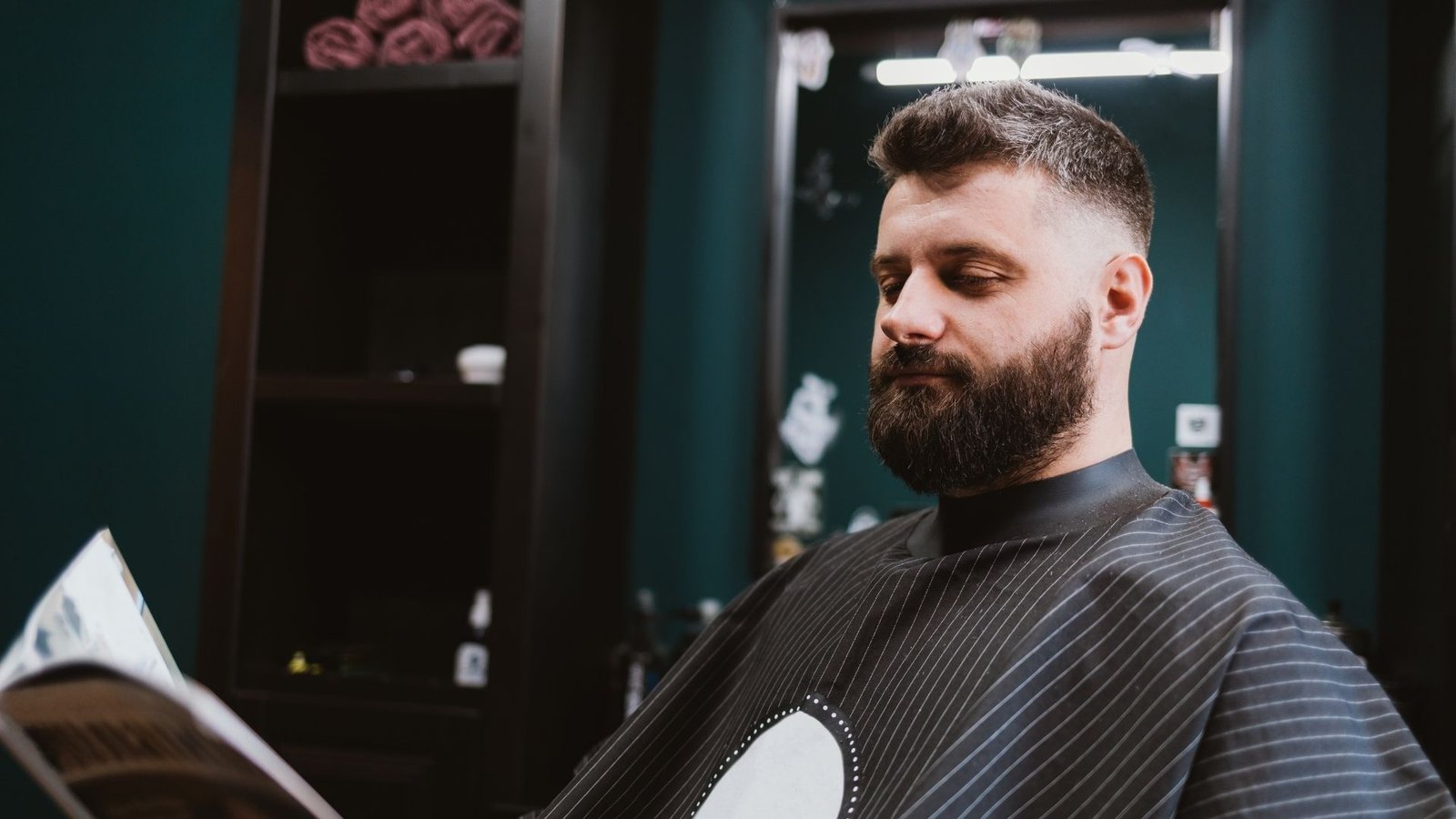
A haircut is never just a haircut. It’s a quiet decision made at the intersection of your job, your calendar, your climate, your wallet, and the way you want to be seen when you walk into a room. Sit in the chair long enough and you start to notice patterns: the construction worker who wants something he can forget about for three weeks, the new dad who needs five minutes flat, the guy prepping for a first date who suddenly cares about his part line for the first time in a year. This post breaks down exactly how lifestyle drives haircut decisions, with real comparisons, data tables, and a practical framework you can use before your next appointment.
Key Takeaways
- Your job, activity level, climate, and family responsibilities influence your haircut more than any trend ever will.
- Hair texture and biology set the boundaries of what’s realistic; lifestyle determines what’s practical within those boundaries.
- Low-maintenance cuts save time and money over a year, but the “best” cut is the one that matches your actual weekly routine, not your aspirational one.
- Clear communication with your barber, including reference photos and honest answers about your routine, prevents the most common haircut regrets.
- The right cut evolves as your life does. What worked at 22 may not work at 35, and that’s not a failure, it’s just growth.
The Mirror Doesn’t Lie — Your Hair Is Telling Your Story
What your haircut says about you before you say a word
People read your haircut before they read anything else about you. Research on thin-slicing, the psychological process by which people form judgments within seconds of meeting someone, suggests that grooming cues like hair are processed almost instantly, often before clothing or posture even register (Ambady & Rosenthal, Psychological Bulletin, 1992). A sharp fade suggests discipline. A grown-out, undone look suggests creativity or indifference, depending on context. Neither is right or wrong. Both are messages, whether you intended to send them or not.
The psychology of self-presentation and personal grooming
Self-presentation theory, first articulated by sociologist Erving Goffman in his 1959 work “The Presentation of Self in Everyday Life,” argues that people manage impressions the way actors manage a performance. Hair is one of the few grooming choices you control daily and change frequently, which makes it a uniquely flexible tool for self-presentation. Unlike a tattoo or a wardrobe overhaul, a haircut lets you test a new identity every few weeks without permanent commitment.
Why lifestyle is the real driver behind every cut
Trends come and go, but your 6 a.m. gym session, your client-facing job, and your toddler who grabs at everything don’t. Lifestyle is the quiet, constant force behind haircut decisions. A barber who understands your week will give you better advice than any magazine spread, because the magazine doesn’t know you’re coaching soccer practice three nights a week.
What We Mean When We Say ‘Lifestyle’
Defining lifestyle in the context of hair choices
For the purposes of this guide, lifestyle means the sum of your daily routines, responsibilities, and environment: your work, your activity level, your social calendar, your family obligations, and the climate you live in. It’s the practical backdrop against which every haircut decision gets made.
The five lifestyle pillars that shape your haircut decision
| Pillar | What It Affects | Example Impact |
| Occupation | Length, texture, formality | Corporate roles favor tapered, tidy cuts |
| Activity level | Maintenance frequency, product use | Athletes need sweat-resistant, low-fuss styles |
| Social life | Styling effort, grooming frequency | Active daters groom more often |
| Family responsibilities | Time available, budget | Dads often choose quick, wash-and-go cuts |
| Climate and geography | Texture control, scalp health | Humid climates demand frizz-resistant cuts |
How lifestyle differs from personal style (and why both matter)
Lifestyle is what you need. Personal style is what you want. The best haircuts live at the overlap of the two. A guy who wants a long, textured crop but works twelve-hour shifts in a kitchen under heat lamps is going to be fighting his own schedule every single day. A good barber helps you find where your taste and your routine can coexist without constant maintenance battles.
Your Job Shapes Your Hair More Than You Think
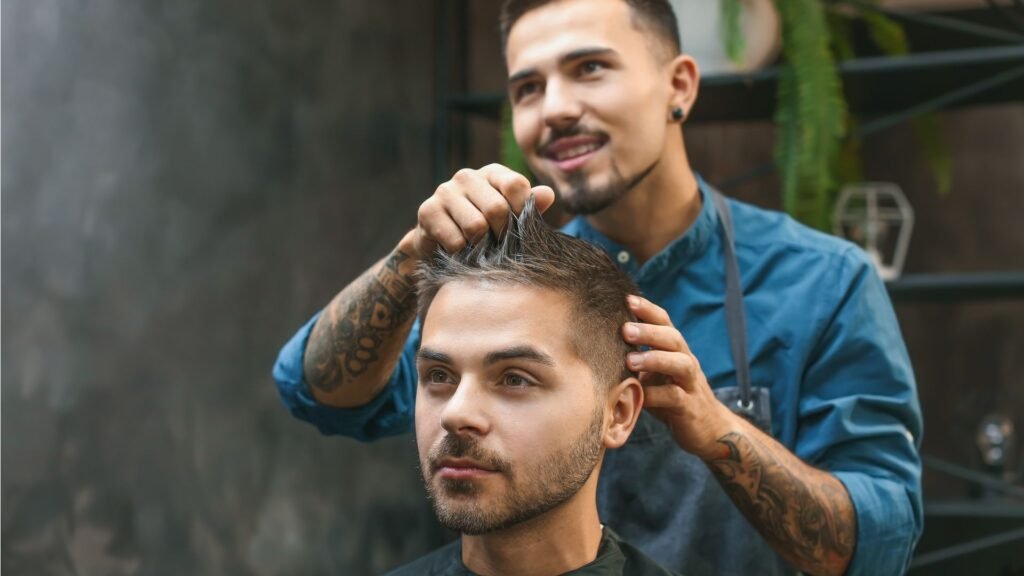
Corporate and professional environments — clean, conservative cuts
Law firms, banks, and client-facing corporate roles still lean toward classic, tapered cuts: the standard business fade, a tidy side part, or a short crop. These aren’t arbitrary rules. Appearance-based judgments in professional settings happen fast, and a well-maintained cut signals attention to detail before a single word is spoken.
Creative industries — where expression meets experimentation
Advertising, design, music, and tech startups tend to give far more latitude. Longer textured styles, undercuts, and bold color choices read as confidence and creative identity rather than carelessness. The same mullet that would raise eyebrows at a law firm might be a quiet flex in a design studio.
Physical and outdoor jobs — durability and low maintenance
Construction, landscaping, firefighting, and similar physical trades demand cuts that survive hard hats, sweat, dust, and long hours with zero touch up time. Shorter fades, crew cuts, and buzzed styles dominate here because they hold their shape without a mirror or comb in sight.
The work from home era and how it changed grooming habits
Remote and hybrid work has genuinely shifted grooming patterns. Fewer daily face to face interactions mean some men stretch out the time between cuts, while others have leaned into lower maintenance, “camera ready” styles that look sharp on a video call but require less daily styling than their office bound counterparts needed.
| Occupation Type | Recommended Cut Style | Maintenance Frequency |
| Corporate/Professional | Taper fade, side part | Every 3 to 4 weeks |
| Creative Industry | Textured crop, undercut | Every 4 to 6 weeks |
| Physical/Outdoor Trade | Buzz cut, crew cut | Every 2 to 3 weeks |
| Remote/Hybrid Worker | Low fade, natural texture | Every 5 to 6 weeks |
Corporate vs. Creative Cut Comparison
A corporate cut prioritizes symmetry, tight fades, and minimal length on top; a creative industry cut prioritizes texture, movement, and asymmetry. Choose corporate if your role involves client meetings or conservative dress codes. Choose creative if your workplace culture rewards individuality over uniformity.
A barber who has worked both ends of that spectrum, the downtown office crowd and the warehouse shift workers, develops a sixth sense for reading a client’s job before they even say what they do. Give yours the context and you’ll save three or four appointments of trial and error.
How Active You Are Determines How Practical Your Cut Needs to Be
Gym-goers, athletes, and high-activity lifestyles
If you’re training five or six days a week, your hair gets wet, sweaty, and compressed under hats or helmets constantly. Styles that rely on precise part lines or heavy product tend to collapse by the second set. Shorter, textured cuts that air dry into shape are far more forgiving.
Sweat, moisture, and hair health — what trainers never tell you
Frequent sweating strips natural oils and can irritate the scalp if hair isn’t washed regularly after workouts. Dermatologists commonly recommend rinsing hair after intense sweating sessions to prevent folliculitis and buildup, particularly for men who train daily.
Sport-specific haircut considerations
Swimmers often keep hair extremely short to reduce drag and chlorine damage. Contact sport athletes, like wrestlers or rugby players, favor buzz cuts to avoid hair pulling injuries during a match. Runners and cyclists generally prioritize anything that stays out of their eyes without a headband.
Active lifestyle vs. sedentary lifestyle: a direct comparison
An active lifestyle demands cuts built for sweat, speed, and minimal post shower styling, think buzz cuts, crops, and short tapers. A sedentary or low activity lifestyle has more room for longer, styled looks that take real time with product and a blow dryer each morning. Choose the active lifestyle approach if your week includes more than three workouts; choose the styled approach if your routine is largely desk based with occasional light activity.
| Activity Level | Weekly Workouts | Ideal Cut Type |
| High Activity | 5 or more | Buzz cut, crop, short fade |
| Moderate Activity | 2 to 4 | Textured crop, medium fade |
| Low Activity | 0 to 1 | Longer styled cuts, pompadour, quiff |
Whatever your weekly workout count looks like, the next section matters even more if your week also involves a crowded social calendar, because grooming frequency rises fast once you start thinking about who’s going to see you.
The Social Life Factor — Going Out, Dating, and First Impressions
How your social calendar influences your grooming frequency
Men with busy social calendars, frequent nights out, weddings, dates, tend to book cuts more often, averaging every three to four weeks compared to every six to eight weeks for homebodies. Grooming frequency often rises and falls with how often you expect to be seen.
Dating and attraction — the science behind groomed hair
Research on facial attractiveness consistently finds that grooming cues, including well maintained hair, influence perceived attractiveness and trustworthiness more than most people assume (Rhodes, Annual Review of Psychology, 2006). A fresh cut before a first date isn’t vanity, it’s a well documented confidence boost with a measurable social payoff.
Social confidence and the barbershop effect
There’s a reason the walk out of the barbershop feels different from the walk in. A sharp cut changes posture, eye contact, and the way you carry yourself into a room. That shift isn’t imaginary; it’s a well known psychological effect tied to self image and perceived competence.
| Social Activity Level | Average Haircut Frequency | Common Style Preference |
| High (3+ outings/week) | Every 3 weeks | Sharp fades, styled texture |
| Moderate (1 to 2 outings/week) | Every 4 to 5 weeks | Classic crops, tapers |
| Low (occasional outings) | Every 6 to 8 weeks | Low-maintenance crew cuts |
Cultural identity, heritage, and hair as a statement
For a lot of men, a haircut carries weight beyond fashion. Certain fades, part designs, and lengths are tied directly to cultural heritage and community pride, from the high top fades rooted in 1980s Black barbershop culture to the undercut styles carried across generations in different immigrant communities. A good barber respects that history instead of flattening every request into the same generic trend.
How your friend group and neighborhood shape your style
Walk into any barbershop and you’ll notice regulars tend to cluster around similar cuts. Part of that is the barber’s specialty, but part of it is social mirroring. If your crew all wears tight skin fades, you’re statistically more likely to ask for one too, even if you walked in with a different photo on your phone.
Once you understand how your social world nudges your choices, it’s worth looking at the group that often shapes grooming decisions the most without anyone admitting it out loud: your own household.
Family Life, Fatherhood, and the Haircut That Has to Work Harder
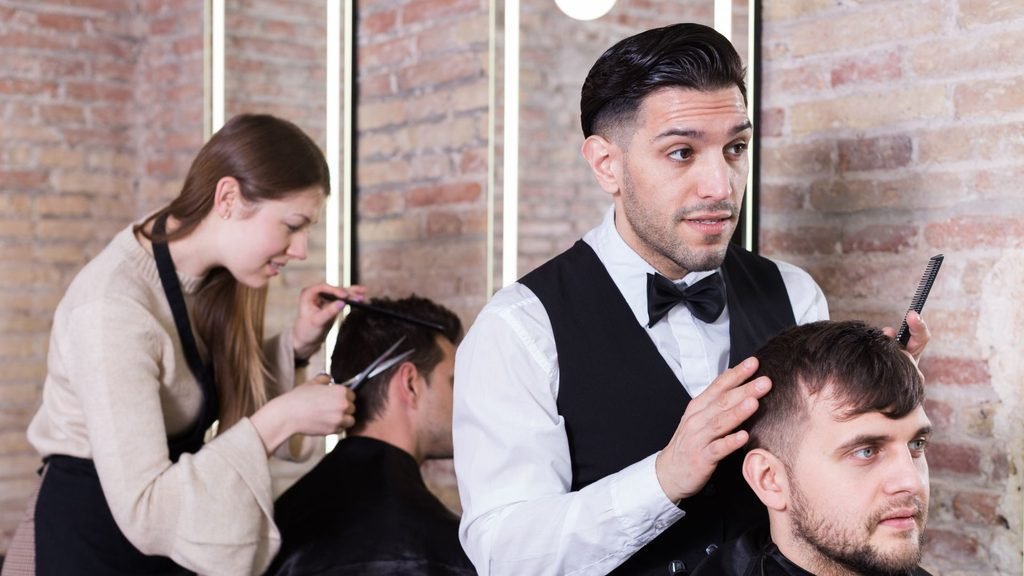
Dads and the no-fuss haircut
Fatherhood changes the morning routine fast. A five minute, wash and go cut isn’t laziness, it’s realism. Dads consistently gravitate toward crew cuts, buzz cuts, and low maintenance crops because mornings are already a juggling act of lunches, shoes, and school drop offs.
Teaching sons grooming habits — a generational perspective
The father son haircut trip is one of the oldest grooming rituals around, and it carries weight beyond the cut itself. It’s often a child’s first introduction to a barber chair, the buzz of clippers, and the idea that taking care of yourself is simply part of being a man. Many fathers book matching appointments as a bonding ritual rather than a scheduling convenience.
How family budgets affect grooming choices
With more mouths to feed, discretionary grooming spend often tightens. Family men are more likely to space out visits, choose simpler cuts that grow out gracefully, or look for barbershops offering family bundle pricing.
| Life Stage | Common Priority | Typical Cut Choice |
| New fathers (0 to 2 years) | Speed and simplicity | Buzz cut, crew cut |
| Fathers of school-age kids | Budget balance | Low-fade, classic crop |
| Empty nesters | More flexibility, more style | Textured or longer styles |
A dad’s routine changes the math on haircuts, but so does the weather outside his front door, which is the next piece of the puzzle.
Climate, Geography, and the Environment Around You
Hot and humid climates — what works and what doesn’t
Humidity causes hair to swell and frizz as it absorbs moisture from the air, an effect well documented in cosmetic science literature on hair fiber hygroscopy. Shorter cuts and tighter fades resist this far better than longer, loosely styled hair that tends to puff or curl unpredictably.
Cold weather, dry air, and scalp health
Cold, dry air strips moisture from both hair and scalp, which can lead to flaking and brittleness. Men in colder climates often need more conditioning and gentler, less frequent washing during winter months to avoid over drying an already dehydrated scalp.
Urban vs. rural grooming habits and expectations
Urban environments tend to support more frequent visits, higher end barbershops, and faster moving trend adoption simply because of proximity and competition among shops. Rural areas often favor classic, durable cuts and less frequent visits due to travel distance and fewer specialty barbershop options nearby.
| Climate Type | Hair Challenge | Recommended Approach |
| Hot/Humid | Frizz, sweat buildup | Shorter, tighter fades |
| Cold/Dry | Scalp dryness, static | Added conditioning, moisture-rich products |
| Temperate | Minimal extremes | Greater styling flexibility |
Urban vs. Rural Grooming Comparison
Urban grooming culture favors frequent visits, trend forward cuts, and specialty barbershops within walking distance. Rural grooming culture favors durable, classic cuts and longer intervals between visits due to travel time. Choose the urban approach if you have easy access to multiple shops; choose the rural approach if practicality and infrequent upkeep matter more to you.
Climate sets the outdoor conditions your hair has to survive. Your actual hair type determines how it survives them, which brings us to biology.
Hair Type, Texture, and Your DNA Are Part of Your Lifestyle Too
The hair type spectrum — from bone straight to tightly coiled
Hair typing systems, most commonly the Andre Walker system used throughout the beauty industry, classify hair from Type 1 (straight) through Type 4 (tightly coiled), with subcategories for texture and density. Each type behaves differently under humidity, product, and cutting technique.
| Hair Type | General Behavior | Best-Suited Cuts |
| Type 1 (Straight) | Falls flat, less volume | Textured crops, fringe styles |
| Type 2 (Wavy) | Moderate volume, some frizz | Medium-length layered cuts |
| Type 3 (Curly) | High volume, defined curls | Curl-friendly fades, afros |
| Type 4 (Coily) | Dense, shrinkage, high texture | Tapered afros, twists, fades with length on top |
Density, thickness, and growth patterns — working with what you have
Density refers to how many individual strands occupy your scalp, while thickness describes the width of each strand. A dense head of thin hair can look just as full as a sparse head of thick hair, which is why two men with the “same” cut on paper can look completely different in the chair. Growth patterns, cowlicks, whorls, and stubborn hairlines, dictate how a cut will fall once it grows past the two week mark.
How ethnicity and cultural background influence haircut traditions
Hair texture varies significantly across ethnic backgrounds, and so do the grooming traditions built around that texture. Tapered afros and fades designed specifically for coily hair require different clipper techniques and guard sizes than the tapers used on straight or wavy hair. A barber who specializes in textured hair is worth seeking out specifically if Type 3 or Type 4 hair is what you’re working with.
When your hair fights your lifestyle — and how to find the middle ground
Sometimes the cut you want and the hair you have are in direct conflict. Fine, straight hair won’t hold the volume of a pompadour without serious product investment. Thick, coily hair won’t lie flat without heat or chemical straightening. The honest move is to adjust the goal, not force the hair. A skilled barber will tell you this upfront instead of promising a result your biology can’t deliver.
Hair type sets the rules biology hands you. Face and body shape set the proportions you’re working within, which is the next layer of the decision.
Face Shape, Head Shape, and Body Type Still Matter
The classic face shape guide, updated for real men
Oval, round, square, rectangular, diamond, and heart shaped faces each pair naturally with different cut proportions. Round faces generally benefit from added height on top to elongate the face. Square, angular jawlines can handle sharper, more geometric fades that echo the bone structure. Long, rectangular faces often look more balanced with shorter heights and fuller sides to add width.
| Face Shape | Goal | Flattering Cut Features |
| Round | Add length | Height on top, tapered sides |
| Square | Complement angles | Sharp, geometric fades |
| Long | Add width | Shorter top, fuller sides |
| Oval | Most flexible | Nearly any style works |
| Diamond | Soften cheekbones | Textured fringe, side-swept styles |
How height and build should influence proportional haircut choices
A taller, broader man can carry more volume and height on top without looking out of proportion. A shorter or slighter build often looks more balanced with tighter, closer cropped sides and less overall bulk up top. It’s the same logic a tailor uses on a suit: proportion matters more than any single style rule.
Scalp conditions, receding hairlines, and making smart adjustments
A receding hairline doesn’t have to dictate shorter hair forever, but it does change the strategy. Styles that create a soft, textured front hairline tend to disguise recession far better than a hard, straight line that draws attention to where the hair has pulled back. Scalp conditions like psoriasis or eczema may also require a barber who’s gentle with tension and product choice.
Your face and build shape how a cut looks once it’s finished. Your calendar shapes how long it keeps looking that way, which is where we turn next.
Age, Life Stage, and the Haircuts That Grow With You
Teens and early twenties — experimentation and identity
Younger guys tend to treat haircuts as an identity lab, trying bold fades, longer textured styles, or color without much hesitation. There’s less professional pressure and more social experimentation happening, and that’s a healthy part of figuring out personal style.
The thirties pivot — when style meets responsibility
Somewhere in the thirties, careers solidify, families start, and the haircut calculus shifts toward something more durable and professional. Men in this stage often trade high maintenance trend pieces for versatile, classic cuts that work across more contexts with less daily effort.
Forties and fifties — owning the distinguished look
As hair starts to thin or grey, the smartest move is usually working with the change rather than against it. Shorter, textured cuts tend to disguise thinning more effectively than longer styles that expose scalp through sparse strands. Grey hair paired with a sharp, well maintained cut consistently reads as distinguished rather than aged.
Fathers and sons — passing down the barbershop tradition
The barbershop chair is often one of the few spaces where fathers and sons sit side by side in near silence and still feel connected. That ritual, the smell of talc, the buzz of clippers, the hot towel at the end, gets passed down the same way a favorite tool or a family recipe does.
Age changes the cut you want. Budget often decides whether you can keep it up, which is the next honest conversation.
Budget, Frequency, and the True Cost of Your Haircut Choice
How often should you actually be getting cut?
Most men need a trim every three to six weeks depending on the style and how fast their hair grows. Shorter, cleaner cuts like fades need more frequent visits to stay sharp, while longer, textured styles can stretch further between appointments.
Comparing the real cost of different haircut styles over a year
| Cut Style | Visits Per Year | Avg. Cost Per Visit | Estimated Annual Cost |
| Skin fade | 17 to 18 | $35 | $595 to $630 |
| Classic taper | 13 | $30 | $390 |
| Textured crop | 9 to 10 | $35 | $315 to $350 |
| Longer styled cut | 6 to 8 | $40 | $240 to $320 |
The hidden costs — products, tools, and upkeep at home
Beyond the chair, there’s the pomade, the sea salt spray, the trimmer for touch ups between visits, and the occasional at-home clipper kit that saves a trip but rarely matches a barber’s finish. High maintenance cuts often carry an invisible second price tag in product spend alone.
Value vs. price — what a quality cut is really worth
The cheapest cut isn’t always the best value if it needs fixing two weeks later or doesn’t hold its shape. A skilled barber who gets it right the first time, and who tailors the cut to your actual routine, saves you money in the long run even at a higher price per visit.
Money and frequency are only half the equation though. Even a well budgeted cut can go wrong if you can’t communicate what you want, which brings us to one of the most common failure points in the whole process.
The Reference Photo Haircut — Using Inspiration Without Wasting the Barber’s Time
Why reference photos work and why they sometimes backfire
A photo removes guesswork and gives your barber a visual target, which is genuinely useful. The backfire happens when the photo shows hair type, face shape, or density completely different from your own, setting expectations that your actual head of hair simply can’t meet.
How to find and use a Reference Photo Haircut effectively
Look for reference images of men with similar hair texture and a similar face shape to your own, not just a celebrity you admire. Save two or three angles if possible, front, side, and back, so your barber can see the full shape rather than guessing at the parts the photo doesn’t show.
The gap between inspiration and reality — hair type, face shape, and honesty
A Reference Photo Haircut works best as a conversation starter, not a contract. Tell your barber plainly: “I like this shape, but I know my hair is thinner, what’s realistic?” That honesty gets you a far better result than silently hoping the photo translates one to one.
Photos handle the “what.” The seasons handle the “when,” and your hair needs a different plan depending on the time of year.
Seasonal Lifestyle Changes and How Your Hair Should Respond
Summer cuts — heat, humidity, and the practical case for going shorter
Heat and sweat make longer styles harder to maintain through the summer months. Shorter fades and crops shed heat better, dry faster after a swim, and simply require less daily effort when the temperature climbs.
Winter hair — growth cycles, dry scalp, and styling in the cold
Cold air and indoor heating both pull moisture from hair and scalp, which is why winter is often the season to ease up on washing frequency and lean into richer conditioning products. Some men also use the cooler months to grow out length they’ll trim back down for summer.
How climate and geography shape regional haircut trends
Coastal cities with high humidity tend to favor shorter, low maintenance fades across the board, while drier inland regions see more flexibility for longer, styled looks. Regional barbershop trends often track climate more closely than they track national fashion cycles.
Seasons are predictable. Mistakes, unfortunately, are not, and a few show up in nearly every barbershop on a weekly basis.
Common Mistakes Men Make When Choosing a Haircut for Their Lifestyle
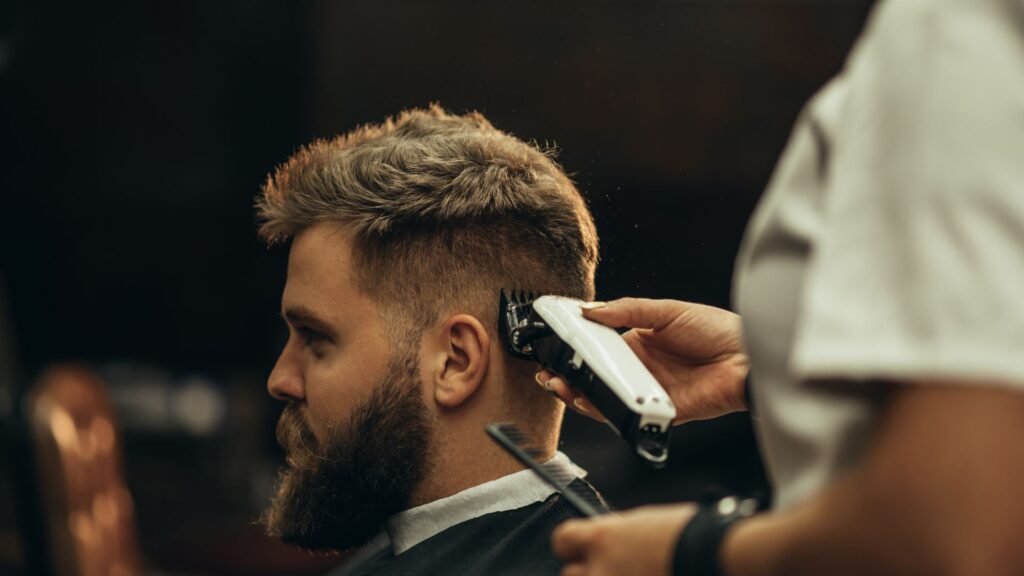
Copying a celebrity cut without accounting for lifestyle differences
A celebrity’s cut usually comes with a stylist on call and zero real-world maintenance demands. Copying the look without copying the upkeep routine behind it is where most disappointment starts.
Ignoring maintenance requirements until it’s too late
A high maintenance cut looks great for exactly as long as you’re willing to maintain it. Skip two or three weeks and even the sharpest fade starts to look like neglect rather than style.
Letting someone else decide — partners, barbers, habits
A cut chosen entirely to please someone else, or chosen purely out of habit because “that’s what I’ve always gotten,” rarely accounts for how your actual life has changed. It’s worth occasionally asking whether the cut still fits the man sitting in the chair.
Sticking with the same cut for 10 years out of comfort
Comfort isn’t a bad reason to keep a cut, but it’s worth distinguishing comfort from inertia. A decade of the same style might mean you found something that truly works, or it might mean you never stopped to ask if something better exists for where you are now.
Avoiding these mistakes gets a lot easier once you know how to actually talk to the person holding the clippers.
How to Have the Right Conversation With Your Barber
What to say when you sit down in the chair
Start with your lifestyle, not just the style. “I work in an office, I train four times a week, and I have about five minutes in the morning” tells your barber more than any single word describing the cut itself.
The information a great barber near me needs from you
Searching “barber near me” gets you a list of names, but the right fit comes from the details you hand over once you’re in the chair: your job, your activity level, your hair type, and how much daily effort you’re honestly willing to put in.
How to describe what you want without using the wrong words
Terms like “not too short” or “a little shorter on the sides” mean different things to different people. Use guard numbers, reference points on your own head, or photos to close that gap in interpretation.
When to trust the barber’s professional recommendation
If a barber pushes back on a request, it’s usually because your hair type or face shape makes it impractical, not because they’re ignoring you. A barber with years in the chair has seen your exact situation hundreds of times before.
Communication gets you the right cut in theory. Matching that cut to an actual trending style that fits your life is the next practical step.
Trending Haircuts Mapped to Specific Lifestyles
The fade family — which fade fits which lifestyle
Skin fades suit high activity, high maintenance lifestyles with frequent barbershop visits. Low fades suit professional settings that want a subtler transition. Mid fades split the difference and work well for most everyday routines.
Textured crops, quiffs, and modern classics — who are they really for?
Textured crops suit men with moderate styling time and Type 1 or Type 2 hair. Quiffs need daily product and a few minutes with a blow dryer, making them a better fit for lower activity, higher grooming time lifestyles.
Longer styles and man buns — lifestyle requirements you didn’t know existed
Longer styles demand patience through the awkward growing out phase and consistent at home maintenance between barbershop visits. They work best for men with flexible professional dress codes and lower daily physical activity.
Buzz cuts and skin fades — minimal effort, maximum lifestyle fit
For maximum activity, minimum styling time, and the lowest at home maintenance, buzz cuts remain the most practical option on the entire spectrum of men’s haircuts.
| Style | Daily Styling Time | Best Fit Lifestyle |
| Skin fade | 2 to 5 minutes | Active, social, image-conscious |
| Low fade | 2 to 3 minutes | Corporate, professional |
| Textured crop | 5 to 8 minutes | Moderate activity, creative work |
| Quiff | 8 to 10 minutes | Low activity, style-focused |
| Buzz cut | Under 1 minute | High activity, minimal-fuss |
Knowing the trends is useful. Turning that knowledge into a plan that actually fits your week is the real finish line.
Building Your Personal Haircut Blueprint — A Practical Action Plan
The lifestyle audit — 10 questions to ask yourself before your next cut
- What does my job require in terms of appearance?
- How many days a week am I sweating through a workout?
- How much time do I realistically spend on hair each morning?
- What’s my hair type and how does it behave in humidity?
- What’s my face shape and build?
- How often do I go out socially in a given month?
- Do I have kids whose routines affect my mornings?
- What climate do I live in, and does it change seasonally?
- What’s my realistic grooming budget per year?
- What cut have I been putting off trying out of habit alone?
Matching your answers to the right cut category
Once you’ve answered honestly, group your answers into three buckets: low maintenance, moderate maintenance, and high maintenance. Most men land somewhere in the moderate bucket, which still leaves plenty of room for personal style within a practical framework.
Creating a maintenance schedule that actually fits your life
Book your next three appointments based on your style’s ideal frequency rather than waiting until the cut looks grown out. A fade needs that three week rhythm to stay sharp; a textured crop can comfortably stretch to five or six.
How to evolve your haircut as your lifestyle changes
Revisit your lifestyle audit roughly once a year, or any time something major shifts: a new job, a new baby, a big move. The goal isn’t to chase a new look constantly, it’s to make sure the one you have still fits the life you’re actually living.
Frequently Asked Questions
How often should I get a haircut if I work out regularly?
Men who train five or more days a week typically need a trim every two to three weeks, since sweat and tight hat or helmet contact tend to flatten and distort shorter, structured styles faster than a low activity routine would.
What’s the best haircut for a busy dad with no time in the morning?
A buzz cut or classic crew cut is usually the best fit, since both require no daily styling and still look intentional, even when your mornings are consumed by lunches, shoes, and school drop offs.
Can I bring a photo of a celebrity’s haircut to my barber?
Yes, but choose a reference based on similar hair type and face shape rather than fame alone. A Reference Photo Haircut works best as a starting point for conversation, not a guaranteed outcome, especially if your hair texture differs significantly from the person in the photo.
How do I find a good barber near me if I just moved to a new city?
Start by searching “barber near me” and checking recent reviews that specifically mention your hair type or the style you’re after, then book a simple trim first before committing to a complex cut so you can judge their technique with low stakes.
Does climate really affect what haircut I should get?
Yes. Humid climates cause hair to swell and frizz, which favors shorter, tighter styles, while colder, drier climates can lead to scalp dryness that calls for gentler washing and richer conditioning, regardless of the cut itself.
How much should I expect to spend on haircuts per year?
Depending on style and visit frequency, annual costs typically range from around $240 for a longer, low frequency style to over $600 for a skin fade requiring visits every two to three weeks.
What’s the biggest mistake men make when choosing a new haircut?
Copying a look without accounting for their own hair type, face shape, or realistic daily maintenance time is the most common misstep, often leading to disappointment that has nothing to do with the barber’s skill.
Should my haircut change as I get older?
Generally yes. Thinning hair and receding hairlines usually respond better to shorter, textured styles than to longer looks that expose scalp, and many men find that a cut adjustment in their forties or fifties reads as more polished than clinging to a style from their twenties.
Is it worth paying more for a specialist barber if I have curly or coily hair?
Often, yes. Textured hair requires different clipper techniques and cutting angles than straight or wavy hair, and a barber experienced with Type 3 and Type 4 hair is more likely to deliver a shape that holds up as it grows out.
Conclusion
There’s no single “best” haircut in any universal sense, only the one that fits the life you’re actually living this year, this job, this routine. The right cut respects your hair type, your schedule, your climate, and your budget all at once, which is exactly why the same style can be perfect for one man and a daily headache for another.Every trip to the chair is a small chance to check in: has your job changed, has your routine shifted, is the cut you’ve worn for years still serving the man you are now. Talk honestly with your barber, bring your real schedule instead of just a photo, and let the cut follow your life rather than the other way around.