

Daily combing trains your hair’s cuticle and growth pattern to settle in a consistent direction over time, a process barbers call hair memory. The right comb, used at the right frequency and on the right texture, distributes natural oils, reduces frizz, and reinforces the shape of your haircut. Comb wrong, or not at all, and your hair fights you every morning.
Most guys treat the comb like an afterthought, something you grab out of habit, not out of understanding. But ask any barber who has spent twenty years behind the chair, and they will tell you the comb is doing more work than the clippers ever get credit for. It shapes how your hair falls, how it holds product, and how it ages between visits to the chair.
This isn’t about vanity. It’s about mechanics. Hair is a living structure with memory, texture, and chemistry, and the comb is the tool that talks to all three. Understanding that conversation is the difference between hair that cooperates and hair that looks like it lost a fight with a pillow.
In this guide, we’re going to walk through the science, the technique, and the daily habits that turn an ordinary comb into one of the most underrated tools in your grooming kit. Grab a seat. Consider this your consultation before the chair.
The Comb: A Tool You’ve Been Underestimating
Walk into any barbershop and you’ll see combs lined up next to clippers, scissors, and talc like they belong in the same league. They do. A comb isn’t a backup plan for bad hair days. It’s a precision tool, and treating it like one changes everything about how your hair looks and behaves.
Why most men treat combing as an afterthought
For a lot of guys, combing happens once, maybe twice a day, and only as a quick fix. You run it through after a shower, maybe again before heading out the door, and that’s the extent of the relationship. The problem is that hair responds to repetition, not occasional effort. A comb used sporadically sends mixed signals to your strands, and mixed signals mean unpredictable results. Barbers see this constantly: a client with a great cut whose hair still looks messy by 2 p.m. because the comb never became part of the daily rhythm.
What daily combing actually does to your hair
Combing isn’t just cosmetic. Each pass realigns the hair shaft, smooths the cuticle layer, and helps distribute the natural oils your scalp produces. Done consistently, this builds a kind of muscle memory into your hair, training it to fall in a specific direction. Skip it, and your hair reverts to whatever pattern your cowlicks and growth direction prefer, which is rarely the pattern you want.
The difference between combing and brushing
Combing and brushing are not interchangeable, even though plenty of men use the terms loosely. A comb has individual teeth that separate strands cleanly, which makes it better for detangling, defining a part, and controlling direction with precision. A brush covers more surface area and is better suited for distributing product or adding volume at the root. If you want sharp lines and deliberate shape, reach for the comb. If you want lift and texture, the brush takes over. Most well-rounded routines use both, but for the purposes of training your hair’s direction, the comb is doing the heavy lifting.
Understanding why the comb matters sets the stage for the next question: what exactly are you combing? Hair isn’t just hair, and its structure determines how it responds to every pass of the teeth.
What Your Hair Is Actually Made Of (And Why It Matters)
Before you can understand how combing shapes hair, you need to understand what you’re working with. Hair isn’t a single, uniform material. It’s a layered structure, and each layer reacts differently to friction, moisture, and tension.
The anatomy of a single hair strand
Each strand of hair is built in three layers: the medulla at the core, the cortex surrounding it, and the cuticle on the outside. The cortex gives hair its strength and elasticity, while the cuticle acts like roof shingles, overlapping scales that protect the inner structure. When those shingles lie flat, hair looks smooth and reflects light evenly. When they’re lifted or damaged, hair looks dull, tangles easily, and holds a style poorly. Combing interacts primarily with that outer cuticle layer, which is why technique matters so much.
The cuticle layer and how it responds to combing
Gentle, consistent combing smooths the cuticle scales down, creating a sleeker surface that reflects light and resists frizz. Aggressive or careless combing, especially on dry or tangled hair, can lift or chip those scales, leading to breakage and a rougher texture over time. This is the biological reason why barbers are so particular about comb quality and technique. A cheap, poorly finished comb with rough seams on its teeth can snag the cuticle with every pass, undoing the benefit you’re trying to create.
Hair texture, density, and how they affect combing behavior
Not all hair takes to combing the same way. Fine, straight hair combs easily but can go flat or oily faster because sebum travels the shaft quickly. Thick, curly, or coily hair resists the comb more and requires wider teeth and more patience to avoid snapping strands. Density, meaning how many hairs grow per square inch of scalp, also affects how much product and how many passes are needed to achieve even coverage. Knowing your texture and density isn’t just barbershop trivia, it’s the foundation for building a combing routine that actually works for you instead of against you.
Once you understand the raw material you’re working with, the next logical question is how repetition changes it over time. That brings us to one of the most fascinating concepts in grooming: hair memory.
The Science Behind Hair Memory and Direction
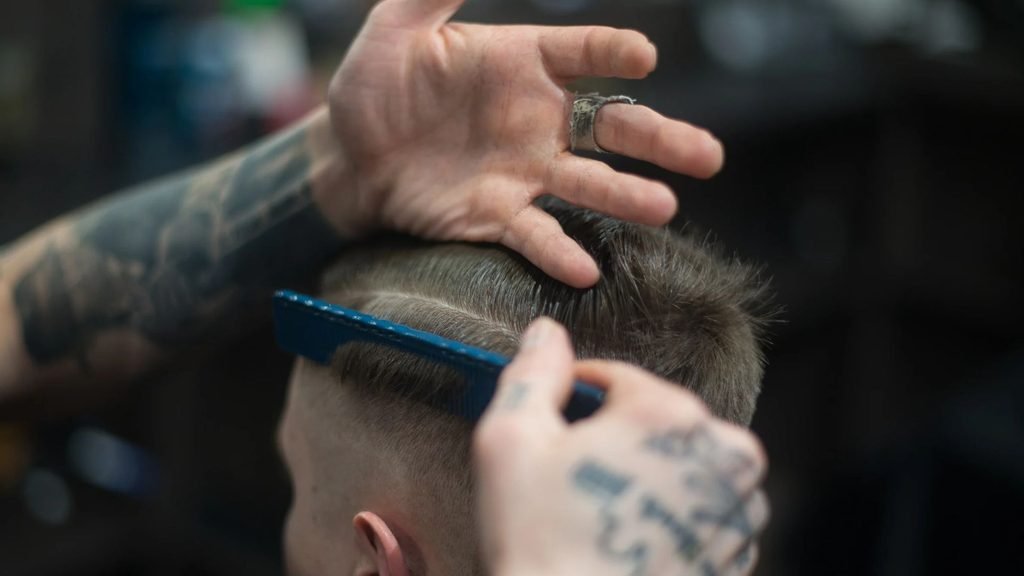
Ask a barber why your hair always seems to fall the same stubborn way no matter what you do, and they’ll usually mention one thing: memory. Hair, much like muscle, adapts to repeated patterns of movement and pressure.
What is hair memory?
Hair memory refers to the tendency of hair to return to a shape or direction it has been trained into over time, whether through heat styling, consistent combing, or natural growth patterns. It’s the reason a cowlick keeps popping up in the same spot, and it’s also the reason a side part, combed the same way every day for months, eventually starts to fall that way on its own, even right after a shower. The hair shaft and the follicle beneath it adjust to repeated mechanical input, locking in a learned direction.
How repeated combing trains your hair to sit a certain way
Every time you comb your hair in a specific direction, you’re reinforcing a pattern. Do it enough times, in the same way, and the hair begins to “remember” that direction even when it’s wet or freshly washed. This is why barbers often tell new clients that the first two to three weeks after a fresh cut are critical. During that window, consistent combing in the intended direction helps new growth and existing hair settle into the shape of the cut, rather than fighting it every single day.
The role of sebum and natural oils in holding direction
Sebum, the natural oil your scalp produces, plays a quiet but important role in this process. It coats the hair shaft, adding weight and a slight tackiness that helps strands hold their combed position longer. Combing distributes sebum from root to tip instead of letting it pool at the scalp, which not only helps with direction but also prevents the greasy-roots, dry-ends problem so many men struggle with. According to a 2021 study published in the International Journal of Trichology, regular mechanical grooming such as combing improves sebum distribution and can reduce visible oiliness at the scalp within two weeks of consistent practice.
Hair memory explains why consistency beats intensity, which naturally leads to the next question every man asks: how often should you actually be combing?
Combing Frequency: How Often Is the Right Amount?
There’s a sweet spot between neglect and obsession, and most men land on one extreme or the other. Finding your rhythm is less about rules and more about reading your own hair’s response.
What happens when you comb too little
Under-combing leaves your hair to its own devices, and hair left alone tends to tangle, trap excess product and sebum at the scalp, and lose shape faster throughout the day. Men who skip combing often notice their part disappearing by midday or their hair “puffing up” unevenly, because nothing is reinforcing the direction set that morning. Infrequent combing also means infrequent redistribution of natural oils, which can lead to a scalp that looks greasy at the roots while the ends stay dry and brittle.
What happens when you comb too much
On the flip side, obsessive combing, especially with a fine-tooth comb on dry hair, creates friction that can lift the cuticle and cause breakage. Overcombing can also strip too much sebum from the scalp if you’re constantly pulling oil down to the ends, leaving the roots dry and more prone to irritation. There’s also a subtler issue: hair that’s combed excessively throughout the day never gets a chance to settle, which actually works against building the kind of memory we talked about earlier.
Finding the right daily rhythm for your hair type
Most men do well with two to three combing sessions a day: once after showering, once before leaving the house if time has passed, and once in the evening to reset before bed. Fine or straight hair might need a touch-up more often since it tends to shift easily, while thick or curly hair often benefits from fewer, more deliberate combing sessions paired with the right product. The goal isn’t a fixed number, it’s consistency at a frequency your specific hair type responds to.
Frequency is only half the equation. The other half is technique, and that depends heavily on the texture you’re working with. Let’s break down how different hair types demand different approaches.
Hair Type vs. Combing Technique: One Size Does Not Fit All
A comb that works beautifully on straight hair can be a disaster on tightly coiled hair, and vice versa. Technique has to match texture, or you’re fighting biology instead of working with it.
Straight hair and combing direction
Straight hair is the most forgiving when it comes to combing, but it’s also the most prone to looking flat if you’re not deliberate about direction. Combing straight hair works best when you start at the roots and establish your part first, then work the rest of the hair to follow that line. Because straight hair has the least natural grip, product often needs to do some of the work that texture would otherwise provide.
Wavy and curly hair: working with the pattern
Wavy and curly hair should generally be combed when damp, with a wide-tooth comb, moving in the direction the curl naturally wants to fall rather than forcing it flat. Combing dry curly hair with a fine-tooth comb is one of the fastest ways to create frizz and break the curl pattern apart. The goal here isn’t to erase the texture, it’s to guide it.
Coily and tightly textured hair: the special rules
Coily and tightly coiled hair requires the most patience and the widest teeth available. Detangling should always start at the ends and work upward in small sections, never starting at the root and pulling down through knots. Many barbers recommend combing coily hair only when it’s saturated with conditioner or a detangling product, since dry combing on this texture carries the highest risk of breakage.
Hair type vs. combing tool comparison table
| Hair Type | Best Comb | Best Timing | Key Risk to Avoid |
| Straight | Fine or medium tooth | Dry or slightly damp | Flattening without product |
| Wavy | Wide tooth | Damp, with conditioner | Frizz from dry combing |
| Curly | Wide tooth or wide-tooth pick | Damp, saturated with product | Disrupting curl pattern |
| Coily | Extra wide tooth or pick | Wet, conditioner-coated | Breakage from root-first combing |
Technique is only as good as the tool behind it, which brings us to a question every man eventually asks his barber: what comb should I actually be using?
The Right Comb for the Job

Not all combs are created equal, and the differences go beyond price. Tooth spacing, material, and even the finish on the teeth can change how your hair responds to every single pass.
Wide-tooth vs. fine-tooth combs
Wide-tooth combs are built for detangling and working with thicker, curlier, or wetter hair, since the larger gaps reduce tension and breakage. Fine-tooth combs are better suited to fine, straight, or short hair where precision matters more than gentle separation, such as creating a crisp part or slicking hair into place. Using a fine-tooth comb on thick, curly hair is a bit like trying to rake leaves with a fork: technically possible, but needlessly difficult.
Materials matter: plastic, wood, horn, and metal
Cheap plastic combs often have seams left over from the molding process, and those tiny ridges can snag and damage the cuticle with repeated use. Wood and horn combs are naturally smoother, and many also carry a slight static-reducing property that keeps flyaways in check. Metal combs offer durability and are often used by barbers for precision work, but they can be harsher on fine or damaged hair if used without care. Investing in a well-finished comb is a small cost compared to the cumulative damage a poor-quality one can cause over months of daily use.
When to use a comb vs. a pick vs. a brush
A comb is your go-to for defined parts, sleek direction, and daily maintenance. A pick, with its long, widely spaced tines, is built for lifting volume in curly or coily hair without disturbing the curl pattern. A brush distributes product evenly and adds smoothness over larger sections but offers less precision for detail work. Think of them as three different clubs in a golf bag: each has its moment, and knowing which one to pull out is half the skill.
Choosing the right tool sets you up for success, but there’s one more variable that changes the entire game: whether your hair is wet or dry when you comb it.
Wet vs. Dry Combing: The Debate Settled
Few grooming debates generate as much confusion as this one. The answer isn’t universal, but it’s not a mystery either once you understand what’s happening to the hair shaft in each state.
Why combing wet hair carries more risk
Wet hair is more elastic and more fragile than dry hair because water temporarily weakens the hydrogen bonds that give hair its structure. Pulling a comb through wet hair without care, or without a detangling product, significantly increases the risk of breakage, particularly for curly and coily textures. That said, wet combing isn’t inherently bad, it just demands a gentler hand and the right preparation.
The case for dry combing in a daily routine
Dry combing, when hair is in its strongest state, is generally safer for quick daily maintenance, touch-ups, and reinforcing direction throughout the day. It’s also the better choice for fine-tuning a part or adding sharp definition before you leave the house. The tradeoff is that dry combing on tangled or textured hair without enough slip can cause frizz if you’re too aggressive.
How to comb wet hair without causing damage
If you’re combing wet hair, always start with a leave-in conditioner or detangling spray to add slip and reduce friction. Use a wide-tooth comb, begin at the ends, and work upward in small sections rather than dragging the comb from root to tip in one motion. Let hair air-dry slightly before switching to a finer comb if you need more precision for styling.
Wet combing vs. dry combing, side by side: wet combing is better for deep detangling and working in product evenly, while dry combing is better for daily shaping, precision, and low-risk touch-ups. Choose wet combing if detangling and product distribution matter more than speed. Choose dry combing if you’re reinforcing a style that’s already set and want minimal risk of breakage.
Technique and timing matter enormously, but none of it works in isolation from the cut itself. Your haircut sets the boundaries that combing works within.
How Your Haircut Shape Affects How Combing Works
A comb can only do so much if the underlying structure isn’t built to support it. This is where the relationship between your barber’s scissors and your daily routine becomes obvious.
Why the cut determines the comb’s ceiling
Every haircut has a built-in ceiling for what combing can achieve. A cut with too much weight left in the wrong places will resist combing no matter how skilled the technique, while a well-structured cut practically combs itself. This is why two men with similar hair texture can have wildly different daily experiences depending on how their last haircut was shaped.
Haircut Balance and how structure influences direction
Barbers often talk about Haircut Balance, the idea that length, weight, and texture need to work together across the whole head rather than being treated as separate zones. When Haircut Balance is off, say, too much length on top with not enough graduation underneath, no amount of combing will make the hair sit the way you want. Get that balance right, and combing becomes a tool for refinement rather than damage control.
Asking your barber the right questions
The next time you’re in the chair, ask your barber how they’re accounting for your natural growth pattern and which direction they’re building the cut to fall. A good barber will explain how the cut is designed to work with your daily combing routine, not against it. If you’ve been searching “haircut near me” and comparing options, this is one of the questions worth asking during a consultation, since it tells you a lot about how much thought a shop puts into results that last beyond the chair.
Once the cut and the comb are working in harmony, the next piece of the puzzle is building a routine that actually holds up day after day.
Building a Daily Combing Routine That Actually Sticks
Knowledge without routine doesn’t change anything. The men who get the best results from combing are the ones who’ve built it into predictable moments throughout their day.
Morning combing: setting the direction for the day
Morning combing, ideally right after any product application, sets the tone for everything that follows. This is the moment to establish your part, your direction, and your overall shape before you walk out the door. Rushing this step usually means fighting your hair for the rest of the day.
Post-shower protocol: the right timing and tools
Right after a shower is a critical window. Hair is at its most pliable, which makes it the ideal time to detangle and apply product evenly. Use a wide-tooth comb first to remove knots gently, then switch to a finer comb if you’re building a precise style once product is in.
Evening combing: why it matters more than you think
Evening combing is the step most men skip entirely, but it matters more than it gets credit for. A quick comb-through before bed redistributes oils that accumulated throughout the day, reduces tangling overnight, and helps reinforce the direction you’re training your hair to hold long-term. Think of it as reps at the end of the day that compound over weeks.
Routine is powerful, but it works best alongside the right products. Let’s look at how product choice interacts with your comb.
Products That Work With (or Against) Your Combing Routine
The best comb in the world can’t overcome the wrong product, and the right product can make an average comb perform like a precision instrument. The relationship between the two deserves more attention than it usually gets.
Pomades, clays, and creams: what each does for comb direction
Pomades, especially water-based ones, offer a slick finish that makes combing smoother and holds direction with a sleek, defined look. Clays provide more texture and a matte finish, which works well for tousled styles but can make fine-tooth combing harder because of their thicker consistency. Creams sit in between, offering light hold and natural movement, ideal for guys who comb frequently throughout the day and want a style that’s easy to reshape.
How to apply product and then comb for maximum hold
Apply product to damp, towel-dried hair rather than soaking wet hair, since too much moisture dilutes the product’s hold. Work it through with your fingers first to distribute evenly, then follow with a comb to refine the direction and smooth out any unevenness. Combing after product application, rather than before, ensures the comb is shaping hair that’s already primed to hold that shape.
Product buildup and how it distorts hair behavior over time
Using too much product, or not washing it out thoroughly, leads to buildup that coats the hair shaft and interferes with how sebum and moisture move through it. Over time, this buildup can make hair look dull, feel stiff, and resist the same combing direction that used to work effortlessly. A clarifying shampoo once a week is often enough to reset things and keep your combing routine effective.
Even with the right products and routine, there are a handful of habits that quietly undo all that good work. Let’s call them out directly.
Common Combing Mistakes That Are Ruining Your Style
Some of the most persistent styling frustrations come down to small, repeated mistakes rather than bad hair itself. Fixing these is often faster and cheaper than any product swap.
Starting from the root when you should start from the tip
Combing from root to tip through tangled hair drags knots downward, tightening them and increasing the risk of breakage. Always start detangling at the ends and work your way up in sections, especially on curly or coily textures where this mistake does the most damage.
Using the wrong comb for your hair type
A fine-tooth comb on thick or curly hair creates unnecessary resistance, snags, and frustration, while a wide-tooth comb on fine straight hair might not provide enough precision for sharp styling. Matching the comb to the texture, as outlined earlier, solves more styling problems than most men realize.
Ignoring your natural part and growth patterns
Every head has a natural part and a direction hair wants to grow, usually dictated by the whorl pattern at the crown. Fighting that pattern every day with a comb, instead of working with it, is a losing battle that leads to frustration and inconsistent results.
Combing against your haircut’s intended shape
If your barber built the cut to fall a certain way, combing against that direction every day undoes the structural work they put in. This is one of the fastest ways to make a great haircut look unintentional within a few weeks.
Fixing these mistakes isn’t just about appearance, it also has a real impact on the health of your scalp, which deserves its own conversation.
What Regular Combing Does for Your Scalp Health

Combing isn’t only about how your hair looks on the surface. Done right, it supports the health of the scalp underneath, which is where every strand actually begins.
Stimulating blood circulation through the scalp
The gentle pressure of combing against the scalp stimulates blood flow to hair follicles, which some trichologists suggest may support a healthier growth environment, though it’s not a substitute for proper nutrition or medical treatment where hair loss is a concern. It’s a small, almost meditative benefit that’s easy to overlook in a routine focused purely on style.
Distributing natural oils from root to tip
As mentioned earlier, combing moves sebum away from the scalp and down the length of the hair, which prevents an oily scalp while conditioning drier ends. This natural conditioning effect is one of the most underrated benefits of a consistent combing habit, especially for men who skip conditioner altogether.
Reducing buildup and keeping follicles clear
Regular combing helps loosen and remove flakes, product residue, and loose hair that might otherwise sit at the scalp and clog follicles. Over time, this can contribute to a cleaner, more comfortable scalp environment, particularly when paired with regular washing.
With the science, technique, and benefits covered, let’s answer the specific questions men ask most often about combing.
FAQ: Your Combing Questions, Answered
Does combing your hair every day make it grow faster?
Combing does not directly speed up hair growth, since growth rate is determined by follicle biology, genetics, and overall health. What combing does support is scalp circulation and oil distribution, which can create a healthier environment for the hair that’s already growing.
Can combing cause hair loss?
Normal, gentle combing does not cause hair loss, since healthy hair in the growth phase is firmly rooted. However, aggressive combing, especially on wet or tangled hair, can cause breakage that looks similar to loss, and repeated tension from harsh combing can contribute to strain on the follicle over time.
What is the best direction to comb your hair?
The best direction follows your natural growth pattern and the shape your barber built into your haircut, usually away from the crown’s whorl and toward your established part. Fighting this natural direction daily leads to more frizz and a harder time maintaining style.
Is it better to comb your hair wet or dry?
It depends on the goal: wet combing with a wide-tooth comb and a detangling product is better for working out knots and distributing product evenly, while dry combing is safer and more precise for daily touch-ups and reinforcing a style that’s already set.
How many times should you comb your hair in a day?
Most men benefit from combing two to three times a day, once after showering or applying product, once midday if needed, and once in the evening to redistribute oils and reduce overnight tangling. The right number depends on hair type, with fine hair often needing more frequent touch-ups than thick or curly hair.
Can combing fix a bad hair day?
Combing can improve a bad hair day by redistributing oils, redefining a part, and smoothing frizz, but it can’t fully correct a cut that’s structurally out of balance or hair that badly needs a wash. For a true reset, combing works best paired with a small amount of product and, if things are really off track, a trip back to the chair.
Does the type of comb really make a difference?
Yes, tooth spacing and material genuinely affect results, with wide-tooth combs better for thick or curly hair and detangling, fine-tooth combs better for precision and fine or straight hair, and smooth materials like wood or horn reducing cuticle damage compared to poorly finished plastic.
Understanding the questions is one thing, but putting the knowledge into action over a focused stretch of time is where real change happens. Here’s a simple plan to get there.
Your 7-Day Combing Reset Plan
Change doesn’t require a dramatic overhaul, just focused attention over a short, deliberate window. Here’s how to reset your combing habits in a week.
Days 1 to 2: audit your tools and habits
Start by checking your current comb for rough seams, missing teeth, or the wrong tooth spacing for your hair type. Pay attention to when and how often you’re currently combing, and note any moments you’re skipping entirely, like the evening routine most men ignore.
Days 3 to 5: build the new routine
Introduce morning, post-shower, and evening combing sessions, using the right comb and technique for your hair type as outlined throughout this guide. Focus on direction consistency, always combing with your natural growth pattern and haircut shape rather than against it.
Days 6 to 7: assess and adjust
By day six or seven, check how your hair is holding direction compared to where you started. Adjust frequency, product, or tool choice based on what you’re noticing, since the goal is a routine that fits your specific hair, not a generic checklist.
A week is enough to notice a shift, but the real payoff of consistent combing shows up over a much longer timeline.
The Long Game: What Months of Consistent Combing Can Do
Short-term results are encouraging, but the real transformation in how your hair sits happens gradually, through weeks and months of consistent, deliberate combing.
How hair direction shifts over weeks and months
As hair memory builds over time, strands increasingly fall into the trained direction even without active styling, meaning less daily effort for the same result. This is the long-term payoff of the discipline covered throughout this guide: a routine that eventually requires less correction because the hair itself has adapted.
When to visit your barber to reinforce the shape
As hair grows, the shape that supported your combing routine gradually shifts, which is why regular visits, typically every three to five weeks depending on your style, matter just as much as daily maintenance. A fresh haircut resets the structural foundation that your combing routine depends on to hold direction cleanly.
The bigger picture: grooming as self-respect
At the end of the day, a comb is a small, inexpensive tool, but the habit behind it says something larger about how a man carries himself. Taking a few extra minutes each day to comb with intention isn’t vanity, it’s a quiet form of discipline that shows up in how put-together you look and feel. That’s the same philosophy behind every great haircut: small, consistent choices, repeated with care, add up to something that lasts well beyond the chair.