
The Patch Nobody Mentions Until the Car Mirror
The Drive Home Moment
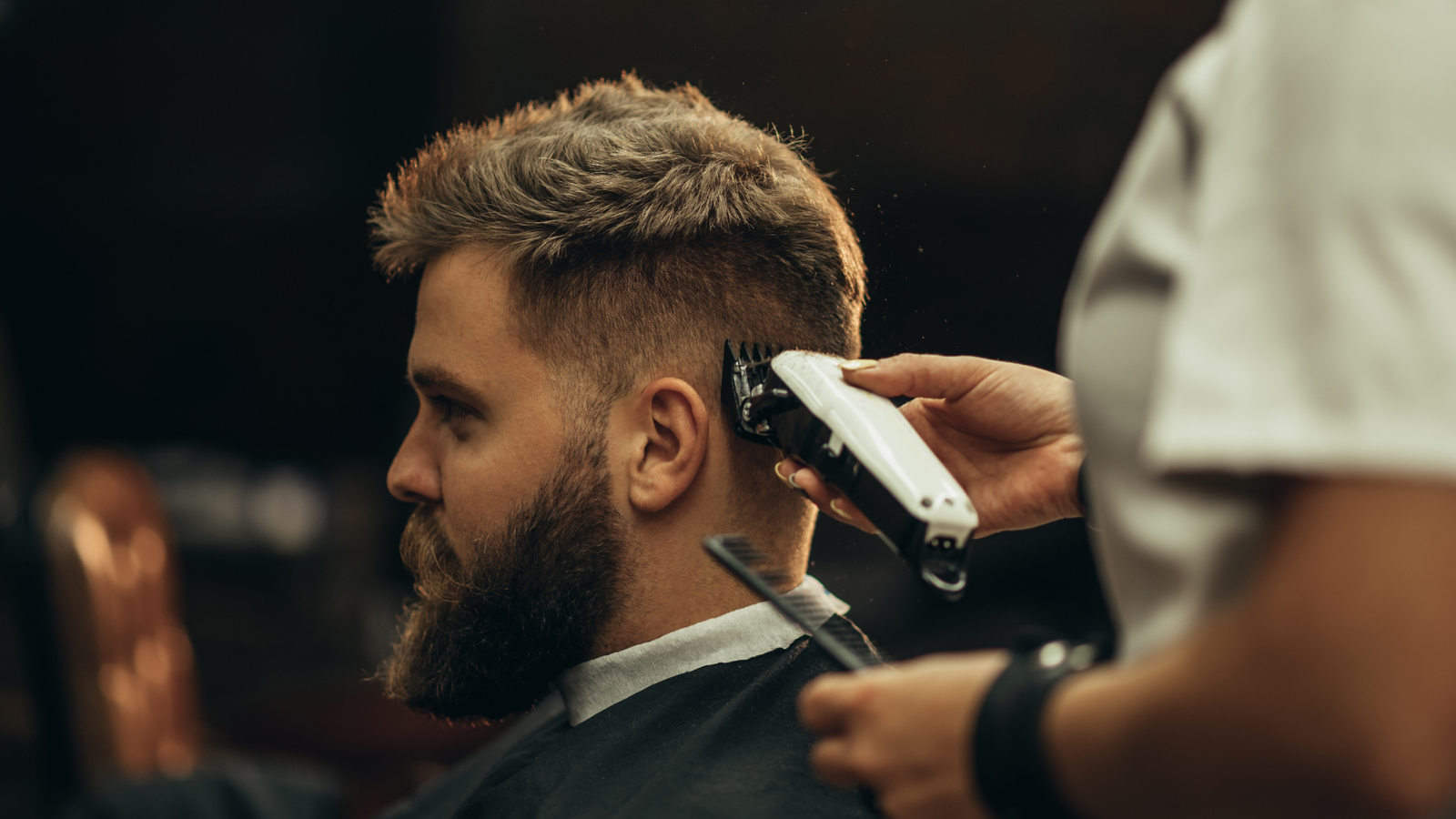
The cape comes off with a soft snap. I brush a cloud of talc across the back of your neck, spin the leather chair toward the mirror, and hand you the little mirror so you can see the back. You nod. It looks clean. You pay, shake hands, and walk out into the afternoon.
Then you sit down in the car, flip down the visor, and tilt your head toward the window.
That’s when you see it. A darker smudge above the left ear. A lighter band running around the side like a ring on a coffee table. Maybe a small spot near the crown that seems to catch the sun differently than everything around it.
I’ve had men call the shop twenty minutes after leaving, a little embarrassed, asking, “Is this supposed to be here?” And honestly, I’m glad when they call. It tells me they care about the details, and it gives us a chance to talk about something most men never get explained to them.
Dark and light patches in a fade are among the most common frustrations in men’s grooming. Perhaps the most surprising part is how many different things can cause them. Some are the barber’s doing. Some come from the clippers. Some come from your scalp, your hair color, the lighting in your bathroom, or simply the passage of a few days.
Shadows, Bands and Spots: Naming What You See
Before we talk about causes, it helps to name what you’re looking at. I’ve noticed that men often describe these patches in very different words, and each description points toward something slightly different.
| What You See | What Barbers Often Call It | Most Likely Causes |
| A horizontal dark line | A line, a step, or a shelf | Skipped length, guard change without blending |
| A lighter ring around the head | A bald band or a hole | Too much pressure, blade too short in one zone |
| A dark smudge in one spot | A shadow or a patch | Missed area, growth direction, dense hair |
| A light spot in one area | A thin spot or a gap | Low density, cowlick, scar, scalp condition |
| Uneven sides | Mismatched fade | Different angle or height on each side |
| Splotchy, cloudy look | A muddy blend | Dull blades, uneven passes, rushing |
Naming it matters. A line usually means the transition between two lengths wasn’t softened. A hole usually means a blade went too deep. A shadow might be your natural hair growing in a different direction. Each one asks a different question.
Why Fades Show Everything
A fade is built on contrast. Hair moves from skin or near skin at the bottom to longer length higher up, and the eye follows that gradient like it’s watching a sunset. When the gradient is smooth, it looks effortless. When even one small section breaks the pattern, the eye goes straight to it.
Think of it like a freshly painted wall in a room with a big window. On a cloudy day, you don’t notice the roller marks. When the afternoon sun hits it sideways, every missed stroke shows up. A fade is that wall. The short lengths leave nowhere for small errors or natural variations to hide.
That’s also why the same issue in a longer cut might go completely unnoticed. A quarter inch of difference in four inches of hair is hard to see. A quarter inch of difference in a sixteenth of an inch of hair is a whole different story.
To understand where the patches come from, it helps to first agree on what a good fade should look like.
How a Fade Is Supposed to Look
The Gradient Idea
A fade is a cut where the hair on the sides and back gets gradually shorter as it moves down toward the ears and neckline. The key word is gradually. There should be no sudden jumps in color or length, just a smooth transition from dark to light, like a photograph slowly developing.
That transition shows up as a change in tone. Longer hair looks darker because it covers more scalp and holds more pigment in view. Shorter hair looks lighter because more skin shows through. So when we talk about dark and light patches, we’re really talking about places where the tone doesn’t match the length the barber intended, or where length changes too suddenly.
A good fade has what I call a steady fall of light. If you ran your eyes from the top of the fade down to the neck, the brightness would increase evenly, step by step, without any bright islands or dark puddles along the way.
Guards, Levers and Blades Decoded
Every fade is built from a set of lengths. Here’s roughly how they line up, though every clipper brand varies slightly.
| Tool Setting | Approximate Length | What It Looks Like in a Fade |
| Foil shaver or razor | Skin | Bare, smooth, lightest tone |
| Zeroed trimmer | Very close to skin | Faint shadow, almost bald |
| Clipper, lever closed, no guard | About 1/32 inch | Light shadow |
| Clipper, lever open, no guard | About 1/16 inch | Slightly darker shadow |
| #0.5 guard | 1/16 inch | Soft gray tone |
| #1 guard | 1/8 inch | Scalp visible but covered |
| #1.5 guard | 3/16 inch | Medium tone |
| #2 guard | 1/4 inch | Darker, good coverage |
| #3 guard | 3/8 inch | Full color, little scalp |
| #4 guard | 1/2 inch | Solid, dark coverage |
The lever on the side of most clippers adjusts the blade by a tiny amount, often less than a millimeter. That tiny adjustment is where much of the blending magic happens. Barbers use half-steps and lever positions to create in-between lengths that soften every transition.
Low, Mid, High and Skin Fades
| Fade Type | Where the Shortest Length Ends | Patch Risk | Why |
| Low fade | Just above the ear and neckline | Lower | Small area of very short hair |
| Mid fade | Around the temple level | Moderate | More area to blend evenly |
| High fade | Near the top of the head | Higher | Large area of very short hair |
| Skin or bald fade | Down to bare skin | Highest | Every scalp detail shows |
| Taper fade | Only at sideburns and nape | Lowest | Very little exposed scalp |
| Shadow fade | Close but never to skin | Low to moderate | Hair always covers scalp |
Skin fade vs. shadow fade is perhaps the most important comparison in this whole guide. A skin fade takes the bottom down to bare skin. A shadow fade stops just short, leaving a faint haze of hair. The shadow fade forgives far more, because a thin layer of hair evens out the scalp’s natural variations in tone.
Now that we share the vocabulary, it’s worth looking back at how this style came to be.
A Short History of the Fade
Military Roots and the High and Tight
The fade, in its early form, grew out of military grooming. During World War II and the decades after, service members wore close-cropped sides with a little more length on top. The high and tight became a signature look, especially in the Marine Corps. It was practical, easy to inspect, and fast to cut.
Those early cuts weren’t about seamless blending. They were about speed and uniformity. A military barber might cut dozens of heads in a morning, and the sides were often taken down with little gradual transition. If you look at old photos closely, you can sometimes see the harsh lines where one length met another.
Black Barbershops and the Art of the Blend
The fade as we know it today, smooth and artistic, owes an enormous debt to Black barbershops. In the 1980s and early 1990s, barbers in cities like New York, Philadelphia, Chicago, and Atlanta turned the fade into a craft. The high-top fade became a cultural icon, worn by musicians, athletes, and kids on every block.
These barbers developed techniques that are still taught today: working the lever in small increments, flicking the clipper out of the hair to soften lines, and reading hair texture with a precision that took years to learn. The barbershop itself was the classroom. Younger barbers watched older ones, swept floors, and practiced on friends until their blends were clean.
I remember the first time I watched a master blend a fade on coily hair. He worked like a painter, tilting his clippers just slightly, checking the light from the window, stepping back, stepping in again. I noticed he spent more time looking than cutting. Perhaps that’s the real lesson of the fade.
From Clipper Lever to Foil Shaver
| Era | Milestone | What It Meant for Fades |
| Around 1919 to 1921 | Leo Wahl develops the electromagnetic clipper | Electric clippers reach barbershops |
| 1920s | Andis and Oster expand clipper lines | Faster short cuts become common |
| 1940s to 1950s | Military crew cuts and high and tights | Short sides become standard |
| 1980s | High-top fades rise in Black barbershops | Blending becomes an art form |
| 1990s | Fades spread across hip-hop and sports culture | Fades go mainstream |
| 2000s | Adjustable clippers with fine lever control | Smoother half-step blends |
| 2010s | Skin fades and foil shavers surge | Bald bottoms become popular |
| 2020s | Cordless tools, close-up social media photos | Every patch is under a microscope |
The tools changed, and the standards rose with them. A fade that looked excellent in 1995 might draw comments today, simply because phone cameras now zoom in on details nobody could see before.
History explains how we got here. Science explains why patches happen at all.
The Science of Why Short Hair Looks Dark or Light
Hair Color Against Skin Color
The tone you see in a fade comes from two layers: your hair and your scalp. Hair color comes from melanin, mainly eumelanin (brown and black) and pheomelanin (red and yellow). The more pigmented the hair, the darker it reads against the skin.
When hair and skin are very different in tone, every change in length shows clearly. When they’re similar, changes are subtle.
| Hair Color | Skin Tone | Contrast Level | How Patches Show |
| Black or dark brown | Fair | Very high | Every line and gap is visible |
| Black or dark brown | Medium | High | Lines show, gaps softer |
| Black or dark brown | Deep | Low to moderate | Blends more forgiving, edges still matter |
| Light brown | Fair | Moderate | Softer gradient |
| Blond or red | Fair | Low | Fade looks subtle, patches rarely obvious |
| Gray or white | Any | Low to variable | Fade can almost disappear |
I noticed early in my career that the same small mistake looked like a crater on one client and was almost invisible on the next. It wasn’t my hands that changed. It was the contrast.
Density: How Much Hair Covers the Scalp

Hair density varies from person to person and from one part of the head to another. According to the American Academy of Dermatology, the average scalp holds about 100,000 hairs, but those hairs aren’t spread evenly. The temples and nape often carry fewer hairs than the area just above the ears.
Lower density means more scalp shows through at the same length. So a #1 guard run evenly across the side of the head can look darker in a thick area and lighter in a thinner one, even though the hair is the exact same length.
Perhaps this is the most common reason a man says, “But I cut it all the same.” He’s right about the length. The density simply wasn’t the same.
The Lawn Stripe Effect
Have you ever seen a baseball field with perfect light and dark stripes in the grass? The grass isn’t two different colors. The mower bends the blades in opposite directions, and light reflects differently off each.
Short hair works the same way. Hair lying one direction reflects light toward you and looks lighter. Hair lying the other direction shows more of its shadowed side and looks darker. When a barber cuts against the grain in one area and with the grain in another, or when hair naturally grows in different directions, you can get stripes and patches that have nothing to do with length.
I find this one quietly fascinating, because it means a fade can be technically perfect and still look uneven under certain light. The hair is the same length. It’s just leaning a different way.
Diameter, Texture and Cut Ends
Most scalp hairs measure roughly 50 to 100 micrometers across, about the thickness of a sheet of paper. Thicker hairs block more light and look darker at short lengths. Finer hairs let more scalp show through.
Texture adds another layer. Straight hair at a short length stands up or lies flat in a fairly even way. Curly and coily hair coils at different points, so the visible length can change even when the cut length is the same.
Then there are the cut ends. Freshly clipped hair has blunt tips that catch light. As hair grows a few days, the ends soften and the tone evens out. That’s one reason a fade can look slightly patchy on day one and smoother by day three.
With the science in place, let’s look at the most common culprit: technique.
Technique Causes: When the Blend Breaks Down
Skipped Steps Between Lengths
The most common cause of a dark line in a fade is a jump that’s too big. If a barber goes from a #2 straight to a #0.5 with nothing in between, the eye sees two distinct tones with a border running between them.
A smooth fade usually moves in small steps. Each step overlaps the one before, and each border gets softened with a half-guard, a lever adjustment, or a lighter touch.
| Approach | Steps Used | Result |
| Rushed fade | #2 to #0.5 | Visible line, dark band above light |
| Basic fade | #2 to #1 to #0.5 | Softer, some lines possible |
| Careful fade | #2, #1.5, #1, lever open, lever closed, #0.5 | Smooth, even gradient |
| Detailed skin fade | Above plus trimmer and foil shaver | Seamless, if done well |
It’s a bit like stairs. Big jumps between steps are hard on your knees. Smaller steps feel like a ramp.
Flat Blade vs. Tilted Blade
How a barber holds the clipper changes how short it cuts. Lay the blade flat against the head, and it cuts at its full shortness. Tilt it so only the front edge touches, and it cuts slightly longer.
| Factor | Flat Blade | Tilted Blade |
| Cutting length | Shortest the setting allows | Slightly longer |
| Main use | Removing bulk, setting a baseline | Softening transitions |
| Patch risk | Can dig a hole if pressed hard | Can leave shadows if inconsistent |
| Best area | Lower part of each zone | Borders between zones |
Patches often come from switching between these angles unevenly. Tilting a little more on the left side than the right can leave one side darker. Pressing harder in one spot can carve a light hole. I’ve noticed that newer barbers often grip too hard, like a golfer white-knuckling the club. A lighter grip tends to produce a lighter, more even result.
Flicking Out vs. Pushing Through
Flicking out, sometimes called a C-stroke or scooping motion, means the barber moves up into the hair and then curves the clipper away from the head. This creates a soft edge where the length tapers naturally.
Pushing straight through keeps the blade on the head the whole way up. That creates a clean, even length, but it also leaves a hard stop where the pass ends.
| Factor | Flicking Out | Pushing Through |
| Edge created | Soft, feathered | Hard, defined |
| Best for | Blending transitions | Setting a baseline length |
| Patch risk | Shadows if flicks are uneven | Lines if passes end at the same height |
| Skill needed | Higher | Lower |
A good fade usually uses both. The trouble comes when passes all stop at the same height without any flick. That creates a perfect horizontal line, as neat as a ruler and just as visible.
Rushing the Corners Behind the Ears
The trickiest spots in any fade are behind the ears and around the occipital bone, the bump at the back of the skull. The head curves sharply there, and hair often grows in mixed directions.
If a barber rushes these areas, patches show up fast. The clipper rocks on the curve, cutting closer in one spot and longer in another. Hair growing downward and sideways behind the ear can leave a darker shadow if it’s not approached from more than one angle.
When I train younger barbers, I tell them the corners are where you earn your reputation. Anyone can blend a flat side. The curves show who’s been paying attention.
Even perfect technique can be undone by the wrong tools.
Tool Causes: When the Clippers Are the Culprit
Dull Blades vs. Sharp Blades
A dull blade doesn’t cut cleanly. It pushes some hairs aside and snags others, leaving uneven lengths that read as cloudy or blotchy patches.
| Factor | Dull Blades | Sharp Blades |
| Cut quality | Snags, misses hairs | Clean, even |
| Feel | Pulling, tugging | Smooth glide |
| Heat | Runs hot | Stays cooler |
| Visual result | Muddy, uneven tone | Crisp gradient |
| Patch risk | High | Low |
| Fix | Sharpen or replace | Oil and clean regularly |
Blades dull faster than most people expect, especially on thick or coarse hair. Hair carries fine grit, oils, and product residue, all of which wear down metal edges over time. Regular oiling helps the blades glide and stay cooler.
Zeroed vs. Unzeroed Trimmers
Zeroing a trimmer means adjusting the blades so the cutting blade sits almost even with the stationary blade. This produces an extremely close cut, just above the skin.
| Factor | Zeroed Trimmer | Unzeroed Trimmer |
| Closeness | Near skin | Slightly longer |
| Main use | Skin fades, sharp lines | General edging |
| Skin risk | Higher irritation, nicks | Gentler |
| Patch risk | Light holes if over-pressed | Mismatch if mixed with zeroed areas |
Patches can appear when a barber mixes the two. Edging one side with a zeroed trimmer and the other with a standard one leaves slightly different tones. It seems like a tiny thing, but on high-contrast hair, it shows.
Worn Guards and Fading Batteries
Plastic guards bend over time. A slightly warped guard doesn’t sit flat, so it cuts a little shorter on one edge than the other. Cheap guards can flex under pressure, which produces small light spots where the guard pressed into the head.
Cordless clippers bring another quiet problem: power drop. As the battery runs low, the motor slows. A slower blade may skip hairs, leaving darker patches toward the end of a cut. If the left side was cut on a full battery and the right side on a dying one, the sides can look different.
It’s like mowing the yard with a mower that’s running out of gas. The first half looks great. The second half starts leaving tufts.
Tools explain some patches. But sometimes the cause is simply you.
Your Head, Your Hair: Natural Causes
Whorls, Cowlicks and Growth Direction
Every head has at least one whorl, a spiral where hair changes direction, usually near the crown. Many men also have whorls or cowlicks at the nape, behind the ears, or at the temples.
In these spots, hair may grow sideways, downward, or even in a circle. When a clipper passes over them, some hairs get cut cleanly while others lie flat and escape. The result is often a darker swirl in an otherwise even fade.
I noticed years ago that some of the most stubborn patches showed up in the same place on the same clients every time. It wasn’t a mistake. It was their hair, quietly doing what it had always done.
Bumps, Ridges and Skull Shape
Very few heads are perfectly round. Bumps, ridges, small dents, and flat spots all change how a clipper sits. When the blade rides over a bump, it can press harder and cut shorter. When it passes over a dip, it may barely touch the hair.
| Head Feature | Typical Patch | Why It Happens |
| Prominent occipital bone | Light band on the bump | Blade presses harder on the high point |
| Flat back of head | Dark area below crown | Clipper skims instead of contacting |
| Dent or old injury | Darker spot | Blade bridges over the dip |
| Ridge above ears | Light line | Uneven pressure on the curve |
| Uneven temples | Mismatched sides | Different shapes left and right |
A good barber adjusts by changing angle and pressure as the head changes shape. It’s a bit like a skilled driver feeling the road through the steering wheel.
Thin Spots at the Temples and Nape
The temples and nape are naturally lower in density for many men. With age, the temples often thin further. According to the American Hair Loss Association, about two-thirds of American men experience noticeable hair loss by age 35.
In a fade, thinner temples often appear as lighter patches near the front of the side, even when the length is identical. Men sometimes think the barber went too short there. More often, there’s simply less hair.
Scars, Alopecia Areata and Other Spots
Scars don’t grow hair, so they show up as light spots once a fade goes short enough. Childhood bumps, old stitches, and surgical scars can all appear for the first time when a man tries a skin fade.
Some patches have a medical cause. Alopecia areata is an autoimmune condition that causes round patches of hair loss. According to the National Alopecia Areata Foundation, it affects as many as 6.8 million people in the United States, with a lifetime risk of about 2.1 percent. Barbers are often the first to notice these spots, because we see the back of your head more closely than almost anyone.
If your barber gently mentions a smooth, round patch that wasn’t there before, it may be worth seeing a dermatologist. I’ve learned to bring it up softly. Nobody likes surprises in the chair. Most of the time, it’s nothing serious, but it’s better to know.
Your natural hair is one layer. Color and skin add another.
Color, Skin and the Scalp Underneath
Gray Hairs Hiding in the Blend
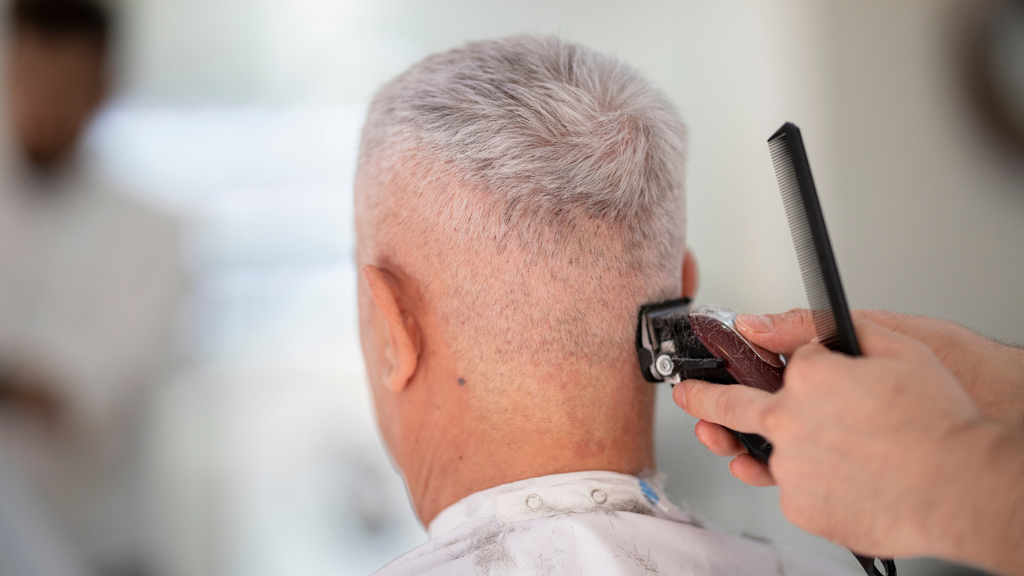
Gray hair often arrives unevenly. It tends to show up first at the temples and above the ears, which is exactly where most fades sit. Gray hairs reflect light differently and contrast less with the scalp, so a cluster of them can read as a light patch.
A 2012 study by Panhard and colleagues in the British Journal of Dermatology found that the old “50-50-50 rule” (half of people having half gray hair by age 50) overstated things. They found that between about 6 and 23 percent of people had half gray hair by 50, depending on background. Still, scattered grays at the temples are common far earlier, and in a short fade, even a few can change the tone.
Sun Bleaching and Tan Lines
Sun lightens hair over time, especially the longer hair on top and the exposed areas at the sides. If you spend summer outdoors with a cap, the hair beneath the cap may stay darker while the exposed hair lightens. That can create subtle tone differences across a fade.
Then there are tan lines. Freshly exposed scalp, which may have been covered by hair for months, is often paler than the skin on your face and neck. After a fresh skin fade, that pale strip can look like a light band. Within a few days of sun, it often evens out. Of course, a little sunscreen is still wise.
Redness and Bumps After a Close Pass
A very close fade can irritate the skin. Redness, razor burn, or small bumps can make some areas look darker or blotchy, especially on fair skin.
Curly and coily hair is especially prone to bumps. The American Osteopathic College of Dermatology notes that pseudofolliculitis barbae, the condition behind razor bumps, affects an estimated 45 to 83 percent of Black men who shave regularly. Very close fades along the neckline can trigger similar irritation. Those bumps sometimes heal with darker marks, called post-inflammatory hyperpigmentation, which can show through a short fade as dark spots.
Dye, Fibers and Enhancements
Some patches come from things added to the hair. Hair dye fades unevenly, especially on short sides that get cut away every few weeks. Box dye on top with natural color on the sides can create a visible two-tone effect.
Hair fibers and enhancement sprays are used by some barbers and clients to darken thin areas or sharpen hairlines. When applied well, they can even out a patchy area. When overdone, they can look painted on, and they may run in sweat or rain.
| Factor | Natural Tone | Added Color or Enhancement |
| Look up close | Real, varied | Can look flat or solid |
| Durability | Permanent until it grows | Washes off, runs in sweat |
| Patch risk | Natural variations | Uneven fading or smudging |
| Upkeep | None | Reapply often |
It seems the most natural-looking results come from using these tools lightly, if at all. Perhaps it’s worth asking yourself whether the patch bothers you, or whether it bothers the camera.
That brings us to light, time, and weather, three things that change a fade without anyone touching it.
Light, Time and Weather
Shop Lighting vs. Bathroom Lighting
You leave the shop looking sharp, then see patches in your bathroom mirror at home. Was the cut uneven, or is the light lying?
Often, it’s the light. The U.S. Department of Energy describes warm white bulbs at around 2,700 to 3,000 Kelvin, while daylight-style bulbs run around 5,000 Kelvin and above. Many barbershops use bright, even, daylight-balanced lighting from several angles. Many bathrooms have one warm overhead bulb.
| Factor | Shop Lighting | Bathroom Lighting |
| Color temperature | Often daylight, 5,000K or more | Often warm, around 2,700K |
| Direction | Multiple angles | Usually overhead |
| Shadows | Soft, minimal | Strong, from above |
| Effect on patches | Smooths tone | Exaggerates ridges and dips |
Overhead light casts shadows into every dip and highlights every bump. It’s like checking a car’s paint under a streetlight versus in a showroom. Neither one is wrong, but they tell different stories.
Your phone adds another layer. Phone cameras sharpen edges, boost contrast, and often use HDR processing that brightens shadows unevenly. A fade that looks smooth in person can look striped in a selfie, especially in harsh sunlight.
Day One vs. Day Seven
Fades change every day. Hair grows about half an inch a month, according to the American Academy of Dermatology. But not every hair grows at the same rate, and not every area grows evenly.
A 2001 study by Loussouarn in the British Journal of Dermatology found that average hair growth rates varied across ethnic groups, with African hair growing at around 0.26 millimeters per day, compared with roughly 0.37 for Caucasian hair and 0.41 for Asian hair. Growth also varies within one head. And according to the Cleveland Clinic, about 10 to 15 percent of scalp hairs are in a resting phase at any time, meaning they aren’t growing at all.
| Factor | Day One | Day Seven |
| Overall tone | Crisp, high contrast | Darker, softer |
| Bare areas | Smooth skin | Light stubble |
| Lines | Show clearly if present | Often blend in |
| Patches from growth | Rare | Common in uneven-growth areas |
| Cut ends | Blunt, catch light | Softer, more even |
So a fade that looks perfect on day one can show faint patches by day seven. Some areas grow faster and darken. Resting hairs stay short and look lighter. Neither one is anyone’s fault. It’s just how hair works.
Humidity, Sweat and Shrinkage
Weather changes how hair sits. According to Clarence Robbins’ textbook, Chemical and Physical Behavior of Human Hair, hair can absorb about 30 percent of its weight in water. As it absorbs moisture, it swells and changes direction slightly.
A sudden Humidity Change can make some areas of a fade stand up while others lie flat, bringing the lawn stripe effect right back. Curly and coily hair can shrink or expand with moisture, changing its visible length.
Sweat adds shine. A sweaty scalp reflects light, which can make thin areas look lighter and more exposed. Oily skin does the same. If you notice patches after a workout or on a hot day, they may vanish once you’ve cooled down and dried off.
Light and weather affect everyone. Hair type and skin tone shape how much.
Hair Type and Skin Tone Change the Picture
Straight Hair on Fair Skin
Straight, dark hair on fair skin is the toughest combination for a seamless fade. The contrast is high, and straight hair lies flat in a consistent direction, which highlights any change in length or growth pattern.
Lines and holes show up quickly here. Many barbers use more blending steps on this hair type and lean toward shadow fades rather than skin fades. If you have this combination, perhaps the softest choice is a low or mid fade that leaves a thin shadow at the bottom.
Thick and Wavy Hair
Thick, wavy hair hides small mistakes well at medium lengths, because the density covers the scalp. The challenge shows up in the transition zone, where dense hair suddenly gives way to very short hair.
Wavy hair also grows in multiple directions, especially around the crown and behind the ears. That can create darker swirls if the barber doesn’t adjust the cutting direction.
Curly and Coily Hair on Deeper Skin Tones
Curly and coily hair on deeper skin tones often produces beautifully smooth fades, partly because the contrast between hair and scalp is lower. That’s one reason the art of the fade flourished in Black barbershops.
There are still challenges. Coily hair coils at different points, so the visible length can vary even when the cut length is the same. Very close cuts can cause bumps and dark marks. Growth direction can be hard to read until the hair has been cut once.
Blond, Red and Gray Hair
| Hair Type and Tone | Patch Visibility | Common Patch Cause | Helpful Approach |
| Dark straight hair, fair skin | Very high | Lines, holes, growth direction | More blend steps, shadow fade |
| Thick wavy hair | Moderate | Dense-to-thin transitions | Careful blending at mid zone |
| Curly hair | Moderate | Uneven coil length | Cut in multiple directions |
| Coily hair, deep skin | Low to moderate | Bumps, dark marks | Guard on edges, gentle pass |
| Blond or red hair | Low | Rarely visible | Fade can look subtle |
| Gray or white hair | Low | Patchy gray distribution | Leave slightly longer |
Blond, red, and gray hair tend to produce subtle fades. The low contrast makes patches hard to see, but it also makes the fade itself less striking. Some men with light hair wonder why their fade “doesn’t show.” Perhaps that’s not a flaw. It’s just a quieter look.
When patches do show, the next question is how to fix them.
Fixing Patches in the Chair and at Home
How a Good Barber Corrects a Patch
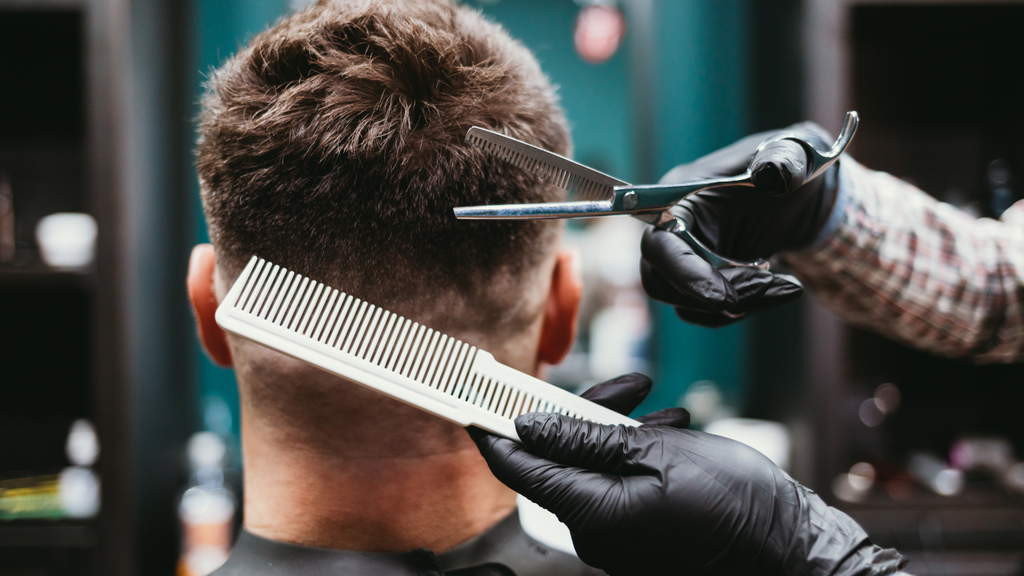
If you come back with a patch, a good barber will usually start by looking at it under different light and asking a few questions. Is it a line? A hole? A dark swirl?
Lines are often softened by going over the border with an in-between length, flicking out to blur the edge. Dark shadows may need an extra pass from a different direction. Light holes are trickier, because you can’t add hair back. The barber might blend the surrounding area slightly shorter to even things out, or suggest waiting a few days.
I’ve learned not to rush these fixes. A quick correction on a patch can create a second patch. It’s often wiser to make small adjustments and step back, like a golfer studying the green before the putt.
Going Shorter vs. Waiting It Out
| Factor | Going Shorter | Waiting It Out |
| Speed | Immediate fix | 3 to 10 days |
| Best for | Lines, dark patches | Light holes, irritation |
| Risk | May create a new patch or change the style | Patch visible for a while |
| Effect on fade | Can shift the fade higher | Keeps original shape |
| When it makes sense | Patch is in the upper zone | Patch is in a very short zone |
Sometimes the kindest fix is time. Hair grows about an eighth of an inch a week, which is often enough to soften a light hole. Perhaps the question to ask yourself is: will this bother me for a week, or will it bother me more if the fade changes shape?
Home Touch-Ups That Help and Hurt
| Helps | Hurts |
| Cleaning the neckline lightly | Trying to blend a fade yourself |
| Using a gentle moisturizer on irritated skin | Shaving bumps with a razor |
| Washing out sweat and oil | Pressing hard with a trimmer |
| Waiting a few days for growth | Chasing a line with a lower guard |
| Checking in natural light | Judging only in a phone selfie |
Most home touch-ups make patches worse. The back of the head is hard to see, and even a steady hand struggles with mirrors. If you want to maintain your fade between visits, a light neckline cleanup is usually as far as I’d suggest.
Knowing the fixes helps. Knowing the mistakes helps even more.
Mistakes That Create Patches
Chasing a Line Until It Becomes a Hole
One of the most common mistakes, at home or in a rushed chair, is chasing a line. You see a dark band, go over it shorter, and now there’s a light band below it. You go over that, and suddenly the fade has crept up an inch.
It’s like trying to level a wobbly table by shaving one leg. You shave it, then another leg is too long, and before long you’re eating on the floor.
Cutting Wet vs. Cutting Dry
| Factor | Cutting Wet | Cutting Dry |
| How hair sits | Flat, stretched | Natural position |
| Accuracy for fades | Lower | Higher |
| Clipper glide | Can drag | Smooth |
| Patch risk | Higher, hair shrinks when dry | Lower |
| Best use | Scissor work on top | Clipper fades |
Most barbers cut fades on dry hair. Wet hair lies flat and looks longer than it really is. When it dries, it stands up, shrinks, or changes direction, and patches appear that weren’t visible during the cut.
Choosing a Fade Too Short for Your Scalp
Not every scalp loves a skin fade. If you have scars, thinning temples, dark marks, or bump-prone skin, going all the way to skin may reveal more than you want.
| Mistake | What It Shows | Gentler Choice |
| Skin fade over scars | Light spots | Shadow fade |
| Skin fade on bump-prone skin | Redness, dark marks | Guard at the bottom |
| High fade with thin temples | Large light areas | Low or mid fade |
| Ignoring cowlicks | Dark swirls | Leave a touch more length there |
| Fading over gray patches | Blotchy tone | Slightly longer blend |
This isn’t about giving up a style you love. It’s about matching the style to your scalp. Perhaps the best fade is the one that shows what you want and hides what you’d rather keep private.
Mistakes are easier to understand through real people.
Stories From the Chair
The Groom With the Mystery Spot
He came in three days before his wedding, wanting a sharp skin fade. As I took the sides down, I noticed a small, smooth, round patch behind his right ear. It hadn’t been visible at a longer length.
I paused and quietly asked if he’d noticed it. He hadn’t. I suggested we leave that side slightly longer, as a shadow fade, and that he might mention it to a doctor after the wedding. He came back a month later. It was a small patch of alopecia areata, and it was already being treated. “Glad you said something,” he told me. “Glad you said it quietly too.”
The Father Who Faded His Son in the Kitchen
A dad brought in his ten-year-old son with a kitchen fade gone sideways. The boy had a bright band above each ear and dark patches behind.
“I watched a few videos,” the father admitted, rubbing the back of his neck. “Didn’t realize the lever did anything.”
We cleaned it up into a slightly higher, softer fade. While I worked, I showed the dad how the lever changed the length and how flicking out softened lines. He watched closely. His son just wanted to know if he looked “cool now.” He did.
The Gray Streak That Wasn’t a Mistake
A man in his early forties came in convinced I’d cut a light patch into his left temple. He showed me a phone photo. Sure enough, there was a pale stripe.
We looked in the mirror together under natural light. It was a cluster of new gray hairs. He was quiet for a moment, then laughed. “Well, that’s a different kind of problem.”
We decided to leave the fade a half-step longer at that temple so the grays blended with the darker hair around them. Sometimes the fix isn’t technical. It’s about understanding what you’re seeing.
These stories bring up a practical question: what does a clean fade really cost?
What a Clean Fade Really Costs
Price Factors Behind a Smooth Blend
| Factor | Effect on Price | Why |
| Fade type | Skin fades cost more | More steps, more precision |
| Barber experience | Higher with masters | Cleaner blends, fewer patches |
| Time in chair | Longer cuts cost more | Careful blending takes time |
| Location | City shops often charge more | Rent and demand |
| Hair type | Can add time | Curly and coily hair needs care |
| Extras | Beard, hot towel, line-up | Added services |
A basic fade might run $25 to $40 in many areas, while a detailed skin fade from an experienced barber might be $40 to $60 or more. When you search for a haircut near me, it may be worth checking whether the shop shows close-up photos of their fades in natural light. Smooth blends in those photos often say more than any price tag.
The Annual Math
| Visit Rhythm | Visits Per Year | Cost Per Visit | Annual Cost |
| Skin fade every 2 weeks | 26 | $45 | $1,170 |
| Skin fade every 3 weeks | 17 | $45 | $765 |
| Mid fade every 3 weeks | 17 | $35 | $595 |
| Low fade every 4 weeks | 13 | $35 | $455 |
| Taper fade every 5 weeks | 10 or 11 | $30 | $300 to $330 |
Lower, softer fades tend to stay patch-free longer and cost less over a year. Skin fades look sharpest on day one, but they show growth and patches fastest. Perhaps the question is: how often do you want to see your barber?
Gifts for Sons, Dads and Friends
If you’re buying for someone who loves a clean fade, a few thoughtful gifts can help:
- A prepaid series of fades with a trusted barber
- A gentle scalp moisturizer and sunscreen for short fades
- A soft neck brush and a good comb for daily touch-ups
- A quality neckline trimmer for light cleanups between visits
One mother bought her son a set of three prepaid fades before his senior photos. She quietly asked us to keep the fades soft so they’d look good in pictures. It was a small detail, but it showed how much she was paying attention.
Price and value change with the times. So do the trends.
Trends and Insights From Behind the Chair
The Camera Close-Up Era
Social media has raised the bar for fades. Barbers now post close-up photos and videos of their blends, and clients bring those images into the chair. I’ve noticed that men are more aware of patches than ever, because they’re comparing their fades to perfectly lit, carefully edited photos.
That can be inspiring. It can also be a little unfair. A photo in perfect light doesn’t always show how a fade looks on day five under a bathroom bulb.
Softer Fades Coming Back
After years of very high, very bald fades, I’ve noticed many men returning to softer styles: low fades, taper fades, and shadow fades. Part of the reason seems to be maintenance. Softer fades grow out more evenly and show fewer patches over time.
Men Asking Better Questions
More and more, men are asking why. Why is that side darker? Why does my temple look lighter? Why does my fade look different in photos? That curiosity is a good thing. It turns the chair into a conversation instead of a transaction.
With those questions in mind, here are the ones I hear most often.
Frequently Asked Questions
Why is one side of my fade darker than the other?
Often, it’s a combination of growth direction, density, and technique. Hair may grow differently on each side, and small changes in clipper angle or pressure can leave slight differences. Lighting can also exaggerate it. Checking both sides in natural light can help you see whether it’s the cut or the light.
Are light patches in a fade a sign of hair loss?
Not usually. Most light patches come from natural low density, cowlicks, or the blade going slightly shorter in one area. But a smooth, round patch that appears suddenly could be alopecia areata or another scalp condition. If you notice one, it may be worth checking with a dermatologist.
How long does it take for a patchy fade to even out?
Many small patches soften within three to seven days as the hair grows. Light holes may take a week or two. Lines can often be softened by a quick blending visit.
Can a barber fix a dark line in my fade?
Usually, yes. Barbers soften lines by blending with an in-between length and flicking out the edge. Sometimes this moves the fade slightly higher.
Why does my fade look patchy in photos but fine in the mirror?
Phone cameras sharpen edges and increase contrast. Harsh sunlight or overhead light can create strong shadows. Your fade may look smoother in person, especially in soft or natural light.
Is a skin fade or shadow fade better for avoiding patches?
A shadow fade is generally more forgiving. It leaves a thin layer of hair over the scalp, which softens natural variations in tone, scars, and density. Skin fades show every detail.
Should I fix fade patches myself at home?
It’s usually best not to. The back of the head is hard to see, and chasing a patch often creates a bigger one. A light neckline cleanup is fine, but leave blending to your barber.
With the questions answered, let’s put it all into a plan.
Your Patch-Free Plan and a Final Word
A 30-Day Fade Care Plan
| Week | What to Do | Why It Helps |
| Week 1 | Moisturize scalp, use sunscreen, check in natural light | Calms irritation, evens tone |
| Week 2 | Light neckline cleanup if needed | Keeps edges clean |
| Week 3 | Note any patches, take a natural-light photo | Helps your barber see the issue |
| Week 4 | Visit your barber, share your notes | Adjusts the fade to your hair |
| Ongoing | Gentle shampoo, avoid razors on bumps | Protects skin, reduces dark marks |
The Self-Check Before Your Next Visit
Before your next visit, take a moment with these questions:
- Where do patches tend to show up? Temples, crown, behind the ears?
- Do they appear right away or after a few days?
- Do they look worse in certain light?
- Have I noticed grays, scars, or new spots?
- Do I want a sharper fade or a more forgiving one?
There’s no scorecard. These questions simply help you and your barber understand what’s happening on your head.
A Final Word From the Chair
At the end of a fade, I like to brush away the last bits of hair, dust a little talc across the neck, and turn the chair toward the window. I tilt your head gently, letting the natural light fall across the sides. That’s where the truth of a fade shows.
So, what causes dark and light patches in a fade? More things than most people imagine. Technique, tools, density, color, scalp health, lighting, weather, and time all play a part. Sometimes it’s the barber. Sometimes it’s the clippers. Sometimes it’s simply your hair being your hair.
Perhaps the better question isn’t “Who made this mistake?” but “What is this patch telling me?” A light spot might be a scar you forgot about. A dark swirl might be a cowlick you’ve had since childhood. A pale stripe might be the first quiet sign of gray.
If any of this rings true, bring it with you to your next visit. Ask your barber what they see. Look at your fade in a few different lights. And if a patch shows up anyway, that’s fine too. Hair grows back about an eighth of an inch a week, and the chair will be here whenever you’re ready for another pass.