
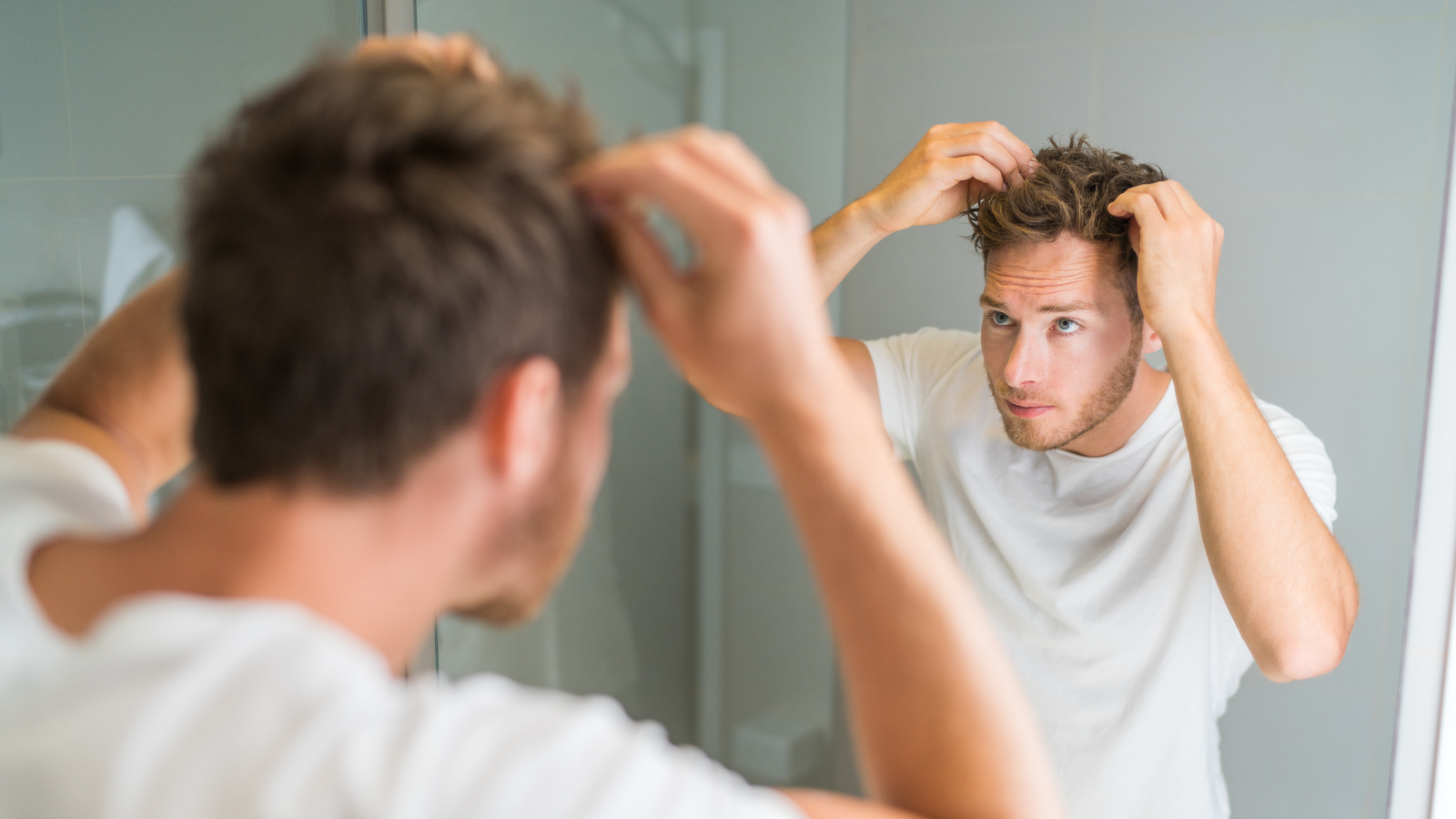
You walked out of the shop looking sharp. Clean fade, crisp part, product doing its job. Two hours later you catch your reflection in a storefront window and your hair has a mind of its own. The front’s gone soft, the sides are puffing out, and that line you paid for looks like it’s melting.
That’s humidity working on you, and it’s not personal. It’s chemistry. Hair is built from a protein called keratin, and keratin is hygroscopic, meaning it pulls moisture straight out of the air around it. When the air is thick with water vapor, your hair drinks it in, swells, and changes shape. When the air is bone dry, your hair gives up moisture just as fast and goes brittle. Either way, the structure you styled that morning doesn’t stand a chance without the right prep.
This guide breaks down exactly why that happens, what it looks like depending on your hair type, and how to build a routine that holds up whether you’re walking into a muggy August afternoon or a dry winter wind. We’ll cover the science in plain terms, give you product comparisons that actually matter, and lay out a checklist you can run through before you leave the house.
Key Takeaways
- Hair absorbs moisture from the air through hydrogen bonds in keratin, and that absorption is what causes frizz, flattening, or loss of shape in humid conditions.
- Hair type and porosity determine how dramatically humidity affects you. Coarser, more porous hair swells and frizzes faster than fine, low-porosity hair.
- Product choice matters more than product quantity. Silicone-based serums and anti-humectant styling creams outperform water-based gels when the air is heavy.
- A good haircut from a skilled barber reduces humidity problems before you even touch a product, because the right cut works with your hair’s natural fall instead of fighting it.
- Prevention beats correction. Prepping hair before you leave the house is far more effective than trying to fix frizz once it’s already set in.
What Humidity Actually Is (And Why Your Hair Cares)
Humidity is simply the amount of water vapor floating around in the air. Relative humidity, the number you see on your weather app, tells you how much moisture the air is holding compared to the maximum it could hold at that temperature. Low humidity sits under 30%. Moderate humidity runs from about 30% to 50%. High humidity climbs above 60%, and anything north of 80% is the kind of thick, sticky air that makes a white undershirt stick to your back by 9 a.m.
Your hair doesn’t know or care about the number. It only cares about moisture availability. Hair is roughly 70 to 100 microns in diameter, about the width of a human eyelash, but it’s covered in a layer called the cuticle, made of overlapping scale-like cells, similar to shingles on a roof. When humidity rises, those shingles lift slightly, letting moisture seep into the inner layers of the hair shaft. That’s the moment your hairline starts to rebel.
This isn’t a flaw in your hair. It’s how keratin has worked since humans had hair at all. Your grandfather dealt with the same thing standing on a job site in July, long before anyone sold a humidity-proof pomade. What’s changed is that we now understand the mechanism well enough to work around it instead of just fighting it blind.
Why Dry Air Causes Problems Too
It’s not only humid air that messes with your style. Dry air pulls moisture out of your hair, making it brittle and prone to static and flyaways. The difference is in the symptom. Humid air causes swelling, frizz, and loss of structure. Dry air causes flatness, static cling, and breakage at the ends. Both come back to the same root cause: hair reacting to the moisture level of its environment.
| Air Condition | Relative Humidity | Typical Hair Reaction |
| Very Dry | Below 20% | Static, flyaways, brittleness, dull appearance |
| Dry | 20% to 30% | Mild flatness, reduced hold time, some static |
| Moderate | 30% to 50% | Hair holds style reasonably well, minor changes by evening |
| Humid | 50% to 70% | Swelling begins, frizz appears, curls loosen or tighten depending on type |
| Very Humid | Above 70% | Significant frizz, loss of defined lines, flattening of structured styles |
This is why a barber in a coastal shop and a barber in a desert town might recommend completely different finishing products, even for the same haircut. They’re not disagreeing on technique. They’re adjusting for the air.
The Science Behind Humidity and Hair
Here’s where we get into the actual mechanics, because understanding this part is what separates guys who just buy whatever’s trending from guys who actually solve the problem.
Hydrogen Bonds Are Doing the Work
Inside each strand of hair, keratin proteins are held together by several types of bonds. The two that matter most for humidity are hydrogen bonds and disulfide bonds. Disulfide bonds are strong, chemical bonds that give hair its permanent structure, the kind only broken down by chemical treatments like perms or relaxers. Hydrogen bonds are weaker and temporary. They’re what hold your style in place after a blow-dry or a flat iron pass, and they’re also the first thing water molecules in the air attack.
When water vapor reaches the hair shaft, it breaks those temporary hydrogen bonds and reforms them in a different configuration. That’s the entire mechanism behind frizz. Your hair isn’t getting damaged in the traditional sense. It’s reverting to a shape closer to its natural, unstyled state, whatever that happens to be for your hair pattern.
The Cuticle Layer and Porosity
The cuticle’s job is to protect the inner cortex of the hair shaft. A smooth, flat cuticle resists moisture better than a rough, raised one. This is where porosity comes in, and it’s the single biggest factor in how much a given head of hair reacts to humidity.
- Low porosity hair has a tightly packed cuticle. It resists moisture entering or leaving, which means it’s more humidity-resistant but also harder to style with water-based products because they struggle to penetrate.
- Medium porosity hair has a moderately open cuticle. It absorbs and retains moisture at a balanced rate, generally the easiest hair type to style and maintain.
- High porosity hair has a cuticle with gaps or damage, often from heat styling, chemical processing, or split ends that have crept further up the shaft than they should have. This hair type absorbs moisture fast and loses it just as fast, making it the most reactive to humidity swings.
| Porosity Level | How It Behaves in Water | Humidity Reaction | Styling Challenge |
| Low | Water beads up, slow to absorb | More resistant, but takes longer to style | Product sits on top rather than absorbing |
| Medium | Absorbs water at a steady rate | Moderate frizz and swelling in high humidity | Generally the most manageable |
| High | Absorbs water almost instantly | Severe frizz, rapid swelling, fast moisture loss afterward | Needs sealing products to lock moisture in |
A quick way to check your own porosity at home: drop a clean strand of hair into a glass of water. If it floats, you’re likely low porosity. If it sinks slowly, you’re medium. If it sinks fast, you’re high porosity. It’s not a lab-grade test, but it’ll point you in the right direction.
Hair Shape and Curl Pattern
Straight hair, wavy hair, curly hair, and coily hair all respond to humidity differently because of the shape of the hair follicle itself. Round follicles produce straighter hair, while oval and flattened follicles produce wavier and curlier hair. The more irregular the follicle shape, the more the hair shaft has natural bends built into its structure, and the more surface area is exposed to moisture in the air.
That’s why curly and coily hair types tend to frizz and expand more dramatically in humidity, while straight hair is more likely to go flat or lose volume. Neither reaction is worse than the other. They’re just different expressions of the same underlying chemistry.
This chapter sets the foundation. Next, let’s look at how that foundation plays out across different hair types, because the fix for a guy with thick curly hair looks nothing like the fix for a guy with fine straight hair.
How Different Hair Types React to Humidity
No two heads of hair behave the same way in a humid room, and that’s exactly why a one-size-fits-all approach to product and styling falls apart the moment the weather changes. Knowing your type is step one in building a routine that actually holds.
Straight Hair
Straight hair has the smoothest cuticle structure of the common hair types, which means it’s generally more resistant to frizz but far more prone to going flat. In high humidity, straight hair tends to lose volume and separation, especially at the crown, because moisture weighs down each individual strand without creating the kind of texture that holds a style up.
Wavy Hair
Wavy hair sits in the middle. It has more surface area than straight hair but less than curly hair, so it frizzes more easily than straight hair but holds more shape than curly hair in the same conditions. Humidity often pushes wavy hair toward a frizzier, less defined wave pattern rather than full curl or total flatness.
Curly Hair
Curly hair has the most to gain and the most to lose from humidity, depending on how it’s managed. With the right moisture balance, humidity can actually enhance curl definition. Without it, curly hair frizzes heavily and loses its defined pattern, turning into a shape that’s harder to control.
Coily Hair
Coily hair has the tightest curl pattern and the most surface area of any hair type relative to its length, making it extremely reactive to both humidity and dryness. It swells significantly in humid conditions and can shrink noticeably once dry, which is why moisture retention techniques matter more here than almost any other hair type.
| Hair Type | Humidity Reaction | Primary Risk | What Helps Most |
| Straight | Loses volume, goes flat | Flatness at the crown | Lightweight volumizing products, avoiding heavy oils |
| Wavy | Frizzes, loses wave definition | Frizz overtaking the wave pattern | Light anti-humectant cream, diffusing when drying |
| Curly | Frizzes or enhances depending on moisture balance | Loss of curl definition | Leave-in conditioner plus a sealing cream |
| Coily | Swells, shrinks when drying | Dryness and breakage alongside frizz | Deep moisture retention, protective styling |
Fine Hair vs. Thick Hair
Density matters just as much as curl pattern. Fine hair has less structural strength per strand, so it’s more easily pushed around by humidity and tends to go limp fast. Thick hair has more strands per square inch and more structural resistance, but once humidity gets in, thick hair holds onto that frizz longer because there’s simply more hair reacting at once.
If you’ve got fine hair, your enemy is heaviness. Every extra pump of product weighs it down further. If you’ve got thick hair, your enemy is coverage. You need enough product to coat every strand, or the uncoated ones will frizz regardless of what the coated ones do.
Understanding where you land on both of these scales, curl pattern and density, tells you exactly which section of the product aisle to walk toward, which is exactly what we’re covering next.
Step-by-Step: How to Prep Your Hair for Humid Days
Prevention wins every time over correction. Trying to fix frizz after it’s already happened is like trying to flatten a fade after the clippers slipped. You’re better off doing it right the first time. Here’s the process, step by step.
Step 1: Check the Forecast Before You Style
This sounds basic, but most guys skip it. A thirty-second glance at the humidity percentage tells you exactly how aggressive your prep needs to be. Under 40%, you can style normally. Over 60%, you need to build in extra protection from the start.
Step 2: Start With a Clarifying Wash If Needed
Product buildup on the hair shaft makes humidity problems worse, not better, because buildup often traps moisture unevenly. If it’s been more than a week since your last clarifying wash, start there. A clean cuticle responds far more predictably to whatever you put on it next.
Step 3: Condition With Intention
Skip conditioner and you’re leaving your cuticle rougher than it needs to be, which means more surface area for humidity to grab onto. A rinse-out conditioner smooths the cuticle down. For high porosity or coily hair, follow with a leave-in conditioner to lock that smoothness in before styling begins.
Step 4: Dry With Control, Not Just Speed
Air drying sounds natural, but it gives humidity the most time to interfere before your style is set. Blow-drying with a round brush or diffuser, depending on hair type, locks your shape in faster and gives the hydrogen bonds less opportunity to reform into something messy. Always dry on a lower heat setting with a cool shot at the end to help the cuticle lie flat.
Step 5: Apply an Anti-Humectant Product
This is the step most guys get wrong. Humectants pull moisture toward the hair, which is great in dry climates and terrible in humid ones. Anti-humectants, often silicone-based, create a barrier that blocks moisture from entering the hair shaft in the first place. Check your product label. If humidity’s your enemy, you want anti-humectant, not humectant.
Step 6: Lock It In With the Right Finishing Product
Pomade, gel, cream, or spray, the right choice depends on your hair type and the level of hold you need. We’ll break this down fully in the next section, but the short version is this: heavier creams and pomades with a wax or silicone base hold up better in humidity than water-based gels, which tend to soften and lose grip as moisture builds.
| Step | Action | Time Required | Why It Matters |
| 1 | Check humidity forecast | 30 seconds | Tells you how aggressive your routine needs to be |
| 2 | Clarifying wash (if needed) | 5 minutes | Removes buildup that worsens humidity reactions |
| 3 | Rinse-out and leave-in conditioner | 5 to 10 minutes | Smooths the cuticle to resist moisture intrusion |
| 4 | Controlled drying | 5 to 15 minutes | Sets hydrogen bonds before humidity can interfere |
| 5 | Anti-humectant product | 1 minute | Blocks external moisture from the shaft |
| 6 | Finishing product and shape | 2 to 5 minutes | Locks the final style into place |
A barber can walk you through this same sequence in the chair and point out exactly where your hair tends to fall apart first. If you’ve never asked, it’s worth bringing up at your next appointment. A good one will have an opinion, and it’ll usually be a strong one.
Products and Tools: What Works vs What Doesn’t
Not every product on the shelf is built for the same job. Here’s a breakdown of the common head-to-head choices guys face, and which side wins depending on the conditions.
Gel vs. Pomade
Gel is water-based and dries hard, giving you strong hold initially. The problem is that water-based gels are often humectant by nature, meaning they actively draw moisture in. In high humidity, gel can soften, get tacky, or lose its grip entirely by midday. Pomade, especially oil or wax-based varieties, creates more of a barrier on the hair shaft and holds up far better when the air gets thick.
Winner in humidity: Pomade. Choose gel only in low humidity conditions where you want that extra crisp, hard-hold finish.
Mousse vs. Cream
Mousse is lightweight and works well for volume, but it’s often less resistant to moisture than cream. Cream products typically have a richer base that coats the strand more thoroughly, offering better frizz control in humid air, though at the cost of some volume.
Winner in humidity: Cream, particularly for wavy and curly hair types looking to maintain definition without excess frizz.
Blow-Dry vs. Air-Dry
Blow-drying with proper technique sets the hair’s shape before humidity gets a chance to interfere. Air-drying leaves hair exposed to ambient moisture for a much longer window, giving humid air more time to do its damage before the style is even finished forming.
Winner in humidity: Blow-dry, using a cool shot to finish and seal the cuticle flat.
Silicone-Based Serum vs. Natural Oil
Silicone creates a physical barrier against moisture, making it highly effective at blocking humidity. Natural oils, like argan or coconut oil, offer shine and some protection but are generally less effective at fully sealing out moisture compared to silicone.
Winner in humidity: Silicone-based serum, though natural oils remain a solid choice for guys prioritizing a more natural routine over maximum hold.
Humidity Spray vs. Leave-In Conditioner
Humidity-specific sprays are formulated with anti-humectant ingredients designed purely to block moisture. Leave-in conditioner is more about overall hair health and manageability but doesn’t always include the same moisture-blocking technology.
Winner in humidity: Humidity spray, used as a finishing step after a leave-in conditioner, not as a replacement for one.
High Porosity Routine vs. Low Porosity Routine
High porosity hair needs sealing products, like butters or heavier creams, applied after moisture to lock hydration in. Low porosity hair needs lighter, water-based products applied to damp hair, since heavy products just sit on top without absorbing.
Winner depends entirely on your porosity, which is why the glass-of-water test from earlier is worth doing before you commit to a full routine.
Short Cut vs. Long Style in Humidity
Shorter cuts, especially tight fades maintained with a clean razor shave around the edges, tend to hold up better in humidity simply because there’s less hair length for moisture to act on. Longer styles have more surface area and more weight distribution issues, making them more vulnerable to both frizz and flattening.
Winner in humidity: Shorter cuts, generally speaking, though a well-maintained longer style with the right product can still perform well if you’re willing to put in the extra prep time.
| Comparison | Better Choice in Humidity | Reason |
| Gel vs. Pomade | Pomade | Oil or wax base resists moisture better than water-based gel |
| Mousse vs. Cream | Cream | Richer coating offers stronger frizz control |
| Blow-dry vs. Air-dry | Blow-dry | Sets style before humidity interferes |
| Silicone serum vs. Natural oil | Silicone serum | Creates a stronger moisture barrier |
| Humidity spray vs. Leave-in conditioner | Humidity spray | Formulated specifically to block moisture |
| High vs. Low porosity routine | Depends on hair | Sealing products for high porosity, lightweight for low |
| Short cut vs. Long style | Short cut | Less surface area for humidity to affect |
Knowing which side of these comparisons fits your hair saves you money and saves you from standing in front of a shelf of products with no idea which one actually solves your problem. Next, let’s talk about the mistakes that undo all of this good work.
Common Mistakes Men Make With Humidity and Hair
Even with the right products, technique errors can wreck an otherwise solid routine. Here are the mistakes that show up most often.
Mistake 1: Over-Washing
Washing every single day strips natural oils that would otherwise help protect against humidity. Over time, this also roughens the cuticle, making hair more porous and more reactive to moisture swings, not less.
Mistake 2: Using Too Much Product
More product doesn’t mean more hold. Excess product weighs hair down and can actually attract more moisture if it’s not formulated correctly, particularly with water-based or humectant ingredients applied heavy-handed.
Mistake 3: Skipping Conditioner
Guys with short hair often skip conditioner entirely, assuming it’s only for longer styles. A rougher, unconditioned cuticle is more vulnerable to humidity, regardless of hair length.
Mistake 4: Ignoring Porosity
Applying the wrong type of product for your porosity level is one of the most common and most avoidable mistakes. Heavy butters on low porosity hair sit on top and do nothing. Light sprays on high porosity hair evaporate before they can seal anything in.
Mistake 5: Letting Split Ends Go Unaddressed
Split ends don’t just look bad. They create rough, damaged surface area that absorbs moisture unevenly, making frizz worse specifically at the ends of your hair. Regular trims every four to six weeks keep this from compounding.
Mistake 6: Towel-Drying Too Aggressively
Rubbing hair hard with a towel roughens the cuticle immediately after a shower, right when it’s most vulnerable. A gentle squeeze or patting motion, ideally with a microfiber towel, protects the cuticle’s natural smoothness.
Mistake 7: Not Adjusting the Routine Seasonally
What works in January doesn’t work in July. Sticking with the same products and techniques year-round, without adjusting for seasonal humidity swings, is one of the most common reasons guys feel like “nothing works” on their hair.
| Mistake | Why It Hurts | Quick Fix |
| Over-washing | Strips oils, roughens cuticle | Wash every 2 to 3 days instead of daily |
| Too much product | Weighs hair down, can attract moisture | Use a dime-sized amount and build up slowly |
| Skipping conditioner | Leaves cuticle rough and reactive | Condition every wash, even with short hair |
| Ignoring porosity | Wrong product type for your hair’s needs | Test porosity and match products accordingly |
| Unaddressed split ends | Increases uneven moisture absorption | Trim every 4 to 6 weeks |
| Aggressive towel-drying | Roughens cuticle right after washing | Pat dry with a microfiber towel |
| Static seasonal routine | Products stop matching the air’s moisture level | Swap products as seasons change |
Fixing these seven habits alone solves more humidity problems than any single product ever will. Now let’s see how all of this plays out in situations you’ll actually face.
Real-World Scenarios
Theory is useful, but it helps to see how this plays out in situations you’ll actually run into.
The Outdoor Wedding in July
You’ve got a tight fade, a fresh lineup, and a ceremony starting at 4 p.m. in 85% humidity. This is a worst-case scenario for hold. The fix: blow-dry and set your style the morning of, apply an anti-humectant pomade, and carry a small travel-size humidity spray for a midday touch-up before photos.
The Gym Session Before Work
Sweat is its own humidity problem, trapped right against your scalp. A lightweight, sweat-resistant styling cream holds up better here than a heavy pomade, which can feel greasy once mixed with sweat. Rinse and restyle if you’ve got the time, or use a dry shampoo to reset before reapplying product.
The Beach Day
Salt air and humidity together is a tough combination, especially for fine or straight hair that goes flat fast near water. A texturizing sea salt spray can actually work in your favor here, giving hair something to grip onto instead of fighting the moisture directly.
The Office in a Dry Winter Building
Indoor heating dries the air significantly, which flips the problem entirely. Static and flyaways replace frizz as the main concern. A light leave-in conditioner and a small amount of natural oil help here far more than anti-humectant products designed for the opposite problem.
The Dad Dropping His Kid at Practice in the Rain
Rain is humidity’s aggressive older brother. A hat or hood is your first line of defense, but if you’re bare-headed, a quick-drying, heavier hold product applied before you leave the house buys you the most time before everything starts to sag.
| Scenario | Main Challenge | Best Immediate Fix |
| Outdoor summer event | High humidity, long exposure | Anti-humectant pomade plus travel humidity spray |
| Gym session | Sweat-based moisture | Lightweight, sweat-resistant styling cream |
| Beach day | Salt air plus humidity | Texturizing sea salt spray |
| Dry winter office | Low humidity, static | Light leave-in conditioner and natural oil |
| Rainy outdoor errand | Direct moisture exposure | Heavier hold product applied before leaving |
These situations aren’t rare. They’re the normal rhythm of a week, which is exactly why a flexible routine beats a rigid one.
Cost and Value: Budgeting for Humidity-Proof Hair
You don’t need to buy out the entire grooming aisle to solve this problem. A focused, three-to-four product routine built around your specific hair type and local climate will outperform a ten-product shelf used without any real strategy.
What’s Actually Worth Spending On
A quality anti-humectant styling product and a good leave-in conditioner are the two items worth prioritizing if your budget is tight. These two do more heavy lifting against humidity than any other category.
Where You Can Save
Clarifying shampoo doesn’t need to be premium. A basic, sulfate-based clarifying formula used once every week or two does the job just as well as a boutique version three times the price.
The Haircut Itself Is Part of the Budget
A cut from a barber who understands your hair type and your local climate is, functionally, a humidity investment. A cut that already works with your hair’s natural fall needs less product and less daily effort to look sharp, which saves money on styling products over the course of a year.
| Budget Category | Low-Cost Option | Mid-Range Option | Premium Option |
| Anti-humectant styler | Drugstore pomade ($6 to $10) | Barbershop-brand pomade ($15 to $25) | Specialty humidity-control cream ($25 to $40) |
| Leave-in conditioner | Basic drugstore formula ($5 to $8) | Mid-tier salon brand ($15 to $20) | Premium salon-exclusive formula ($25 to $35) |
| Clarifying shampoo | Basic sulfate formula ($4 to $7) | Mid-tier clarifying shampoo ($12 to $18) | Premium scalp treatment shampoo ($20 to $30) |
| Haircut maintenance | Every 6 to 8 weeks | Every 4 to 5 weeks | Every 3 to 4 weeks with added treatments |
The highest-value move on this entire list isn’t a product at all. It’s consistency: sticking with a routine that matches your hair type and your climate, rather than chasing a new product every time the weather shifts.
Expert Insights and Trends
Barbershops that deal with a wide range of hair types and climates tend to develop a sharp, practical sense of what works, often ahead of what’s trending in mainstream grooming media.
The Shift Toward Climate-Specific Product Lines
Grooming brands have increasingly started marketing products specifically for humidity control, rather than general-purpose hold products. This mirrors what barbers have been doing informally for years: adjusting product recommendations based on a client’s local climate and the season.
Texture-First Cutting Techniques
More barbers are cutting with a client’s natural texture and curl pattern in mind, rather than cutting against it and relying on product to force a shape. A cut that respects your natural fall holds up significantly better in humidity because you’re not asking product to do a job the scissors should’ve already handled.
The Return of Classic Barbering Fundamentals
There’s a renewed appreciation in the grooming world for fundamentals: proper washing technique, regular trims, and simple, well-chosen products over a crowded product shelf. This mirrors exactly what the science supports. Fewer, better-matched products consistently outperform a cluttered routine.
What Experienced Barbers Tend to Recommend
Across most experienced shops, the general guidance holds steady: match your product to your porosity and climate, don’t over-wash, get regular trims, and let your haircut do more of the work than your product. It’s not flashy advice, but it’s the kind that holds up appointment after appointment.
| Trend | What It Means for You |
| Climate-specific products | Easier to find products matched to your exact humidity conditions |
| Texture-first cutting | A cut that reduces your reliance on heavy styling product |
| Return to fundamentals | Simpler routines, fewer wasted purchases |
| Consistent expert guidance | Porosity and climate awareness matter more than chasing trends |
This chapter closes the loop between the science we covered earlier and how it’s actually applied in a working shop. Now let’s turn all of it into something you can act on starting tomorrow morning.
A Humidity-Proof Hair Checklist
Use this as a quick reference before you walk out the door, especially on days when the forecast shows anything above 50% humidity.
- Check the day’s humidity forecast before choosing your routine
- Wash with a clarifying shampoo if it’s been over a week since your last one
- Condition every wash, regardless of hair length
- Apply leave-in conditioner if your hair is medium to high porosity
- Blow-dry with a cool shot finish rather than air-drying
- Choose an anti-humectant product over a water-based humectant one
- Apply product to damp, not soaking wet, hair for better distribution
- Carry a small humidity spray for midday touch-ups on long days
- Book a trim every 4 to 6 weeks to manage split ends
- Reassess your routine each season as humidity levels shift
Print this, save it, or just run through it mentally each morning. It takes less time to follow than it does to fix a style that’s already fallen apart by lunch.
Frequently Asked Questions
Why does my hair frizz up specifically when it’s humid outside?
Humidity introduces extra water vapor into the air, which hair absorbs through its outer cuticle layer. This absorption breaks and reforms the hydrogen bonds that were holding your style in place, causing the hair shaft to swell and shift into a less controlled shape, which shows up as frizz.
Does hair type determine how badly humidity affects me?
Yes. Curly and coily hair types generally show the most dramatic frizz and swelling because their follicle shape creates more surface area exposed to moisture. Straight hair tends to go flat rather than frizzy, while wavy hair sits somewhere in between.
Can I actually prevent frizz, or do I just have to manage it?
You can significantly reduce it, even if you can’t eliminate it entirely in extreme humidity. Using anti-humectant products, drying hair with controlled heat rather than air-drying, and keeping your cuticle smooth through regular conditioning all meaningfully cut down on frizz.
Is it true that some products make humidity frizz worse?
Yes. Water-based humectant products, including many gels, are designed to draw moisture toward the hair. That’s helpful in dry conditions but counterproductive in humid ones, where you want a product that blocks moisture rather than attracting it.
How often should I get a trim to help manage humidity-related frizz?
Every four to six weeks is a solid general guideline. Regular trims remove split ends before they travel further up the hair shaft, reducing the rough, porous surface area that absorbs moisture unevenly and worsens frizz.
Does the length of my haircut make a difference in how humidity affects it?
Generally, yes. Shorter cuts have less surface area for humidity to act on and tend to hold their shape more reliably. Longer styles are more vulnerable simply because there’s more hair length exposed to the moisture in the air.
What’s the single most effective product change I can make for humid weather?
Switching from a water-based, humectant styling product to a silicone-based or wax-based anti-humectant product tends to produce the most noticeable improvement, since it directly addresses the moisture-blocking function your hair needs in humid conditions.
Does dry air cause the same problems as humid air?
No, dry air causes the opposite problem. Instead of frizz from excess moisture absorption, dry air pulls moisture out of the hair, leading to static, brittleness, and flyaways. The products and techniques that help in humidity often need to be adjusted for dry conditions.
Is there a way to test my hair’s porosity at home before choosing products?
Yes. Drop a clean strand of hair into a glass of water. Hair that floats is generally low porosity, hair that sinks slowly is medium porosity, and hair that sinks quickly is high porosity. This gives you a rough but useful starting point for choosing the right products.
Should I change my haircut based on the climate I live in?
It’s worth discussing with your barber, especially if you live somewhere with consistently high humidity. A cut that works with your hair’s natural texture and fall will generally require less daily product and maintenance than a cut styled against your hair’s natural tendencies.
Conclusion
Humidity isn’t something you beat once and forget about. It shifts with the seasons, the city you’re in, and even the specific week you’re having. What doesn’t shift is the underlying science: your hair is reacting to moisture in the air through the same hydrogen bonds and cuticle structure every single time, whether you understand what’s happening or not.
The guys who stay sharp regardless of the forecast aren’t working with better hair than you. They’re working with a better understanding of what their hair actually needs, matched to the conditions they’re walking into that day. Know your porosity. Know your hair type. Build a routine around those two facts instead of whatever’s trending that month, and talk to your barber about how your cut itself can carry more of the weight. Get those fundamentals locked in, and the next time you catch your reflection in a storefront window on a muggy afternoon, you’ll still recognize the guy looking back at you.