
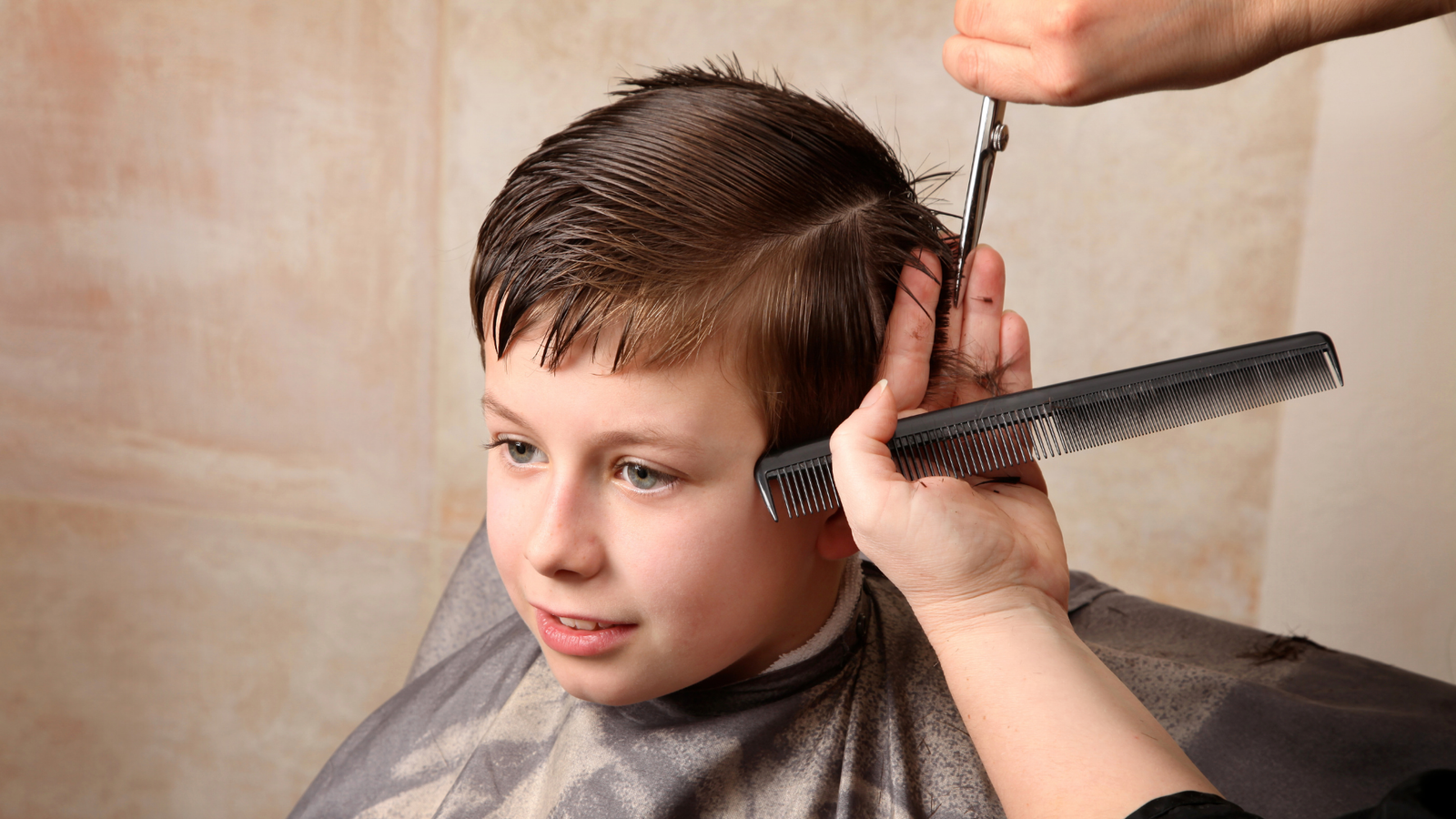
A child’s haircut is never just a trim. It is a small negotiation between a growing head of hair, a squirming body, and a parent hoping for thirty minutes of peace. Get the growth pattern wrong, and you end up chasing cowlicks for weeks. Get the comfort wrong, and you end up with a kid who screams at the sight of clippers until he’s twelve. This guide breaks down what actually happens to a child’s hair as it grows, why comfort isn’t a nice-to-have but a technical requirement, and how to set your son (or daughter) up for a lifetime of easy, confident haircuts.
Key Takeaways
- Children’s hair grows at different rates and in different directions than adult hair, which changes how a cut should be planned and maintained.
- Comfort during the haircut directly affects the technical outcome, since a fidgeting child makes precision nearly impossible.
- Scalp sensitivity, hair texture, and cowlick patterns should guide clipper guard choice and styling, not trends alone.
- Building positive early experiences in the chair pays off for years, reducing anxiety and improving cooperation at every future visit.
- A good haircut for a child factors in how the style will grow out over four to six weeks, not just how it looks on day one.
Why a Child’s First Haircut Sets the Tone for Years to Come
A child’s first haircut is a technical job wearing the costume of a milestone. Parents bring cameras. Grandparents show up uninvited, phones already recording. Meanwhile, the barber is quietly managing a client who has no concept of why a stranger with buzzing metal tools is near his ears.
What makes a first haircut different from every haircut after it
The first cut is rarely about style. It’s about trust. A toddler doesn’t know that clippers won’t hurt. He doesn’t know the cape isn’t a trap. Every sensation, the vibration against the scalp, the cold steel of scissors, the smell of talc in the air, is brand new. A barber who treats the first visit like a routine trim is setting up friction for every visit that follows.
How early experiences shape future cooperation
Child psychologists have long noted that early exposure to mildly stressful but ultimately safe experiences builds resilience (Child Mind Institute, 2022). A calm, well-paced first haircut teaches a child that the chair is safe. A rushed, painful, or frightening one teaches the opposite, and that lesson can stick for years.
The parent’s role in a successful first visit
Parents often underestimate their own influence on the outcome. A tense parent produces a tense kid. I’ve watched dads grip their son’s hand so tight before a first cut that the child panicked before the clippers even turned on. Staying relaxed, chatting normally, and letting the barber lead the pace makes a measurable difference.
The first haircut is a foundation, not a finished house. Once that trust is built, the real work, understanding how a child’s hair actually grows, can begin.
Understanding How Children’s Hair Grows Differently Than Adult Hair
Hair growth isn’t the same at six years old as it is at twenty-six. The follicles are still maturing, the growth cycle runs on a different clock, and the texture itself can change multiple times before adulthood.
The biology of juvenile hair growth cycles
Hair grows in three phases: anagen (growth), catagen (transition), and telogen (resting). In children, a higher percentage of follicles tend to sit in the active anagen phase compared to adults, which is part of why kids’ hair often grows noticeably faster between cuts (American Academy of Dermatology, 2023). That faster growth means a style that looks sharp on day one can look shaggy by week three if the cut wasn’t planned with growth in mind.
Why hair texture can change dramatically during childhood
Many parents are surprised when their child’s baby-fine hair turns coarse and wavy around age seven or eight. This shift happens because follicle shape and oil production change as children mature, particularly around puberty (Journal of Pediatric Dermatology, 2021). A barber cutting a five-year-old’s hair should expect that same head might need an entirely different approach by age ten.
How growth rate affects cut longevity
| Age Range | Average Hair Growth Rate | Recommended Cut Frequency |
| 1 to 3 years | 0.5 to 1 cm per month | Every 6 to 8 weeks |
| 4 to 7 years | 1 to 1.3 cm per month | Every 4 to 6 weeks |
| 8 to 12 years | 1.2 to 1.5 cm per month | Every 3 to 5 weeks |
| 13 to 17 years | 1.3 to 1.6 cm per month | Every 3 to 4 weeks |
These numbers aren’t exact for every kid, but they give parents a realistic planning tool instead of guessing.
Growth rate alone doesn’t explain why some kids sit still and others don’t. That comes down to comfort, and comfort is where most haircuts actually succeed or fail.
The Comfort Factor: Why Kids Fidget in the Chair
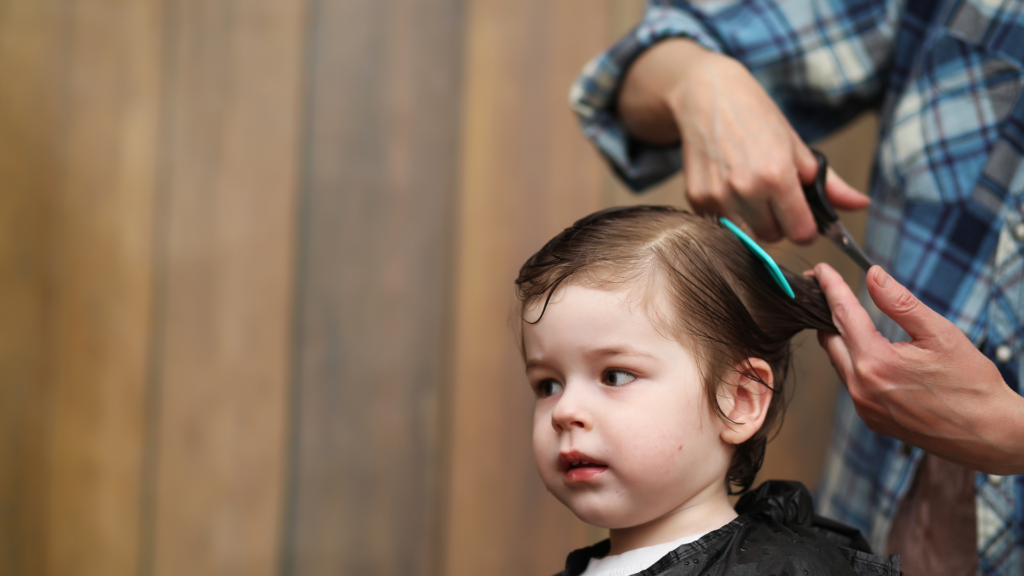
Ask any barber who’s cut kids’ hair for a decade and they’ll tell you the same thing. The haircut is 20 percent scissor work and 80 percent crowd control. A squirming child isn’t being difficult for fun. There’s almost always a physical or sensory reason behind it.
Sensory triggers that make kids uncomfortable in the chair
The sound of clippers, the itch of loose hair on the neck, and the pressure of a cape pulled too tight can all overwhelm a young nervous system. Kids with sensory sensitivities, which research suggests affects a meaningful portion of the general pediatric population, may react strongly to stimuli adults barely notice (Pediatrics Journal, 2020).
Physical comfort versus emotional comfort
Physical comfort means a properly fitted booster seat, a cape that doesn’t choke, and clipper settings that don’t pull hair. Emotional comfort means feeling safe, unhurried, and in some control of the experience. Both have to be addressed. I’ve seen barbers nail the physical setup and still lose the kid because they rushed the pacing.
Simple techniques that reduce fidgeting during a cut
- Let the child hold a toy or tablet to redirect focus.
- Explain each tool briefly before using it, in plain, friendly language.
- Take short breaks for wiggly kids instead of forcing stillness.
- Mirror the child’s energy level instead of fighting it.
Fidgeting isn’t the enemy. Ignoring its cause is. Once comfort is dialed in, the next variable to manage is the child’s actual hair type, because no two heads behave the same way under the clippers.
Reading Your Child’s Hair Type Before You Even Pick Up the Clippers
A skilled barber reads a child’s hair before touching a single tool. Density, curl pattern, and growth direction all determine which technique will actually hold up over the following weeks.
Straight, wavy, curly, and coily hair in children
Each hair type behaves differently under clippers and scissors. Straight hair shows every line clearly, which means mistakes are obvious. Curly and coily hair hides minor unevenness but requires different cutting angles to avoid a boxy, unnatural shape.
Fine versus thick hair and how it changes technique
Fine hair can look thin and patchy if cut too short, while thick hair can look bulky if layers aren’t managed properly. A barber working on fine-haired kids often uses lighter clipper guards and more texturizing to avoid a scalped appearance.
Cowlicks, whorls, and growth patterns unique to kids
Every head has at least one whorl, usually at the crown, where hair grows in a circular pattern. Children’s cowlicks are often more pronounced because the hair hasn’t been trained by years of styling products or repeated cuts. Cutting against a cowlick without planning for it is one of the most common rookie mistakes.
| Hair Type | Best Clipper Guard Range | Common Styling Challenge |
| Fine, straight | #2 to #4 | Looks sparse if cut too short |
| Thick, straight | #3 to #5 | Can appear boxy without layering |
| Wavy | #2 to #4 with texturizing | Uneven length appears more visible |
| Curly | #3 to #6 | Shrinkage makes length hard to judge |
| Coily | #4 to #7 | Requires moisture for shape definition |
Reading the hair correctly prevents half of the complaints parents bring back a week later. But even a perfect read means nothing if the environment around the chair is working against you.
The Barbershop Environment: Why Atmosphere Matters as Much as Skill
A technically perfect fade means little if the kid associates the chair with fear. The physical space itself, lighting, noise, seating, and staff energy, plays a direct role in how children behave and how well a cut turns out.
Lighting, noise, and sensory load in the shop
Bright fluorescent lights and loud background music can overstimulate younger children. Shops that cater to families often dim the lighting slightly and keep volume moderate during kids’ appointments, which measurably reduces fussiness.
Seating and tools designed specifically for children
Booster seats, car-shaped chairs, and lightweight capes aren’t gimmicks. They’re functional adjustments that put a child at the correct height for the barber and reduce the physical discomfort that triggers fidgeting in the first place.
Staff training for working with nervous or young clients
Not every barber enjoys cutting kids’ hair, and that’s fine, but the ones who do tend to share a specific skill set: patience, a calm voice, and the ability to read a child’s mood shift before it becomes a meltdown. This is a trained skill, not an innate personality trait, and shops that invest in it see it pay off in repeat visits.
The environment sets the stage, but the actual tools and guard choices determine whether the style survives the weeks of regrowth that follow.
Clipper Guards and Growth Cycles: Choosing the Right Length
Picking a clipper guard isn’t about copying a photo from a phone. It’s about matching the guard length to how fast that specific child’s hair grows and how long the parent wants the style to last before the next visit.
How guard numbers translate to actual hair length
Clipper guards are numbered by eighths of an inch. A #1 guard leaves about 1/8 inch of hair, while a #4 leaves roughly 1/2 inch. For kids, a slightly longer guard than requested often extends the life of the cut by a week or two.
Matching guard length to expected growth rate
A child with faster growth, as outlined earlier in the 8 to 12 age range, may need a guard one size longer than a slower-growing younger sibling to maintain the same style duration. This is a conversation worth having with the barber at every visit, not just the first one.
Common guard length mistakes that shorten a style’s lifespan
Going too short on the sides to “buy more time” often backfires, since it creates a sharper contrast with the top as it grows, making the whole cut look unbalanced faster than a more moderate guard choice would.
| Guard Number | Approximate Length | Typical Style Use |
| #0.5 | 1/16 inch | Skin fades, buzz cuts |
| #1 | 1/8 inch | Short crew cuts |
| #2 | 1/4 inch | Standard sides for fades |
| #3 | 3/8 inch | Blended sides, textured tops |
| #4 | 1/2 inch | Longer crops, curly hair bases |
Guard choice is half the equation. The other half is understanding that a child’s scalp doesn’t respond to clippers the same way an adult’s does.
Scalp Sensitivity in Children vs Adults
Kids’ scalps are more sensitive than most parents realize, and that sensitivity directly affects how a barber should approach pressure, speed, and tool temperature.
Why children’s scalps are more reactive to pressure and vibration
A child’s skin is thinner and still developing nerve density patterns, which can make clipper vibration and scissor pressure feel more intense than it would to an adult (American Academy of Pediatrics, 2021). This isn’t an exaggeration from a nervous kid. It’s a physiological reality.
Signs a child is experiencing discomfort during a cut
Watch for flinching, pulling away, or sudden tears without an obvious trigger. These are often pressure or vibration responses rather than fear responses, and adjusting clipper speed or guard pressure usually resolves it immediately.
Adjusting technique for sensitive-scalp kids
- Use lighter clipper pressure and let the tool do the work.
- Choose cordless clippers with lower vibration output when possible.
- Avoid hot towels directly against sensitive scalps, keeping warmth moderate.
- Take breaks for kids who flinch repeatedly rather than pushing through.
A sensitive scalp doesn’t mean a bad haircut is inevitable. It means the approach needs adjusting, much like a barber would adjust technique for the season, which brings its own set of hair challenges.
Seasonal Considerations for Kids’ Haircuts
Hair doesn’t behave the same way in July as it does in January, and a smart haircut plan accounts for the season a child is heading into.
Summer haircuts and sweat, swimming, and sun exposure
Chlorine and saltwater dry out hair and can fade color treatments faster, while sweat during outdoor play tends to make longer styles stick and look unkempt faster. Shorter guard lengths or more texturized tops often work better for active summer months.
Winter haircuts and static, dryness, and hat-friendly styles
Dry winter air increases static, especially in fine or straight hair, and styles that work well under beanies and hoods tend to hold up better than ones requiring daily product application that a cold-weather routine often skips.
Back-to-school timing and why it matters for style longevity
Scheduling a haircut two to three weeks before the first day of school, rather than the week of, allows the style to settle into its natural growth pattern before school photos, a trick many experienced parents already use.
| Season | Common Hair Challenge | Suggested Adjustment |
| Summer | Sweat, chlorine, sun fading | Shorter guards, lighter texture |
| Fall | Transition dryness | Moderate length, light conditioning |
| Winter | Static, dryness, hat friction | Hat-friendly cuts, less product dependency |
| Spring | Allergies, humidity shifts | Breathable, lower-maintenance styles |
Seasonal planning connects directly to hair texture and curl pattern, since those two factors determine how well any given cut survives weather changes in the first place.
The Role of Hair Texture and Curl Pattern in Cut Longevity
Texture and curl pattern aren’t just aesthetic details. They determine how a haircut ages between visits, and ignoring them is one of the fastest ways to produce a style that looks great for three days and rough for three weeks.
How curl pattern affects how a haircut grows out
Curly and coily hair tends to shrink upward as it dries, meaning a cut that looks short wet can look drastically different once fully dry. Barbers experienced with curl patterns cut dry or account for shrinkage percentages before trimming.
Texture-specific products that extend style life between cuts
Lightweight creams work well for wavy hair, while curl-defining products with moisture retention tend to suit coily textures better than gels alone, which can flake and dry out a child’s more delicate scalp.
Why one-size-fits-all cuts fail across different textures
A fade that looks sharp on straight hair can look patchy on coily hair without proper blending technique, because the curl pattern disguises the gradual transition that makes a fade read as clean.
Texture determines longevity, but even the best-suited cut for a child’s hair type still needs the right style foundation, and that’s where common boys’ haircuts and their growth behavior come into play.
Common Haircut Styles for Boys and How They Grow Out
Not every popular style is a smart choice for a kid who’s going to be back in the chair in four to six weeks. Some styles age gracefully. Others fall apart fast.
Buzz cuts: pros, cons, and growth timeline
Buzz cuts are low maintenance and forgiving for active kids, but they also show new growth quickly, often needing a touch-up every three weeks to maintain a uniform look.
Crew cuts and textured crops: a mid-length comparison
| Style | Average Maintenance Window | Comfort Level for Fidgety Kids | Styling Effort |
| Buzz cut | 3 weeks | High (quick cut) | None |
| Crew cut | 4 to 5 weeks | Medium | Minimal |
| Textured crop | 5 to 6 weeks | Medium | Light styling needed |
| Fade with longer top | 4 weeks (fade), 6 weeks (top) | Lower (longer sit time) | Moderate |
Fades and tapers: why they require more frequent maintenance
Fades look sharp, but the blended transition zone grows out unevenly faster than the rest of the head, which is why fades generally need touch-ups sooner than simpler, single-length styles.
Choosing a style isn’t only about looks. It’s about matching the cut to the child’s patience level and the family’s realistic schedule, which depends heavily on the tools the barber is using to execute it.
Tools of the Trade: What Changes When Cutting Kids’ Hair
The tools themselves often need adjusting for younger clients, not just the technique behind them.
Clipper types best suited for sensitive young scalps
Quiet, low-vibration cordless clippers tend to work better on kids than heavier corded models, which produce more noise and a stronger buzzing sensation against the scalp.
Scissor-over-comb versus clipper-over-comb for kids
Scissor-over-comb tends to give a softer finish that some kids tolerate better due to lower noise levels, while clipper-over-comb is faster, which matters for kids with shorter attention spans.
Why smaller, specialized tools improve comfort and precision
Trimmers with smaller blade heads allow a barber to navigate around small ears and thin necklines more precisely than full-size clippers, reducing nicks and discomfort around sensitive areas.
The right tools reduce physical discomfort. But even the best tools can’t overcome a child who’s mentally checked out of the experience, which is where the psychology of the chair becomes just as important as the equipment.
The Psychology of a Calm Child in the Chair
A calm child isn’t an accident. It’s usually the result of small, deliberate choices made by both the barber and the parent before the first snip.

Building trust through predictable routines
Kids respond well to predictability. Visiting the same barber, sitting in the same chair, and following a familiar sequence of steps reduces anxiety more than almost any single trick a barber can perform.
Using distraction and communication effectively
Narrating what’s happening in simple terms (“I’m going to trim around your ear now, it might tickle a little”) helps kids feel informed rather than ambushed by sensation.
When to let a child take breaks during a longer cut
Forcing a squirmy child to sit through an entire cut in one go often backfires. Short, structured breaks, even just thirty seconds to breathe, frequently produce a better final result than pushing through discomfort.
A calm chair experience sets up the next major decision parents face, figuring out exactly how often their child actually needs a haircut based on real growth patterns rather than guesswork.
How Often Should Kids Get Haircuts? Growth Rate Explained
This is one of the most common questions parents ask, and the honest answer is that it depends on age, hair type, and style choice, not a fixed universal number.
Average haircut frequency by age group
Referring back to the growth rate table earlier in this guide, younger children with slower growth can typically stretch to six to eight weeks between cuts, while older kids with faster-growing, more actively styled hair often need a visit every three to four weeks.
How style choice impacts how often a cut is needed
Fades and tight tapers require more frequent maintenance than looser, longer styles, since the contrast between regrowth and the original cut becomes visible faster.
Signs it’s time for a trim regardless of the calendar
- Hair falling into the eyes repeatedly
- Ears becoming covered in a style meant to be above them
- Noticeable unevenness as cowlicks reassert themselves
- The child pulling at or complaining about hair touching the neck
Frequency planning works best as a partnership between parent and barber. That partnership, especially between fathers and sons, often becomes one of the more meaningful parts of the haircut experience.
Father-Son Barbershop Visits: Building Tradition and Trust
There’s a quiet tradition in many families where a father brings his son in for a cut, and it becomes a recurring ritual rather than a chore. This Lifestyle influence, passed from one generation to the next, often shapes how a child views grooming for the rest of his life.
Why shared haircut visits build long-term comfort habits
Kids pick up on their parent’s body language more than their words. A dad who sits relaxed in the waiting chair, chatting with the barber, signals safety far more effectively than any verbal reassurance could.
Making the visit a bonding ritual rather than a chore
Some families turn the visit into a small event, grabbing a treat afterward or making it a monthly tradition tied to another activity, which reframes the haircut from an obligation into something the child anticipates.
Teaching grooming habits through example
Watching a father get his own haircut, ask questions, and sit comfortably through the process teaches a son more about handling the chair than any pep talk could.
Tradition and trust matter, but they don’t eliminate every mistake. Even experienced parents and barbers fall into a handful of predictable traps that hurt both comfort and growth outcomes.
Avoiding Common Mistakes That Hurt Comfort and Growth
Some mistakes are small annoyances. Others undo weeks of careful planning around growth rate and comfort.
Cutting too short “to save time” between visits
Going shorter than requested to stretch the gap between cuts often backfires, producing an awkward growth phase that looks worse sooner than a properly planned, slightly longer cut would.
Ignoring a child’s specific comfort signals
Pushing through visible discomfort, flinching, crying, or repeated requests to stop, almost always results in a worse experience next time, reinforcing fear rather than building tolerance.
Skipping consultation before the cut begins
A thirty-second conversation about growth patterns, cowlicks, and the parent’s realistic maintenance schedule prevents the vast majority of post-cut complaints.
| Common Mistake | Why It Backfires | Better Approach |
| Cutting too short to delay next visit | Awkward regrowth phase, visible unevenness | Choose slightly longer guard for longevity |
| Ignoring scalp sensitivity signs | Builds fear association with the chair | Adjust pressure, speed, and pacing |
| Skipping pre-cut consultation | Misaligned expectations, repeat visits | Discuss growth pattern and style goals first |
| Choosing trend over hair type fit | Style fails to hold shape properly | Match style to actual texture and density |
Avoiding these mistakes in the chair is only half the job. What happens at home between visits matters just as much for keeping both growth and comfort on track.
At-Home Maintenance Between Barbershop Visits
The weeks between professional cuts are where most styles either hold up or fall apart, and a few simple home habits make a measurable difference.

Washing frequency and product use for kids’ hair
Over-washing can dry out a child’s scalp and disrupt natural oils, while under-washing leads to buildup that makes styling harder. Two to three washes per week with a gentle, tear-free formula tends to strike the right balance for most kids.
Simple at-home trims to extend time between visits
Light trims around the neckline or ears, done carefully with blunt-tip scissors, can buy an extra week or two without requiring a full professional visit, particularly for faster-growing kids.
Managing cowlicks and flyaways at home
A light application of a texture cream, combined with brief blow-drying in the direction opposite the cowlick, can train stubborn growth patterns to lay flatter between visits.
Home maintenance stretches the life of a great cut, but it only works if the original cut came from the right place to begin with, which brings up the final and arguably most important decision parents make.
Choosing the Right Barbershop for Your Child
Not every grooming spot is equipped to handle kids well, and choosing the right one shapes every future haircut experience your child will have.
What to look for in a kid-friendly shop
Look for visible patience with young clients, appropriate seating, and a staff that genuinely seems to enjoy working with kids rather than tolerating them. These small signals tell you a lot before the first appointment even begins.
Questions to ask before booking a first appointment
Ask about experience with young or sensitive-scalp clients, typical wait times during busy hours, and whether the shop offers shorter, simpler appointments for younger kids who struggle with long sits.
How searching “barbershop near me” can help you compare local options
A quick search for barbershop near me often turns up reviews specifically mentioning how a shop handles children, which can save parents from a few trial-and-error visits before finding the right fit.
| Factor | Why It Matters for Kids | What to Look For |
| Staff patience | Reduces anxiety and fidgeting | Reviews mentioning kid-specific praise |
| Seating setup | Physical comfort affects precision | Booster seats, proper height adjustment |
| Appointment pacing | Prevents rushed, stressful cuts | Flexible scheduling for young clients |
| Tool selection | Reduces noise and vibration discomfort | Quiet, low-vibration clippers available |
Finding the right shop closes the loop on everything covered in this guide. Growth rate, comfort, texture, and environment all come together in that one decision, and getting it right early pays off for years of easier haircuts ahead.
Frequently Asked Questions
How often should a child get a haircut based on hair growth?
Most children need a haircut every four to six weeks, though faster-growing hair or tighter styles like fades may require visits every three weeks, while slower-growing, longer styles can stretch to eight weeks between trims.
Why does my child flinch or cry during haircuts even without an obvious injury?
Children’s scalps are more sensitive to clipper vibration and pressure than adult scalps due to thinner skin and still-developing nerve sensitivity, so flinching often reflects a genuine physical response rather than simple fussiness.
What’s the best haircut for a child with sensitive skin?
Styles using lighter clipper guards, scissor-over-comb techniques, and minimal pressure tend to work best, since they reduce direct contact time and vibration against a sensitive scalp.
Should I cut my child’s hair shorter to avoid frequent barbershop visits?
Cutting shorter than recommended often backfires by creating an awkward, uneven growth phase sooner, so choosing a slightly longer guard length that balances style with growth rate is usually the better long-term approach.
How can I prepare my child for their first haircut?
Explain the process in simple, honest terms beforehand, choose a shop known for working well with kids, and stay calm and relaxed yourself, since children often mirror a parent’s emotional state during new experiences.
What hair types require more frequent haircuts?
Thicker, faster-growing, and more tightly curled hair types generally require more frequent trims to maintain shape, while fine, straight, slower-growing hair can often go longer between visits.
Are fades a good choice for young children?
Fades can look great, but they require more frequent maintenance than simpler styles due to how quickly the blended transition zone shows regrowth, making them better suited for families comfortable with visits every three to four weeks.
How do seasons affect how often my child needs a haircut?
Summer heat and activity often call for shorter, lower-maintenance styles, while winter dryness and hat-wearing may favor styles that need less daily product and can tolerate slightly longer growth between trims.
Conclusion
A great kids’ haircut isn’t luck. It’s the result of understanding how a child’s hair actually grows, respecting the physical and emotional comfort that keeps them calm in the chair, and matching style choices to real-world maintenance schedules instead of trends alone. The parents who get this right early aren’t just getting a good haircut today. They’re building a foundation of trust that makes every future visit easier, for the child, the parent, and the person holding the clippers.