Twenty-some years behind the chair teaches you something most men don’t realize until they’re sitting in it: a haircut isn’t just hair. It’s posture. It’s confidence. It’s the thing your kid notices when you pick him up from school and says “Dad, you look like you again.” This guide walks you through every major men’s haircut, the difference between a fade and a taper, how to match a style to your hair type and face shape, what things should cost, and how to talk to whoever’s got the clippers in their hand so you walk out happy every single time.
Key Takeaways
- A fade gradually shortens hair down to the skin, while a taper shortens hair without ever hitting bare skin, and knowing the difference changes how you ask for your next cut.
- The right haircut depends on three things: your hair’s natural texture, the shape of your face, and how much daily maintenance you’re actually willing to do.
- Classic cuts like the crew cut, pompadour, and side part have survived for a reason. They work on almost every face and grow out cleanly.
- Clear communication with your barber, using the right words and even photos, is the single biggest factor in getting a haircut you love.
- A good haircut is only half the job. The right products and a realistic maintenance schedule are what keep it looking sharp between visits.
The Chair Isn’t Just a Chair: Why Understanding Your Haircut Matters
Here’s something I tell every new client before the cape even goes on: the worst haircuts aren’t bad because the barber lacks skill. They’re bad because of a breakdown in translation. You said “short on the sides,” I heard “short on the sides,” and somehow we ended up with two completely different pictures in our heads. That gap between what a man wants and what he ends up with is where most haircut regret lives.
Why Most Men Don’t Know What They’re Asking For
Ask a hundred guys what a “fade” is and you’ll get sixty different answers. Some think it means short all over. Others think it’s just another word for buzzed. A handful will describe what is actually a taper, and a few will confidently point to a photo of a style that has nothing to do with what they’re describing. This isn’t a knock on anybody. Haircut vocabulary isn’t taught anywhere. You don’t learn it in school, your dad might not have known it either, and barbershop lingo changes depending on the chair you’re sitting in and the decade you grew up in.
The result is a quiet frustration that plays out every day in barbershops and salons across the country. A man sits down, says a phrase he picked up from a buddy or a barbershop poster, and hopes the person holding the clippers understands exactly what’s in his head. Sometimes it works out. Often, there’s a gap. According to a 2022 consumer survey by Mintel on male grooming habits, nearly one in three men reported leaving a haircut appointment dissatisfied because the result didn’t match what they asked for. That’s not a small number. That’s roughly a third of the men walking out of barbershops every week feeling like they wasted their time and money.
The fix isn’t complicated, though. It starts with understanding the building blocks: what a fade actually is, what separates it from a taper, how length and texture interact, and how the shape of your head and face should guide your choices rather than whatever’s trending on social media that month. Once you understand those fundamentals, you stop gambling every time you sit in the chair. You start making informed requests, and your barber starts delivering results that match the picture in your head.
The Psychological Weight of a Good Haircut
There’s a reason men get quiet and serious when they talk about finding “their guy,” the barber who just gets it. A haircut carries more emotional weight than most men admit out loud. It’s tied to how you feel walking into a job interview, how you feel on a first date, how your son sees you when you drop him off at practice. I’ve had grown men tell me a bad haircut ruined their week. I’ve also watched a teenager’s whole posture change the moment he saw his first clean fade in the mirror, shoulders back, chin up, suddenly standing like he owned the room.
Psychologists who study grooming and self-image consistently find that personal appearance, haircuts included, has a measurable effect on confidence and even how competently others perceive us. A often-cited 2011 study published in the Journal of Experimental Social Psychology on “enclothed cognition” found that what we wear and how we present ourselves physically changes how we think and perform, not just how others see us. Hair works the same way. When it’s right, you don’t think about it. When it’s wrong, you think about nothing else.
That’s why this guide exists. Not to turn you into a hairstylist, but to arm you with enough knowledge that you walk into any chair, anywhere, and walk out looking like the best version of yourself, on purpose, not by accident.
What You’ll Actually Learn in This Guide
Before we get into fades, tapers, and the rest, let’s be clear about the ground we’re covering. You’re going to learn the real definitions behind the terms barbers use every day, the kind of language that lets you describe exactly what you want instead of hoping for the best. You’ll learn how different hair textures, straight, wavy, curly, and coily, change what styles will actually work for you, because a style that looks incredible on a magazine cover might fight against your natural texture every single day.
You’ll also get a breakdown of face shapes and which cuts complement them, a rundown of classic cuts that have survived decades of trends because they simply work, and an honest look at current styles that are popular right now without the hype. We’ll talk pricing, because what you pay for a haircut depends on more factors than people realize. We’ll talk maintenance schedules, because how often you should be sitting in that chair depends on your hair and your style, not some generic rule. And we’ll cover how to actually talk to your barber, because that conversation, more than the clippers themselves, determines your result.
By the end, you won’t just know the names of haircuts. You’ll understand the mechanics behind them, well enough to make decisions with confidence, whether you’re booking for yourself, bringing in your son for his first real cut, or buying a gift certificate for someone who clearly needs an upgrade.
A Short History of Men’s Haircuts: How We Got Here
You can’t really understand why today’s cuts look the way they do without knowing where they came from. Hairstyles aren’t random. They’re shaped by war, music, movies, and economics just as much as by scissors and clippers. Knowing the history gives you a better appreciation for why certain cuts endure and others fade out (pun fully intended).
Military Roots: How Wars Shaped Men’s Hair
Go back to World War I and World War II and you’ll find the roots of most short-back-and-sides styles still in circulation today. Practicality drove everything. Long hair was a liability in trenches and under helmets, prone to lice, hard to manage, and a hazard around machinery. The crew cut emerged from exactly this need: short, uniform, easy to maintain with basic tools, and tidy enough to pass inspection.
After both wars, millions of veterans returned home still wearing that discipline on their heads, and barbershops across the country adapted their standard offerings to match what an entire generation had grown used to. The military influence didn’t disappear when the uniforms came off. It became the baseline “normal” haircut for American men for decades.
The Rebellion Years: Pompadours, Greasers, and Rock and Roll
By the 1950s, something shifted. A generation of young men who hadn’t fought in the war wanted to look different from their fathers, and hair became one of the easiest ways to make that statement. Enter the pompadour, popularized by musicians like Elvis Presley, built with height and volume at the front and slicked-back sides, often held in place with heavy pomade.
This era also gave rise to the greaser aesthetic: ducktails, slicked sides, and a rebellious attitude that barbershops either embraced or quietly disapproved of, depending on the neighborhood. Hair became cultural signaling for the first time at scale. It wasn’t just about tidiness anymore. It was about identity.
The Counterculture Shift: Longer Hair and the 1960s-70s
The pendulum swung hard in the other direction through the 1960s and 70s. The counterculture movement, anti-war sentiment, and the rise of rock bands like The Beatles and later Led Zeppelin pushed hair longer, shaggier, and further from military tidiness than at any point in modern American history. Barbershops that had thrived on quick, standardized cuts suddenly had to adapt or lose business to salons offering more styling-focused services.
This period also saw the first real diversification of mainstream men’s hairstyles by texture and culture, with Afros becoming a powerful style and political statement within Black communities, carrying meaning well beyond fashion.
The Fade Era: 1980s to Today
The modern fade, as we know it, really took hold in the 1980s and 90s, heavily influenced by hip hop culture and barbershops in Black communities, where precision clipper work became an art form. Flat tops, high-top fades, and increasingly sharp gradations between skin and hair pushed clipper technique to new levels of skill.
From there, the fade spread into mainstream barbering everywhere. By the 2010s, thanks in part to social media making every cut instantly shareable, the fade in its many variations (low, mid, high, skin, taper) became arguably the dominant men’s haircut category worldwide, a title it still holds today.
Table 1: Timeline of Major Men’s Haircut Eras
| Era | Dominant Style | Cultural Driver |
| 1914–1945 | Crew cut, short back and sides | Military practicality during WWI/WWII |
| 1950s | Pompadour, ducktail | Rock and roll, youth rebellion |
| 1960s–1970s | Long hair, shaggy cuts, Afro | Counterculture movement, civil rights era |
| 1980s–1990s | High-top fade, flat top | Hip hop culture, barbershop artistry |
| 2000s | Spiky textured crops, buzz cuts | Boy band and pop culture influence |
| 2010s–present | Skin fade, taper, textured crop | Social media, athlete and celebrity influence |
Why This History Still Matters to You Today
Here’s the practical point behind all this history. Every haircut you ask for today is a descendant of one of these eras. When you ask for a pompadour, you’re asking for a piece of 1950s rebellion with modern product technology behind it. When you ask for a skin fade, you’re tapping into decades of barbershop innovation that started in specific communities and became a global standard. Understanding that lineage doesn’t just make you sound sharp when you’re chatting in the chair. It helps you recognize that most “new” trends are really just variations on themes that have been refined over a hundred years, which means they’re proven. You’re not taking a risk on a fad. You’re choosing from a toolbox that generations of barbers have already tested.
Fades Explained: Low, Mid, High, and Everything Between
If there’s one word that gets thrown around more than any other in a barbershop, it’s “fade.” But a fade isn’t one haircut. It’s a technique, a gradual shortening of hair length down to the skin, that gets applied differently depending on where it starts on the head. Understanding where a fade begins changes the entire look and feel of the finished cut.
What Exactly Is a Fade?
A fade is defined by a seamless, gradual blend from longer hair at the top down to little or no hair at the sides and back, eventually reaching skin level at some point. The key word is gradual. A good fade has no visible lines, no harsh steps, just a smooth transition that clipper guards create by moving through progressively shorter blade lengths.
This is different from a basic buzz cut, which keeps the same length all over with no gradation. A fade takes real time and a steady hand. It’s one of the more technically demanding cuts a barber performs, which is part of why a skilled fade specialist can build a loyal following fast.
Low Fade: The Subtle, Professional Choice
A low fade starts the fading process close to the ears and the bottom of the head, leaving more length visible on the sides overall. It’s the most conservative version of the fade family, which makes it a favorite among men who work in professional environments, law offices, banks, client-facing sales roles, where a dramatic high-contrast cut might feel out of place.
The low fade still gives you that crisp, intentional look, but it reads as understated rather than bold. If you want people to notice your haircut is sharp without immediately thinking “fade,” the low fade is usually the answer.
Mid Fade: The Versatile Middle Ground
The mid fade starts roughly at the midpoint between the ear and the top of the head, usually around the temple area. This is the Goldilocks option. It’s bold enough to show real contrast and skill, but not so dramatic that it demands constant upkeep or looks out of place in a business casual setting.
Most barbers will tell you the mid fade is the single most requested fade style because it works across the widest range of face shapes, hair textures, and lifestyles. If you’ve never had a fade before and you’re not sure which to try, mid fade is the safest, smartest starting point.
High Fade: Maximum Contrast and Edge
A high fade begins much higher on the head, often above the temple, creating dramatic contrast between the short sides and the length left on top. This is the version you’ll see on athletes, musicians, and guys who want their haircut to make a statement, not just a tidy impression.
High fades require more frequent maintenance visits, typically every two to three weeks, because the shorter sides grow out and lose their sharp line faster than lower fades. They also tend to pair best with more styled, voluminous tops since the contrast calls attention to whatever’s happening up there.
Skin Fade vs. Taper Fade: What’s the Real Difference?
This is where confusion peaks. A skin fade (sometimes called a bald fade or zero fade) takes the fade all the way down to bare skin at some point on the head, creating maximum contrast. A taper fade blends the hair shorter and shorter but never fully exposes skin, leaving a slight shadow of hair even at the shortest point.
Table 2: Skin Fade vs. Taper Fade Comparison
| Feature | Skin Fade | Taper Fade |
| Shortest point | Bare skin | Slight stubble, never bald |
| Visual contrast | High | Moderate |
| Maintenance frequency | Every 2–3 weeks | Every 3–5 weeks |
| Best for | Bold, modern looks | Professional, conservative looks |
| Pairs well with | Textured crops, pompadours | Classic side parts, business cuts |
If you’re after maximum sharpness and don’t mind more frequent visits, the skin fade delivers. If you want a cleaner look with a little more forgiveness as it grows out, the taper fade is the smarter long-term choice.
Drop Fade: The Curved Variation
A drop fade follows the same gradual shortening principle as a standard fade, but the line curves downward behind the ear instead of staying straight and level. This curve follows the natural shape of the skull and tends to flatter men with rounder or fuller face shapes by adding visual length along the jaw.
It’s become especially popular paired with curly and coily textures on top, since the curve of the fade echoes the natural movement of the curls rather than fighting against a straight, harsh line.
Burst Fade: The Rounded Detail Around the Ear
A burst fade curves around the ear specifically, creating a rounded “burst” of shorter hair rather than a straight line across the side. It’s often used with shorter overall haircuts and mullet-adjacent styles where the back is left slightly longer. Think of it as a fade with a little extra flair around one specific zone rather than a uniform blend across the whole side.
Temp Fade: The Quick Refresh
A temp fade, short for temple fade, is a lighter version that fades just around the temples and hairline without extending the gradation across the entire side and back of the head. It’s often used as a quick touch-up between full haircuts, something your barber can knock out in fifteen minutes to keep your hairline looking sharp without a full service.
Choosing the Right Fade for Your Lifestyle
Here’s the honest barbershop truth: the “best” fade isn’t about what looks coolest in a photo. It’s about matching the fade to how much time, money, and patience you’re realistically going to invest in upkeep. A high skin fade looks incredible the day you walk out of the chair, but if you’re not coming back every two weeks, it grows out unevenly and starts looking neglected fast. A low or mid taper fade grows out more gracefully, giving you more flexibility if your schedule or budget doesn’t allow for visits every couple weeks.
Table 3: Fade Type by Maintenance Commitment
| Fade Type | Visit Frequency Needed | Best Suited For |
| High skin fade | Every 2 weeks | Guys with flexible schedules and budget |
| Mid fade | Every 3 weeks | Most men, general use |
| Low fade | Every 4 weeks | Busy professionals, lower maintenance |
| Taper fade (any height) | Every 4–5 weeks | Men who want forgiving growth |
Tapers Explained: The Subtle Cousin of the Fade
If fades get all the attention, tapers are the quiet professional in the corner who’s been doing great work for decades without needing the spotlight. A lot of men confuse the two, but once you understand the difference, you’ll never mix them up again.
What Makes a Taper Different from a Fade
The core difference comes down to one thing: skin exposure. A fade, at its most extreme points, can go all the way down to bare skin. A taper never does. Hair gets progressively shorter toward the hairline, ears, and neck, but there’s always at least a whisper of hair covering the skin, even at the tightest point.
This might sound like a small distinction, but it changes the entire character of a haircut. A taper reads as neat and natural. A fade reads as intentional and sharp. Neither is better. They just serve different goals.
Neck Taper: The Universal Finishing Touch
A neck taper is almost always included in any professional haircut, regardless of the overall style, because it’s what cleans up the hairline at the back of the neck. Even men who get the exact same length all over their head, no dramatic fading anywhere, still typically get a neck taper so the back doesn’t look like it was cut with a bowl.
This is actually one of the most overlooked parts of a great haircut. A sloppy neck taper, visible uneven lines or hair left too long at the nape, can make an otherwise good haircut look unfinished. Ask any barber: the neck is where amateur haircuts reveal themselves.
Temple Taper: Cleaning Up the Sides
Similarly, a temple taper shortens the hair gradually around the temple and sideburn area without creating a dramatic fade effect. This keeps sideburns looking intentional and connected to the rest of the haircut rather than looking like an afterthought.
Full Taper: A Complete Style on Its Own
A full taper (sometimes called a “tapered cut”) applies the gradual shortening principle across the entire head, not just the neck and temples. The top stays longer, and length gradually decreases moving down the sides and back, but never fully exposes skin anywhere. This is the haircut most men picture when they imagine a classic, professional, timeless men’s cut. It’s the taper you’d see in a 1960s barbershop photo and still see in corporate offices today.
Low Taper vs. High Taper: Does Starting Point Matter?
Just like fades, tapers can start at different points on the head.
Table 4: Low Taper vs. High Taper
| Feature | Low Taper | High Taper |
| Starting point | Near the ears | Above the temple |
| Visual impact | Subtle, blended | More noticeable, but still soft |
| Best for | Conservative workplaces | Men wanting slightly more edge |
| Grows out | Very gracefully | Moderately gracefully |
Who Should Choose a Taper Over a Fade?
If your job requires a conservative appearance, law, finance, education, government, a taper is often the safer professional choice. It gives you a clean, groomed look without the high-contrast statement a fade makes. Tapers also tend to be more forgiving between appointments, which makes them a smart option if you travel often, have an unpredictable schedule, or simply don’t want to think about your hair every two weeks.
Fathers bringing in younger sons for their first “big boy” haircuts often start with a taper too. It’s a gentler introduction to short styles without the dramatic skin exposure of a fade, which some younger kids find a little jarring the first time they see it in the mirror.
Fade vs. Taper: Which One Is Right for You?
This is probably the single most common question that comes up in the chair, so let’s settle it clearly once and for all.
The Core Difference, Restated Simply
A fade exposes skin at its shortest point. A taper never does. That’s it. Everything else, how dramatic it looks, how often you need to maintain it, how it reads in a professional setting, flows from that one fact.
Lifestyle Factors That Should Drive Your Decision
Think about three things honestly: your job, your schedule, and your willingness to maintain a style. A trading floor executive and a tattoo shop owner can both wear a great haircut, but what counts as “appropriate” and “low maintenance” looks very different for each of them.
Table 5: Fade vs. Taper Decision Guide
| Your Situation | Better Choice | Why |
| Conservative workplace | Taper | Clean, understated, professional |
| Creative or casual industry | Fade | Bold, shows personal style |
| Busy schedule, infrequent visits | Low taper | Grows out gracefully |
| Want maximum visual impact | High or skin fade | Sharp contrast, statement look |
| First haircut for a young kid | Taper | Gentle introduction, less dramatic |
| Athlete or performer | Fade | Pairs well with styled tops, high energy |
Can You Combine Both in One Haircut?
Absolutely, and in fact most modern haircuts do exactly this. A classic example: taper around the neck and temples for a clean finish, blended into a mid or low fade on the sides for more visual interest, topped with a textured crop or pompadour. Your barber isn’t choosing one or the other in isolation. They’re layering techniques to build the complete picture, and understanding both terms means you can describe exactly which zones you want more dramatic and which you want subtle.
Classic Men’s Haircuts That Never Go Out of Style
Trends come and go, but certain haircuts have survived every decade because they simply work on almost any man, any hair type, any face shape. These are the haircuts you can request anywhere in the country and know exactly what you’re going to get.
The Crew Cut: Simple, Sharp, Timeless
Born from military necessity, the crew cut keeps hair short and uniform on top (usually half an inch to an inch) with tapered or faded sides. It requires almost no styling, grows out evenly, and works on every hair texture from pin straight to tightly coiled. If you want the lowest-maintenance good haircut available, this is it.
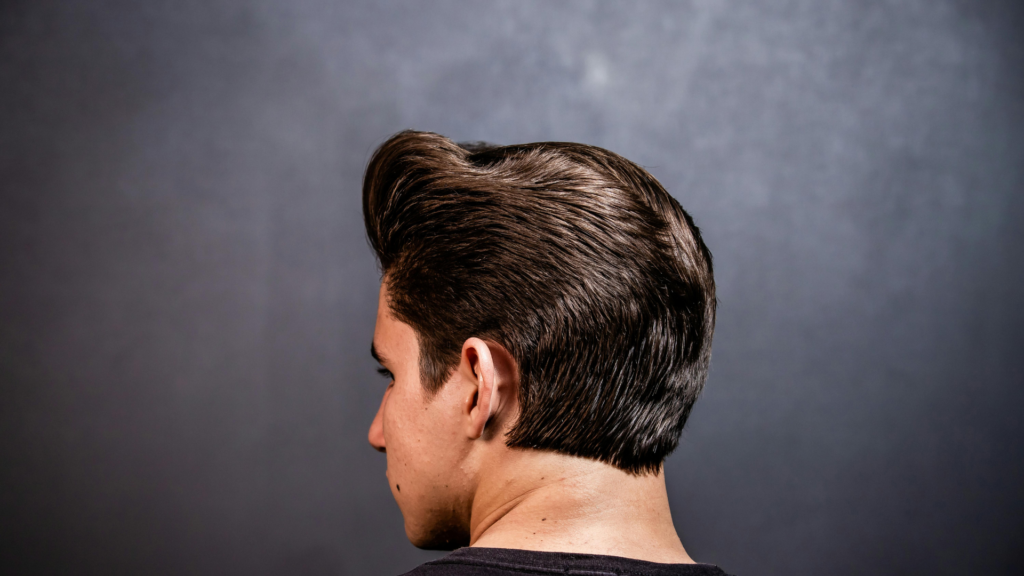
The Pompadour: Height, Volume, and Attitude
The pompadour builds significant height and volume at the front, swept back and up, usually paired with tighter sides, a taper or fade. It demands more styling time and product than almost any other cut on this list, but the payoff is a dramatic, confident look that photographs beautifully. This one requires commitment: a blow dryer, the right pomade, and a few extra minutes every morning.
The Side Part: Professional and Polished
The side part keeps hair at a moderate length on top, combed to one side with a defined parting line, paired with tapered or faded sides. It’s the go-to for weddings, job interviews, and any situation where you want to look sharp without looking like you tried too hard. This cut has barely changed in a hundred years because it simply hasn’t needed to.
The Buzz Cut: Zero Fuss, Zero Regret
A buzz cut uses a single clipper guard length across the entire head with no fading or tapering, typically between a number 1 and number 3 guard. It’s the fastest, cheapest, lowest-maintenance cut available, and it works shockingly well on men with strong jawlines and symmetrical features. The drawback: it hides nothing. If your hair is thinning or your head shape is uneven, a buzz cut will show it.
The Caesar Cut: Short, Textured, Forward
Named after Julius Caesar’s signature look, the Caesar cut features short, horizontally fringed bangs combed forward, with tapered or faded sides. It gained massive popularity through 1990s and 2000s pop culture and has quietly remained a reliable choice because it works well with thinning hairlines, the forward fringe helps camouflage recession at the temples.
Table 6: Classic Haircuts at a Glance
| Haircut | Maintenance Level | Styling Time Daily | Best Hair Texture |
| Crew cut | Very low | Under 1 minute | Any |
| Pompadour | High | 5–10 minutes | Straight to wavy |
| Side part | Moderate | 3–5 minutes | Straight to wavy |
| Buzz cut | Very low | 0 minutes | Any |
| Caesar cut | Low | 1–2 minutes | Straight to coily |
Modern and Trending Men’s Haircuts
Alongside the classics, a handful of contemporary styles have earned their place as go-to requests in barbershops today, each one shaped heavily by social media and celebrity influence.
The Textured Crop: Social Media’s Favorite Cut
The textured crop keeps moderate length on top with heavy texturizing (choppy, piece-y layers cut with scissors or a razor), paired almost universally with a fade on the sides. It’s become arguably the most requested modern cut because it photographs incredibly well and works on wavy to curly textures especially effectively, the natural movement of the hair enhances the choppy styling rather than fighting it.
The Mullet Revival: Business in Front, Party in Back
Yes, it’s back, and not as a joke. The modern mullet keeps the front and top relatively short and clean, often with a fade or taper on the sides, while leaving noticeably more length at the back. Musicians and athletes drove this revival hard over the past several years, and barbershops report a steady stream of requests, often from younger clients who never experienced the style’s less flattering 1980s era firsthand.
The Curly Shag: Working With, Not Against, Natural Texture
The curly shag uses heavy layering throughout to let natural curl pattern create volume and movement, rather than fighting the curl into a tighter, more structured shape. It’s a response to years of curly-haired men being pushed toward styles designed for straight hair. This cut celebrates the texture instead.
The French Crop: A European Classic Goes Global
The French crop combines a short, textured fringe at the front (similar to the Caesar but slightly longer and more tousled) with faded or tapered sides. It’s gained serious traction thanks to European football players and has become one of the most requested cuts among younger men specifically because it looks effortlessly put together with minimal daily styling.
Table 7: Modern Haircuts and Their Texture Requirements
| Haircut | Ideal Texture | Styling Difficulty | Popularity Driver |
| Textured crop | Wavy to curly | Moderate | Social media |
| Mullet revival | Straight to wavy | Low | Musicians, athletes |
| Curly shag | Curly to coily | Low (texture does the work) | Natural hair movement |
| French crop | Straight to wavy | Low | European football culture |
Matching Your Haircut to Your Hair Type and Texture
Here’s where a lot of men go wrong, picking a haircut because it looked good on someone else without considering whether their own hair will actually cooperate.
Straight Hair: The Most Forgiving Texture
Straight hair holds clean lines exceptionally well, which makes it ideal for precise cuts like the side part, pompadour, and sharp skin fades, the lack of natural curl means the line stays crisp. The tradeoff is that straight hair can look flat without some styling product or technique to add texture and body.
Wavy Hair: Natural Movement Without the Work
Wavy hair tends to be the most versatile texture, it holds structured cuts reasonably well while also having enough natural movement to pull off textured crops and shags without heavy styling effort. Most barbers will tell you wavy hair is the easiest texture to work with across the widest range of styles.
Curly Hair: Working With the Curl, Not Against It
Curly hair shrinks significantly when it dries compared to its stretched length, which means cuts need to account for that shrinkage, a style that looks like the right length wet can look noticeably shorter once dry. Curly hair pairs beautifully with drop fades, curly shags, and textured crops, styles designed to work with the curl pattern rather than forcing it into a shape it naturally resists.
Coily Hair: Precision and Pattern Awareness
Coily hair (often associated with tighter, more compact curl patterns) requires a barber who genuinely understands how to cut around the grain and growth pattern of the hair, rather than cutting it like straight hair and hoping for the best. High-top fades, Caesar cuts, and tightly tapered styles have historically been refined specifically within barbershops serving coily-haired clients, and that expertise shows in the precision of the final line work.
Table 8: Hair Texture to Recommended Haircut Matrix
| Texture | Best Classic Match | Best Modern Match | Avoid |
| Straight | Side part | French crop | Curly shag (won’t hold shape) |
| Wavy | Crew cut | Textured crop | None major, very versatile |
| Curly | Caesar cut | Curly shag | Slicked pompadour (fights the curl) |
| Coily | High-top fade | Textured crop with fade | Flat, unlayered long cuts |
Matching Your Haircut to Your Face Shape
Face shape matters just as much as hair texture, maybe more, because it’s the one factor that doesn’t change no matter how you style your hair.
Round Face: Adding Length and Angles
Men with rounder faces generally benefit from haircuts that add height on top and avoid heavy volume on the sides, since side volume widens an already round face further. A high fade with volume up top, or a pompadour, creates the illusion of a longer, more angular face.
Square Face: Softening Strong Angles
A square jawline is often considered a strength, but too much hard-edged styling (sharp lines, very tight fades) can make the face look even more severe. Textured crops and slightly tousled styles soften the hard angles nicely while still looking masculine and intentional.
Oval Face: The Lucky Shape
Oval faces are generally considered the most versatile, nearly every haircut style works well because the proportions are naturally balanced. If you’ve got an oval face, your biggest limiting factor is really just hair texture and lifestyle, not face shape.
Long or Rectangular Face: Adding Width, Reducing Height
Longer faces benefit from styles that add width rather than height, side-swept styles, textured crops with volume at the sides rather than straight up, and lower fades that don’t draw the eye further upward and lengthen the face visually.
Diamond Face: Balancing Narrow Forehead and Chin
Diamond face shapes (narrow forehead and chin with wider cheekbones) do well with styles that add some volume at the forehead, like a soft fringe or textured crop, to balance out the proportions.
Table 9: Face Shape to Haircut Recommendations
| Face Shape | Recommended Styles | Styles to Avoid |
| Round | High fade, pompadour | Flat tops, heavy side volume |
| Square | Textured crop, tousled styles | Severe skin fades with hard lines |
| Oval | Nearly all styles | None significant |
| Long/Rectangular | Side-swept crop, low fade | Pompadours (add too much height) |
| Diamond | Soft fringe, textured crop | Slicked-back styles with no volume |
Kids and Teen Haircuts: A Guide for Fathers
Bringing your son in for his first real haircut is a bigger moment than most dads expect. It deserves its own section, because kids’ hair and priorities differ from adult hair in some important ways.
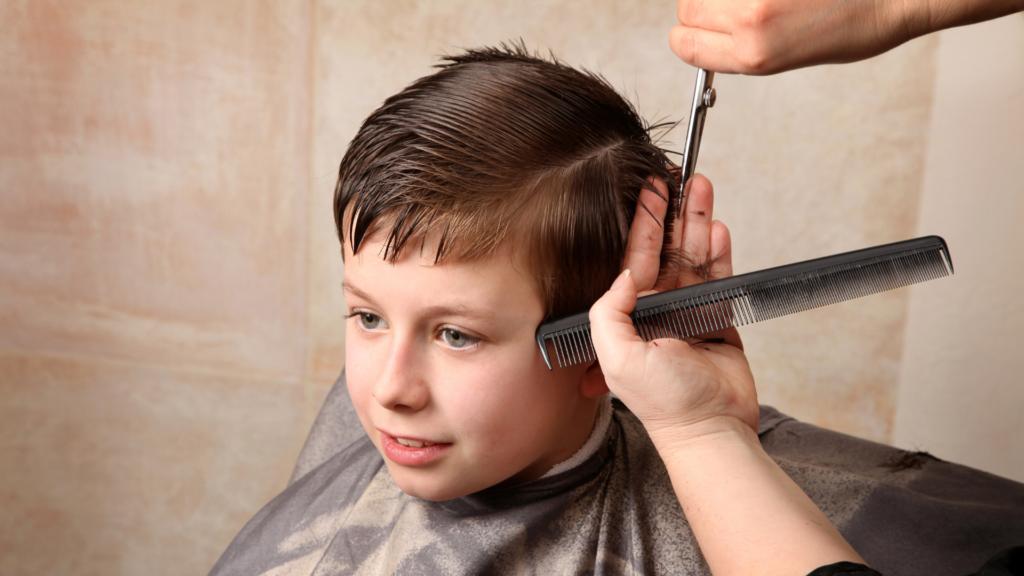
The First Haircut: What to Expect
Most barbers recommend a child’s first proper haircut somewhere between one and two years old, though plenty of kids go longer before that first trim happens. Keep expectations realistic: toddlers wiggle, get scared of clipper noise, and sometimes need a break halfway through. A good barbershop that handles kids regularly will have patience built into the pricing and the pace.
Easy, Low-Maintenance Styles for Young Boys
For boys under ten, simplicity wins every time. A crew cut or a light taper requires almost no daily maintenance, which matters enormously when you’re the one who has to actually get your kid out the door for school on time. Avoid anything requiring daily product application at this age; it’s simply not realistic, and most young boys will wipe product straight into their eyes anyway.
Teen Haircuts: Letting Them Express Some Identity
Teenagers are a different story. This is often the first time a young man starts caring about how his hair looks as a form of self-expression, and it’s worth letting him have some input, within reason. Textured crops and mid fades tend to be popular, low enough maintenance for a busy teenage schedule, but stylish enough to feel personal rather than imposed by a parent.
Table 10: Age-Appropriate Haircut Guide
| Age Range | Recommended Style | Maintenance Needed |
| 1–5 years | Light trim, simple crew cut | Minimal, every 6–8 weeks |
| 6–10 years | Crew cut, light taper | Low, every 4–6 weeks |
| 11–14 years | Mid fade, textured crop | Moderate, every 3–4 weeks |
| 15–18 years | Fade of choice, French crop | Moderate to high, every 2–4 weeks |
Making It a Positive Experience
A little advice from behind the chair: let your son answer questions about his own haircut when the barber asks. It builds confidence and ownership over his own appearance early. And if he’s nervous about clippers, ask the barber to run them near his hand first so he can feel the vibration isn’t scary. Small things like that turn a stressful appointment into one your kid actually looks forward to.
Haircut to Shave: Finishing the Look
A great haircut deserves a clean finish, and that’s where the transition from Haircut to Shave becomes part of the full barbershop experience rather than an afterthought.
Why the Finishing Shave Matters
The neckline and hairline are where haircuts live or die in terms of looking truly finished. Even a perfectly executed fade or taper can look unfinished if the edges around the neck, sideburns, and hairline aren’t cleaned up with a razor. This final step, often done with a straight razor or detail trimmer after the clipper work is complete, is what separates a good haircut from a great one.
The Classic Hot Towel Shave Experience
For men getting a full shave rather than just hairline cleanup, the traditional hot towel treatment remains the gold standard. Hot towels open pores and soften the beard, making the razor glide smoother and reducing irritation significantly compared to a cold, dry shave. Pre-shave oil, a quality lather, and a sharp blade (traditionally a straight razor, though safety razors work well too) complete the ritual.
Skin Fade to Clean Shave: A Complementary Pairing
Men who wear sharp skin fades often pair the look with a fully clean-shaven face, the smooth skin at the hairline echoes the smooth skin exposed by the fade itself, creating a cohesive, polished look from top to bottom. It’s a small detail, but barbers notice when clients put this kind of thought into the total presentation.
Beard Lineups: Precision Beyond the Hair
For bearded clients, a proper beard lineup (defining crisp edges along the cheek line, neckline, and mustache) is just as important as the haircut itself. A sharp haircut paired with a scraggly, undefined beard line undercuts the whole effort. Ask for your beard to be lined up every time you’re in for a haircut, even if you’re not getting it fully trimmed, it maintains that crisp finished look between full beard services.
Products and Tools: What Your Barber Uses and Why
Understanding what’s actually being applied to your hair helps you make better decisions for home maintenance too.
Clippers and Guards: The Backbone of Every Fade and Taper
Professional clippers use interchangeable guards (numbered 0 through 8, generally) that determine cut length, a 0 guard cuts essentially to the skin, while an 8 guard leaves over an inch of length. Fades and tapers rely on a barber skillfully blending between multiple guard lengths, which is why machine quality and blade sharpness matter so much for a clean result.
Pomade, Wax, and Clay: Understanding the Differences
Table 11: Styling Product Comparison
| Product | Hold Level | Shine Level | Best For |
| Water-based pomade | Medium | High | Side parts, pompadours |
| Oil-based pomade | High | Very high | Classic slicked styles |
| Matte clay | High | None (matte) | Textured crops, modern styles |
| Wax | Medium | Low | Light texture, natural finish |
| Sea salt spray | Low to medium | None | Beachy texture, curly shags |
Scissors vs. Razors: Different Tools for Different Textures
Scissor-cutting creates blunt, clean edges and is generally preferred for straight and wavy hair where a crisp line matters. Razor-cutting removes bulk and creates softer, textured edges, often preferred for curly and coily textures where a blunt scissor line can look unnaturally heavy. Most skilled barbers use both tools within a single haircut depending on which zone of the head they’re working on.
How Much Should You Pay for a Haircut?
Pricing confuses a lot of men, especially those used to one particular shop who then travel or try somewhere new and find wildly different prices.
Factors That Actually Drive Haircut Pricing
Table 12: Haircut Pricing Factors
| Factor | Effect on Price |
| Geographic location (urban vs. rural) | Urban shops often 30–50% higher |
| Barber experience/seniority | Senior barbers command premium pricing |
| Service complexity (fade vs. simple trim) | Fades typically cost more due to skill and time |
| Added services (shave, beard line, wash) | Each addition increases total cost |
| Shop type (traditional barbershop vs. upscale salon) | Salons often price higher for similar services |
What’s a Fair Tip?
Standard barbershop etiquette suggests 15 to 20 percent of the total service cost as a tip, similar to restaurant service norms, with 20 percent or more being appropriate if you’re genuinely thrilled with the result or it’s a special occasion cut.
Membership and Package Deals: Are They Worth It?
Many modern barbershops now offer monthly membership packages, a flat monthly fee covering a set number of visits, which can meaningfully reduce per-visit cost for men who maintain fades or tapers requiring visits every two to three weeks. If you’re getting cuts more than once a month, it’s worth asking whether your regular shop offers this kind of package.
How Often Should You Get a Haircut?
This depends almost entirely on the style you’re maintaining, not some universal rule.
Table 13: Recommended Haircut Frequency by Style
| Style | Recommended Frequency |
| High or skin fade | Every 2 weeks |
| Mid fade | Every 3 weeks |
| Low fade or taper | Every 4 weeks |
| Crew cut | Every 4–6 weeks |
| Longer textured styles | Every 6–8 weeks |
| Buzz cut | Every 2–3 weeks (grows out visibly fast) |
The sharper and more dramatic your fade, the faster it loses its clean line as new growth comes in. A high skin fade that looks incredible on day one can look patchy and uneven by week three if you skip your usual schedule.
Talking to Your Barber: How to Get the Cut You Want
This is the section that actually prevents the bad haircuts we talked about back at the beginning.
Bring a Photo, But Explain Your Hair Too
Photos are genuinely useful, but a photo alone doesn’t account for the fact that your hair texture might be completely different from the model in the picture. Explain both: “I want something like this” and “but my hair is thicker/curlier/thinner than his, so I know it’ll look a little different.”
Use the Right Vocabulary
Now that you know the difference between a fade and a taper, and the difference between low, mid, and high, use those exact terms. Saying “mid fade on the sides, taper around the neck, leave the top around three inches for some texture on top” gives your barber far more precise information than “just make it look good.”
Speak Up Mid-Cut, Not After
If something feels off partway through, say something immediately. A barber can almost always correct course mid-service. Once the cape comes off and you’ve left the shop, options become much more limited.
Be Honest About Maintenance Willingness
Tell your barber upfront if you’re not willing or able to style your hair daily or visit every two weeks. A good barber will steer you toward a style that still looks sharp with realistic maintenance rather than setting you up to be disappointed in three weeks.
Maintaining Your Haircut Between Visits
The best haircut in the world looks rough fast without basic upkeep at home.
Daily Styling Basics
A small amount of product, a dime-sized amount for most styles, goes further than people expect. Apply to slightly damp hair, work it through with fingers starting at the roots, then style. Over-applying product is one of the most common mistakes men make at home.
Washing Frequency and Scalp Health
Washing hair every day with regular shampoo can strip natural oils excessively; most dermatologists recommend washing every two to three days for most hair types, using a gentle, sulfate-free formula if your scalp runs dry.
Trimming Your Own Neckline Between Visits
For men on a four to five week haircut schedule, the neckline often grows in noticeably before the next appointment. A simple trimmer at home, used carefully just to clean up the very back of the neckline, can extend how fresh your cut looks between full barbershop visits.
Finding the Right Barbershop
At the end of the day, every piece of knowledge in this guide works best when it’s paired with the right person holding the clippers.
What Separates a Great Barber from an Average One
Look for consistency across multiple visits, not just one lucky great haircut. Ask about their experience with your specific texture, a barber who’s spent years working primarily with straight hair may need more guidance (or more trust from you to learn) when it comes to coily textures, and vice versa.
Searching “Barbershop Near Me”: What to Actually Look For
When you search barbershop near me and get a list of options, don’t just pick the one with the most stars. Read a handful of recent reviews specifically mentioning the style you want, a shop with great reviews for beard trims might not have the same fade specialist you need.
Building a Long-Term Relationship
The real payoff comes after several visits, once a barber knows your hair’s growth pattern, your face shape, and your preferences well enough that you barely need to explain anything anymore. That kind of relationship, built over months and years, is worth more than any single perfect haircut.
Frequently Asked Questions
What’s the difference between a fade and a taper?
A fade gradually shortens hair all the way down to bare skin at its shortest point. A taper gradually shortens hair too, but never fully exposes skin, always leaving at least a light covering of hair. This single difference affects the look, the maintenance schedule, and how formal or bold the haircut appears.
How often should I get a haircut if I have a fade?
Most fades, especially high or skin fades, need maintenance every two to three weeks because the short sides grow out and lose their sharp line quickly. Lower fades and tapers are more forgiving and can often stretch to four weeks between visits.
What haircut is best for a round face?
Styles that add height on top, like a high fade with volume or a pompadour, help create the illusion of length and balance for rounder face shapes. Avoid heavy volume on the sides, which can make a round face appear even wider.
Can curly hair handle a skin fade?
Yes, curly hair works very well with fades, especially drop fades, which curve to complement the natural movement of curls rather than fighting against it with a straight, harsh line. The key is finding a barber experienced specifically with curly textures.
How much should I tip my barber?
Standard etiquette suggests 15 to 20 percent of your total service cost, with 20 percent or higher being appropriate for an especially great result or a special occasion haircut.
What’s the best first haircut for a toddler?
A simple, light trim or a basic crew cut works best for a child’s first real haircut, usually somewhere between one and two years old. Keep it simple, expect some wiggling, and choose a shop experienced in working patiently with young kids.
Is a taper more professional than a fade?
Generally, yes. A taper tends to read as more conservative and understated since it never exposes bare skin, making it a safer choice for formal workplaces like law, finance, or government roles. A low fade can also work professionally, but high or skin fades tend to make more of a statement.
What should I say to my barber to get the exact cut I want?
Be specific: name the fade height (low, mid, high) or specify a taper, describe how much length you want left on top, mention your hair texture, and bring a reference photo if possible. Speaking up during the cut if something feels off is just as important as the initial explanation.
How do I keep my haircut looking fresh between visits?
Use a small amount of appropriate product daily, wash your hair every two to three days with a gentle shampoo rather than daily, and consider trimming your own neckline carefully at home if your appointments are spaced four or more weeks apart.
Conclusion
A great haircut isn’t luck, and it isn’t magic, it’s the result of clear communication, realistic expectations about maintenance, and a style chosen to match your actual hair and face rather than someone else’s. You now know the real difference between a fade and a taper, which classic and modern styles suit your texture and face shape, what a fair price looks like, and how to actually talk to the person holding the clippers so you walk out happy every time.
The next time you sit down in that chair, you won’t just hope for the best. You’ll know exactly what to ask for, why it’ll work for you specifically, and how to keep it looking sharp long after you leave. That’s the difference between getting a haircut and actually understanding one. Book your next appointment with that confidence, and watch how differently the conversation goes.