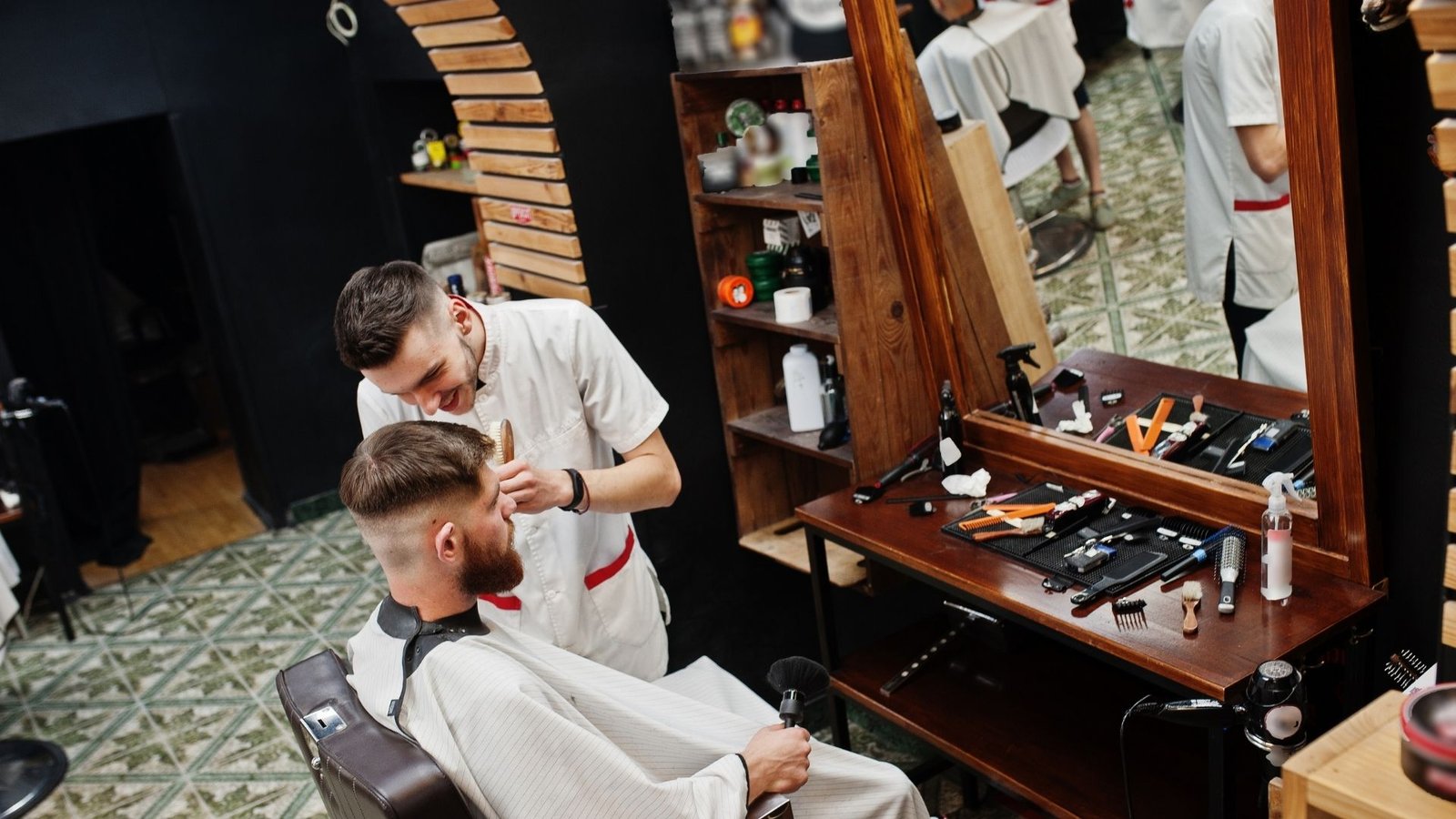
A great grooming routine isn’t about vanity. It’s about showing up in the world looking like you have your act together, even on the days you don’t feel like it. This guide walks you through the entire process, from the first snip of the scissors to the last swipe of a straight razor, covering the history, the science, the tools, and the habits that separate a sharp-looking man from one who’s just winging it. You’ll learn how face shape, skin type, and hair texture should shape your decisions, how to talk to your barber so you get exactly what you want, and how to build a routine that fits your life instead of fighting it. By the end, you’ll have a clear system you can actually stick to, not just a list of products gathering dust in your bathroom cabinet.
Key Takeaways
- A complete grooming routine is a system, not a series of isolated habits. Haircuts, beard trims, shaves, and skincare all work together, and neglecting one throws off the rest.
- Knowing your face shape, skin type, and hair texture is the single biggest factor in getting a haircut or shave that actually suits you.
- The difference between a trim and a shave matters. Confusing the two is one of the most common reasons men leave the chair unhappy.
- Skin prep and aftercare are not optional extras. They determine whether you walk out looking sharp or walk out with razor burn.
- Consistency beats intensity. A modest routine followed every week beats an elaborate one you abandon after a month.
Why Your Grooming Routine Needs a System, Not Just a Habit
A grooming routine works best when it’s a repeatable system, not a collection of habits you perform whenever you happen to remember. Systems have structure. Habits, on the other hand, tend to drift, get skipped, or fall apart the moment life gets busy.
The Difference Between Grooming by Accident and Grooming with Intention
Grooming by accident looks like this: you shave when your face starts to itch, you get a haircut when strangers start commenting, and you buy skincare products only after a breakout embarrasses you in a meeting. It’s reactive. You’re always catching up.
Grooming with intention flips that script. You know your haircut cycle. You know when your beard needs shaping. You have a shave routine you follow because it works, not because you’re desperate. That intention doesn’t require hours of extra effort. It just requires a plan you check in with regularly.
What a Complete Routine Actually Covers
A full grooming routine touches four main areas:
- Haircuts — the foundation that frames your whole look
- Beard maintenance — trims, shaping, and edge work
- Shaving — from quick touch-ups to a full straight razor experience
- Skincare — prep, protection, and repair
Most men focus heavily on one or two of these and neglect the rest. A guy with a sharp fade might be shaving with a dull three-blade razor and zero aftercare. Another might have flawless skin but a haircut that’s grown out past its expiration date. The goal is balance across all four.
How the Right Routine Saves You Time and Money in the Long Run
Here’s the part most men don’t think about: an inconsistent routine actually costs more. Skipping haircuts means longer, more complicated appointments later. Ignoring beard maintenance means more product needed to fix uneven growth. Poor shaving technique means more razors, more bumps, and more visits to the drugstore for bump-fighting creams.
A consistent system means shorter appointments, fewer emergency fixes, and less money wasted on products that only exist to patch up bad habits. Think of it the way you’d think of car maintenance. Regular oil changes cost less than replacing an engine.
Once you understand why a system matters more than sporadic effort, it helps to know where all of this actually came from, because men have been building grooming systems for thousands of years.
A Brief History of Men’s Grooming — From the Barber Pole to the Modern Chair
Men’s grooming isn’t a modern invention dressed up in trendy packaging. It’s one of the oldest personal care traditions in human history, and understanding where it came from gives real context to what happens in the chair today.
Ancient Grooming Rituals and the Birth of the Barbershop
Archaeological evidence shows that razors made of flint, shells, and shark teeth were in use as far back as 30,000 BCE. Ancient Egyptians shaved with copper razors and considered a clean-shaven face a mark of status and hygiene, particularly among priests and nobility. In ancient Greece and Rome, barbershops, known as tonstrina in Latin, became social hubs where men gathered not just for a haircut but for news, gossip, and political debate.
The barber’s role expanded well beyond hair. For centuries, barbers also performed minor surgery and dentistry, which is where the red and white barber pole comes from: the red represented blood, the white represented bandages. It’s a strange bit of history, but it explains why the neighborhood barbershop has always felt like more than a place to get a haircut. It’s been a community fixture since antiquity.
How Shaving Evolved from a Daily Necessity to a Luxury Ritual
For most of history, shaving was a chore, not a treat. Straight razors required regular stropping and honing, and a bad shave could mean nicks, infections, or worse. The invention of the safety razor by King Camp Gillette in 1901 changed everything, making shaving faster, safer, and accessible to the average man at home.
That convenience came at a cost. Home shaving eventually replaced the ritual of the barbershop shave for most men, and the skill of straight razor shaving became a specialty rather than a daily necessity. Today, that specialty has become the luxury. A full straight razor shave at a barbershop isn’t about needing a shave. It’s about experiencing one done right, by someone trained to do it better than you can at your bathroom sink.
The Modern Grooming Revival and What It Means for Men Today
Over the past fifteen years, men’s grooming has seen a genuine revival. Barbershops have shifted from purely utilitarian spaces into destinations that combine skilled craftsmanship with a relaxed, social atmosphere. According to IBISWorld industry data, the U.S. barbershop industry generates billions in annual revenue, driven largely by demand for specialty services like fades, beard sculpting, and hot towel shaves.
This revival means men today have more access to skilled grooming than at almost any point in modern history. It also means expectations have gone up. A basic haircut used to be the norm. Now, precision fades, tailored beard lines, and full-service shaves are widely available and increasingly expected.
Understanding this history is interesting, but it’s only useful once you understand your own face and hair, because no barber, however skilled, can give you a great result without that information.
Know Your Face Before You Touch a Blade or a Clipper
Every great haircut or shave starts with an honest assessment of what you’re working with. Face shape, skin type, hair texture, and even your age all play a role in what will actually look good and feel comfortable.
Face Shape and How It Drives Every Grooming Decision
Face shape influences almost every choice a barber makes, from where to add volume in a haircut to how a beard should be shaped to balance your features.
| Face Shape | Characteristics | Haircut Guidance | Beard Guidance |
| Oval | Balanced proportions, slightly narrower at jaw | Most styles work; low-maintenance versatility | Most beard shapes suit this face |
| Round | Full cheeks, soft jawline, similar width and height | Add height on top, shorter sides to elongate | Angular beard shapes to sharpen the jaw |
| Square | Strong jaw, broad forehead, angular | Textured styles that soften edges | Rounded beard edges to soften sharp angles |
| Rectangular | Long face, narrow width | Shorter on top, fuller sides | Fuller sides, shorter chin length |
| Diamond | Narrow forehead and jaw, wide cheekbones | Fringe or texture to balance forehead | Beard fullness at the jaw and chin |
| Heart | Wide forehead, narrower chin | Volume at the sides, shorter on top | Fuller chin growth to balance narrow jaw |
A skilled barber reads your face shape in seconds, but knowing your own shape helps you have a more productive conversation in the chair.
Skin Type, Sensitivity, and What Your Barber Needs to Know
Your skin type determines how your face will react to a blade, hot towels, and any product applied during a service. There are generally four categories: normal, oily, dry, and sensitive. Sensitive skin is especially important to flag before any shave, since it’s more prone to razor burn, redness, and ingrown hairs.
Tell your barber if you have a history of skin conditions like eczema, psoriasis, or rosacea. This isn’t oversharing. It’s information that changes which products they’ll use and how much pressure they’ll apply.
Hair Texture, Density, and Growth Patterns Explained
Hair texture ranges from straight to wavy to curly to coily, and each type behaves differently under clippers and blades. Density refers to how many hairs you have per square inch, while growth pattern describes the direction your hair naturally grows, including cowlicks and whorls that can throw off a symmetrical cut if not accounted for.
Coarse, curly hair is more prone to ingrown hairs after shaving because the hair curls back into the skin as it grows. This is a major reason why the shaving approach for curly, coarse hair needs to differ from the approach used on straight, fine hair, something we’ll cover in more detail later in this guide.
How Age and Hormones Affect Your Grooming Needs
Hormonal shifts change your grooming needs over time. Testosterone drives facial and body hair growth, which is why beard density often increases through your twenties and into your thirties. As men age, hair can also become coarser or, in the case of scalp hair, thinner due to genetic pattern baldness, which affects an estimated 50% of men by age 50, according to the American Academy of Dermatology.
Skin also changes with age, often becoming drier and less elastic, which means your shaving and skincare approach at 45 shouldn’t look identical to your approach at 22.
Once you understand these fundamentals about your own face and hair, you’re ready to talk about the first and most visible part of any grooming routine: the haircut.
The Haircut — Foundation of Every Great Grooming Routine
If your grooming routine were a house, the haircut would be the foundation. Everything else, your beard, your shave, your skincare, is built around the shape and style your hair establishes.
Why the Haircut Sets the Tone for Everything That Follows
A haircut frames your face more than any other single grooming decision. It affects how your beard should be shaped, how your face looks in photos and video calls, and even how formal or casual you appear without saying a word. A sharp haircut paired with a scruffy, untrimmed beard sends a mixed signal. Coordinating the two is what creates a cohesive, put-together look.
Understanding Fades, Tapers, and Textured Cuts
Three terms dominate modern men’s haircuts, and knowing the difference helps you communicate clearly with your barber.
| Style | Description | Best For |
| Fade | Hair gradually shortens from longer on top to skin-level at the bottom, with variations like low, mid, high, and skin fade | Men wanting a clean, sharp, modern look |
| Taper | Similar gradual shortening, but typically less dramatic and doesn’t go down to skin | Men wanting a subtler, more classic finish |
| Textured Cut | Hair is cut with varying lengths to create movement and volume, often on top | Men with thicker or wavy hair wanting a natural, tousled look |
How to Communicate Exactly What You Want in the Chair
The single biggest cause of haircut disappointment is poor communication. Bring reference photos. Use specific numbers when discussing clipper guards (a “1 on the sides” means something very different from a “3”). Be clear about how much length you want to keep on top and describe your daily styling habits honestly, since a barber will recommend different cuts for a man who spends ten minutes styling versus one who wants to towel-dry and go.
Haircut Maintenance Schedules by Style Type
| Style | Recommended Rebooking Window |
| Skin fade | 2 to 3 weeks |
| Low or mid fade | 3 to 4 weeks |
| Taper | 4 to 5 weeks |
| Textured/longer cut | 5 to 7 weeks |
| Buzz cut | 2 to 3 weeks |
Shorter, sharper styles grow out visibly faster and need tighter maintenance windows, while longer, textured cuts can stretch further between visits without losing their shape.
Once your haircut is dialed in, the next layer of the routine is what happens on your face between full grooming sessions, starting with the beard trim.
Beard Trim — Keeping Your Facial Hair Sharp Between Full Sessions
A beard trim is one of the most requested services at any modern barbershop, and for good reason. It’s the difference between a beard that looks intentional and one that just looks unkempt.
What a Professional Beard Trim Actually Involves Step by Step
A proper beard trim typically follows this sequence: consultation on desired length and shape, combing to detect direction of growth, clipper work to set overall length, scissor work for detail and blending, straight razor or trimmer work to define lines, and a final check with a mirror from multiple angles. Most professional trims take between 15 and 25 minutes depending on beard length and complexity.
Neckline, Cheek Line, and Fade — The Three Pillars of a Clean Beard
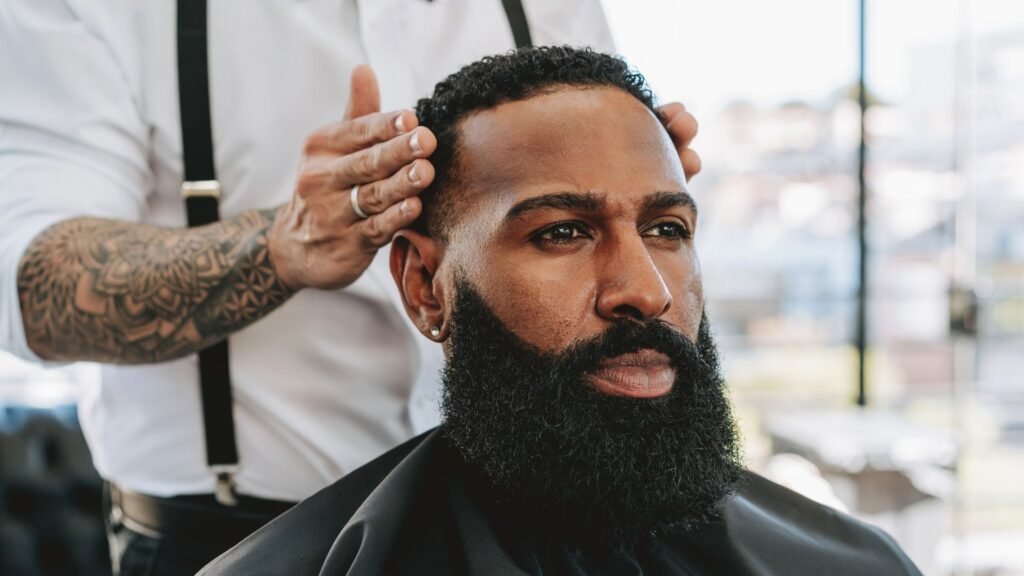
A beard lives or dies by its edges. The three critical zones are:
- Neckline: Should follow the natural curve above your Adam’s apple, not cut straight across, which can make the beard look boxy and unnatural.
- Cheek line: Defines where the beard stops and bare skin begins on the upper cheek, ranging from a natural, higher line to a sharper, lower line depending on preference.
- Beard fade: A gradual blend from shorter hair near the ears into fuller beard growth, often paired with a matching haircut fade for a cohesive look.
Tools Your Barber Uses and Why They Matter
Professional barbers use a combination of clippers with detail blades, straight razors for crisp lines, precision trimmers for fine detail work, and combs designed specifically to lift and separate coarse or curly hair. The precision of these tools is a major reason a professional trim often looks sharper and lasts longer than one done at home with a basic drugstore trimmer.
At-Home Beard Care Between Shop Visits
Between professional trims, a basic at-home routine keeps things looking sharp:
- Wash your beard 2 to 3 times a week with a beard-specific cleanser, since regular shampoo can strip natural oils
- Comb daily to train growth direction and prevent tangling
- Apply beard oil to soften hair and moisturize the skin underneath
- Use small trimmers for stray hairs, but avoid attempting a full reshape at home
Once your beard is properly maintained, the next major decision point in your routine is understanding the difference between trimming and a full shave, which is where a lot of confusion tends to creep in.
The Shave — From Basic Cleanup to Full Straight Razor Experience
Shaving is where grooming routines vary the most, ranging from a two-minute cartridge razor job in the shower to a 45-minute barbershop straight razor experience.
The Difference Between a Trim and a Shave (and Why Men Confuse Them)
A trim shortens hair to a set length without removing it completely, while a shave removes hair down to the skin. Men often use these terms interchangeably when talking to a barber, which leads to miscommunication. If you want your beard shorter but still present, ask for a trim. If you want bare skin, ask for a shave. This single distinction prevents more grooming disappointments than almost any other piece of communication.
The Straight Razor Shave Process Explained in Full
A traditional straight razor shave at a barbershop generally follows these steps:
- Hot towel application to soften hair and open pores
- Pre-shave oil applied to reduce friction
- Lathering with a shaving cream or soap, often applied with a badger brush for lift and warmth
- First pass with the grain of hair growth to remove the bulk of the hair
- Second hot towel to re-soften and prep for a closer pass
- Second pass against or across the grain for a closer finish
- Cool towel application to close pores
- Aftercare with balm or moisturizer
The entire process, done properly, typically takes between 30 and 45 minutes.
Safety Razor vs. Cartridge Razor vs. Straight Razor — A Direct Comparison
| Factor | Cartridge Razor | Safety Razor | Straight Razor |
| Closeness of shave | Good | Very close | Closest available |
| Skill required | Minimal | Moderate | High |
| Cost over time | Higher (frequent cartridge replacement) | Lower (cheap blade replacement) | Lowest ongoing cost, high upfront investment |
| Risk of irritation | Moderate | Low to moderate if used correctly | Low if done by a professional, high if self-taught |
| Best for | Convenience and speed | Men wanting a closer shave with some effort | Special occasions or professional barbershop visits |
If speed matters most, choose a cartridge razor. If you want a closer shave and don’t mind a learning curve, a safety razor is worth the investment. If you want the closest, smoothest result without the risk of self-inflicted nicks, that’s exactly what a trained barber is for.
How to Get the Best Shave for Your Specific Skin Type
The single best strategy for how to get the Best Shave depends heavily on your skin. Sensitive skin benefits from single-pass shaving with the grain only, fragrance-free products, and cool water rinses. Oily skin tolerates closer, multi-pass shaves better but still needs oil-free aftercare to avoid clogged pores. Dry skin needs heavier pre-shave oils and richer post-shave balms to prevent tightness and flaking.
Getting a great shave isn’t only about the blade. What happens before and after the blade touches your skin is just as important, and that’s the next piece of the puzzle.
Skin Prep and Aftercare — What Happens Before and After the Blade
Skin prep and aftercare are the most commonly skipped steps in an at-home shaving routine, and they’re also the biggest reason professional shaves feel so much better than DIY ones.
Pre-Shave Prep Done Right
Proper prep softens hair and prepares skin to reduce friction and irritation. This typically includes washing the face with warm water to remove oil and debris, applying a hot towel for one to two minutes to further soften hair, and using a pre-shave oil to create a protective layer between skin and blade.
Products Your Barber Uses and Why They Work
Barbershops typically rely on a specific product lineup for a reason:
| Product | Purpose |
| Pre-shave oil | Softens hair, reduces friction, protects skin |
| Shaving cream or soap | Creates a protective lather that lifts hair for cutting |
| Alum block | Antiseptic astringent applied after shaving to close pores and reduce bleeding from nicks |
| Aftershave balm or lotion | Soothes, hydrates, and calms skin post-shave |
| Cooling towel | Closes pores and reduces redness |
Post-Shave Care — Balms, Oils, and What to Avoid
After a shave, skin is more vulnerable to irritation, so avoid alcohol-heavy aftershaves that can dry and sting freshly shaved skin. Instead, opt for balms with soothing ingredients like aloe vera or chamomile. Avoid touching your face excessively for the first hour, and skip harsh exfoliants for at least 24 hours after a close shave.
Building a Home Aftercare Routine That Extends Your Shop Results
To make a barbershop shave last, maintain a simple at-home follow-up: moisturize daily, apply SPF each morning to protect freshly exposed skin, and avoid over-exfoliating, which can undo the smoothness a professional shave provides.
Understanding what your skin needs before and after a shave naturally leads to a deeper question: what’s actually happening to your hair and skin on a biological level, and why does that matter for your routine?
The Science Behind Hair and Skin — What Every Man Should Understand
Grooming isn’t just an art. There’s real biology behind why certain techniques work better than others, and understanding it helps explain the “why” behind many of the recommendations you’ll hear in a barbershop.
How Hair Growth Cycles Work and Why It Matters for Your Routine
Hair grows in three phases: anagen (active growth), catagen (transition), and telogen (resting, before shedding). According to the American Academy of Dermatology, the average scalp hair grows about half an inch per month, though facial hair growth rates vary by individual and hormone levels. Understanding this cycle explains why haircuts and beard trims need to happen on a regular schedule rather than a random one. Your hair is constantly cycling, and a consistent trim schedule keeps you ahead of the growth rather than reacting to it.
Ingrown Hairs, Razor Bumps, and How to Prevent Them
Ingrown hairs happen when a cut hair curls back and grows into the skin instead of out and away from it, which triggers inflammation and the small, often painful bumps known as razor bumps or, medically, pseudofolliculitis barbae. Prevention strategies include shaving in the direction of hair growth, using a sharp blade rather than a dull one, avoiding excessive pressure or repeated passes over the same area, and exfoliating gently a day or two before shaving to clear dead skin that can trap hair.
Dermatology Research on Shaving Frequency and Skin Health
Research published by the American Academy of Dermatology notes that shaving frequency should be tailored to individual skin sensitivity, and that daily shaving isn’t necessarily better for skin health than shaving every two to three days for men prone to irritation. This is a useful reminder that grooming frequency isn’t one-size-fits-all. It should match your skin’s actual tolerance, not a generic schedule.
Why Coarse and Curly Hair Requires a Different Approach
Curly and coarse hair types are significantly more prone to ingrown hairs and razor bumps because the curved hair shaft re-enters the skin more easily after being cut short. For these hair types, dermatologists often recommend leaving slightly more length rather than shaving completely smooth, using single-blade razors instead of multi-blade cartridges, and incorporating chemical exfoliants like salicylic acid a few times a week to keep follicles clear.
Understanding the science behind your hair and skin makes the vocabulary used at a barbershop much easier to navigate, which brings us to decoding exactly what’s on a typical service menu.
Grooming Services Decoded — What Every Barbershop Menu Item Really Means
Barbershop menus can look like a foreign language if you’re not familiar with the terminology. Here’s a plain-English breakdown.
Breaking Down the Most Common Service Names
| Menu Term | What It Actually Means |
| Haircut | Standard clipper and/or scissor cut to a desired style |
| Skin fade | Haircut that blends from longer hair on top to bare skin at the sides |
| Line-up / Edge-up | Sharpening the hairline and edges with a trimmer or razor |
| Beard trim | Shaping and shortening facial hair to a defined length and line |
| Beard sculpt | More detailed shaping service, often including line work and styling |
| Hot towel shave | Full shave service using hot towels and traditional lathering, often with a straight razor |
| Head shave | Complete removal of scalp hair, usually with a razor for a smooth finish |
Add-On Services — Hot Towel, Facial Massage, Beard Oil Treatment
Many barbershop locations offer add-ons that enhance a standard service. Hot towel treatments soften hair and relax facial muscles. Facial massages, sometimes done with warm stones or simple hand technique, help relieve tension and improve circulation. Beard oil treatments hydrate and add shine while helping tame flyaways, particularly useful for coarse or dry beards.
How to Read a Menu and Choose the Right Combination for Your Goals
When booking, think in terms of your actual goal rather than just picking the most expensive package. If you need a quick refresh, a standard haircut and line-up covers it. If you’re prepping for an event, consider adding a hot towel shave and facial massage. If your beard needs real shaping rather than just a trim, ask specifically for a beard sculpt rather than a basic trim so your barber knows to spend extra time on detail work.
Now that you understand the menu, it’s time to put everything together into an actual routine you can follow week after week.
Building Your Personal Grooming Routine — Step by Step
A grooming routine works best broken into daily, weekly, monthly, and seasonal layers, each with a clear purpose.
Morning Routine — Daily Habits That Protect Your Skin and Hair
A solid morning routine takes less than five minutes: cleanse your face with a gentle cleanser, apply moisturizer while skin is still slightly damp, apply SPF of at least 30, and run a comb or brush through hair and beard to train direction and remove overnight tangles.
Weekly Routine — What to Do at Home Between Shop Visits
On a weekly basis, deep-clean your beard with a specialized wash two to three times, exfoliate your face once or twice to prevent buildup and ingrown hairs, and do a quick trim of any obvious stray hairs around the neckline or cheek line if needed.
Monthly Routine — When to Book Your Professional Services
Most men benefit from booking a haircut every three to five weeks and a beard trim every two to three weeks, depending on growth rate and desired style. Set calendar reminders rather than relying on memory, since “I’ll book it when I remember” is exactly how routines fall apart.
Seasonal Adjustments — How Weather Affects Your Routine
| Season | Adjustment |
| Winter | Increase moisturizer use to combat dry, cold air; consider heavier beard oil |
| Summer | Prioritize SPF and lighter, oil-free moisturizers due to increased sweat and sun exposure |
| Spring/Fall | Transition products gradually as humidity and temperature shift |
With your routine structured, the next step is making sure the products filling your bathroom cabinet are actually worth using.
Products That Actually Work — Cutting Through the Noise
The men’s grooming product market is crowded, and not every product with flashy packaging delivers real results. Here’s how to separate what matters from what’s just marketing.
Shampoos, Conditioners, and Scalp Treatments for Men
Look for sulfate-free shampoos if you have color-treated or chemically processed hair, and consider a scalp-specific treatment if you’re noticing early thinning, since ingredients like ketoconazole and caffeine have some supporting research for scalp health, according to dermatology literature.
Beard Oils, Balms, and Butters — What They Do and When to Use Them
| Product | Function | Best Used |
| Beard oil | Lightweight hydration and shine | Daily, especially after washing |
| Beard balm | Heavier hold and styling with moisture | When you need light shaping throughout the day |
| Beard butter | Deep conditioning for dry, coarse beards | A few times weekly for extra softness |
Shaving Creams, Soaps, and Gels Compared
| Product | Texture | Best For |
| Shaving cream | Rich lather, easy to apply | Most skin types, everyday use |
| Shaving soap | Requires a brush, dense lather | Traditional wet shaving enthusiasts |
| Shaving gel | Clear, often menthol-based | Men who want visibility while shaving detailed areas |
Moisturizers and SPF — The Non-Negotiables Most Men Skip
Moisturizer and SPF are the two products most men neglect, yet dermatologists consistently rank them among the most important for long-term skin health. Daily SPF use is one of the most effective ways to prevent premature aging and reduce skin cancer risk, according to the Skin Cancer Foundation.
Once you know which products are worth your money, it’s worth understanding what you’re actually paying for when you sit in the barber’s chair.
Pricing, Value, and What You’re Really Paying For
Grooming costs vary widely, and understanding what drives that variation helps you spend your money where it counts.
Average Pricing Across All Major Grooming Service Types
| Service | Typical Price Range (US) |
| Basic haircut | $20 to $45 |
| Skin fade or specialty cut | $35 to $65 |
| Beard trim | $15 to $30 |
| Hot towel shave | $30 to $60 |
| Haircut + beard combo | $45 to $85 |
| Head shave | $25 to $45 |
What Separates a Budget Shop from a Premium Experience
A budget shop typically offers efficient, no-frills service focused on speed. A premium shop invests in longer appointment times, higher-end products, additional touches like hot towels and beverages, and barbers with more specialized training in techniques like straight razor shaving. Neither is objectively “better.” It depends on what you value: speed and cost, or experience and detail.
When to Splurge and When to Save
Splurge on services requiring high skill and precision, like a straight razor shave or a detailed skin fade. Save on services that are lower-risk and more routine, like a basic trim between full haircuts. A useful rule: the more permanent or visible the result, the more it’s worth paying for skill.
Tipping Culture and How It Shapes Your Long-Term Relationship
Standard tipping in most U.S. barbershops runs between 15% and 20% of the service cost, though many regular clients tip more to build rapport with their preferred barber. A strong tipping relationship often translates into better scheduling flexibility, more attentive service, and a barber who remembers exactly how you like things done without you needing to explain every time.
Even with the right routine and the right barber, mistakes happen. Knowing the most common ones can save you a lot of frustration.
Common Grooming Mistakes and How to Fix Them
Most grooming disappointments trace back to a handful of recurring mistakes.
Asking for the Wrong Thing Because You Don’t Know the Vocabulary
Using vague language like “just make it look good” leaves too much room for interpretation. Fix this by bringing photos, using specific numbers for clipper guards, and clearly stating what you don’t want, which is often just as useful as stating what you do want.
Skipping Skin Prep and Aftercare
Jumping straight to a razor without prep, or skipping moisturizer afterward, is one of the fastest ways to end up with irritation. Fix this by treating prep and aftercare as mandatory steps, not optional extras.
DIY Disasters and When to Call a Professional
Home haircuts and beard reshaping attempts frequently go wrong, especially with fades or detailed line work that require an experienced hand. If a service involves precision blending or sharp lines, it’s almost always worth booking a professional rather than risking a self-inflicted mistake that takes weeks to grow out.
Inconsistent Scheduling and What It Does to Your Look
Waiting too long between appointments means your barber has to correct overgrowth instead of maintaining a shape, which often results in a less precise outcome. Set a recurring schedule based on your specific style’s maintenance window, covered earlier in this guide, rather than booking reactively.
Beyond the regular routine, certain situations call for special planning, which brings us to specific grooming scenarios worth preparing for in advance.
Special Grooming Scenarios — Events, First Visits, and Gifts
Some grooming moments carry more weight than a routine appointment, and they deserve a bit of extra planning.
Pre-Wedding and Pre-Event Grooming Timing
For major events, schedule your haircut three to five days beforehand rather than the day before, since hair often looks best a few days after cutting, once it settles. Book beard trims and shaves closer to the event, ideally the day before, to avoid any redness or irritation showing up in photos.
First-Time Visits — What to Expect and How to Prepare
On a first visit to a new barbershop, arrive with reference photos, be ready to answer questions about your hair type and any skin sensitivities, and don’t be afraid to speak up if something isn’t going the direction you expected partway through the service.
Bringing Your Son — Introducing Kids to the Barbershop Experience
Introducing a child to the barbershop is often a memorable rite of passage. Choose a shop known for patience with younger clients, keep the first visit short and low-pressure, and consider booking alongside your own appointment so it feels like a shared experience rather than an isolated errand.
Gift Bookings — Choosing the Right Service for Someone Else
When gifting a grooming service, a full package, such as a haircut paired with a hot towel shave, tends to feel more like a genuine treat than a basic haircut alone. Check with the recipient’s preferred shop if possible, since barbers who already know a client’s preferences deliver a better experience than a random booking elsewhere.
With the fundamentals, mistakes, and special scenarios covered, it’s worth looking at where the entire industry is headed next.
Trends Shaping Men’s Grooming Right Now
Grooming continues to evolve, and a few clear trends are shaping what shops and products look like today.
The Rise of Skin-First Grooming in the Barbershop
Barbershops increasingly treat skin health as central to the experience rather than an afterthought, incorporating dermatologist-informed products and techniques focused on preventing irritation rather than just delivering a close shave.
Sustainability and Clean Grooming Products
Demand for sulfate-free, cruelty-free, and sustainably packaged grooming products has grown steadily, with more brands responding by reformulating products and reducing plastic packaging in response to consumer preference.
Technology in the Shop — Precision Tools and Digital Consultations
Some shops now use digital tools for face-mapping and style consultations, helping clients visualize a haircut before it happens, while precision-engineered clippers and trimmers continue to improve consistency, particularly for detailed fade work.
With the full picture in place, from history to modern trends, a few common questions tend to come up again and again.
Frequently Asked Questions
How often should I get a haircut?
Most men should book a haircut every three to five weeks, though shorter, sharper styles like skin fades often need attention every two to three weeks to maintain a clean look.
What’s the difference between a beard trim and a beard shape-up?
A beard trim generally shortens length evenly, while a shape-up focuses on defining the edges, neckline, and cheek line for a sharper overall silhouette.
Is a straight razor shave actually better than shaving at home?
A straight razor shave performed by a trained barber typically delivers a closer, smoother result with less irritation than most at-home shaves, largely due to blade sharpness, technique, and proper prep that’s hard to replicate without training.
How do I prevent razor bumps if I have curly hair?
Leave slightly more length rather than shaving completely smooth, use a single-blade razor, shave in the direction of hair growth, and exfoliate regularly to keep hair follicles clear.
How much should I tip my barber?
A standard tip runs between 15% and 20% of the service cost, though many clients tip more for exceptional service or to build a stronger long-term relationship with their barber.
Do I need different skincare products for shaving versus everyday use?
Yes. Shaving-specific products like pre-shave oil and aftershave balm are formulated to reduce friction and calm freshly shaved skin, which is more sensitive than skin on a non-shave day.
What should I bring to a first barbershop appointment?
Bring reference photos, know your face shape and hair type if possible, and be ready to clearly describe your daily styling habits and any skin sensitivities.
Can grooming routines really change with the seasons?
Yes. Cold, dry winter air often calls for heavier moisturizers and beard oils, while summer heat and sun exposure make daily SPF and lighter, oil-free products more important.
What’s the biggest mistake men make with their grooming routine?
Inconsistent scheduling is the most common issue. Waiting too long between haircuts or beard trims forces a barber to correct overgrowth instead of simply maintaining a shape, which usually leads to a less precise result.
Your Complete Grooming Routine Starts Here
Everything in this guide comes down to one core idea: grooming works best as a system built around your specific face, skin, and hair, not a generic routine borrowed from someone else.
The Personal Grooming Decision Checklist
Before your next appointment, run through this quick checklist:
- Do you know your face shape and how it should influence your haircut and beard shape?
- Do you know your skin type and any sensitivities worth mentioning to your barber?
- Are you scheduling haircuts and beard trims based on your style’s actual maintenance window?
- Does your at-home routine include proper prep and aftercare, not just the shave or trim itself?
- Are your products actually suited to your hair texture and skin type, rather than whatever was on sale?
Conclusion
A great grooming routine isn’t built in a single appointment. It’s built through consistency, honest communication with your barber, and a willingness to actually understand what your face and hair need instead of guessing. Start with one piece, whether that’s finally sticking to a haircut schedule or upgrading your aftercare routine, and build from there. The rest falls into place one appointment at a time.