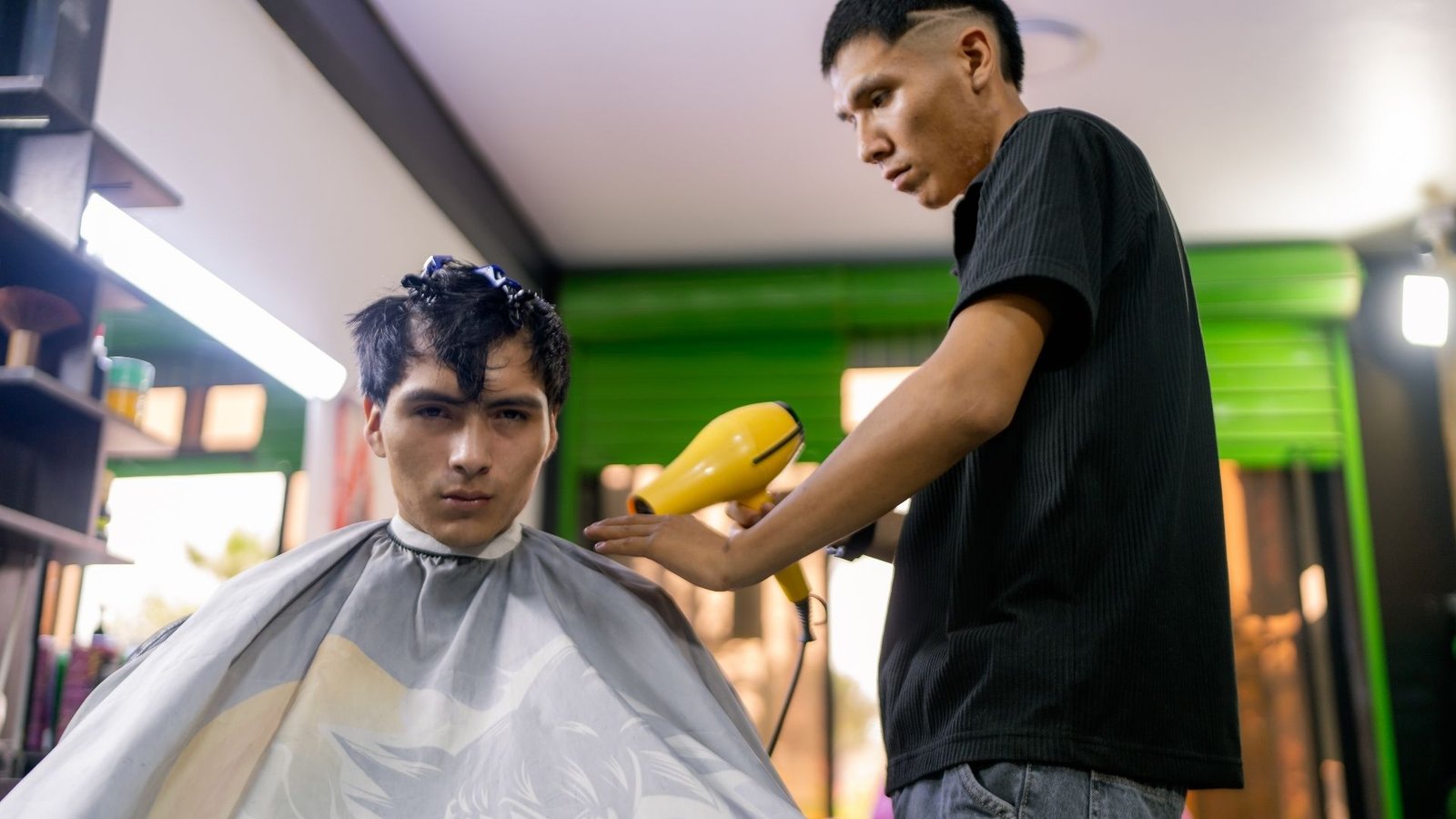
Walk through the door of a proper barbershop and the first thing that hits you isn’t the buzz of clippers or the gleam of chrome chairs. It’s the smell. Bay rum, warm shaving cream, a faint trace of leather and talc all mixing together into something that instantly tells your brain: relax, you’re somewhere good. That scent does more work than most people realize. It shapes mood, builds trust, and turns a routine haircut into a ritual you actually look forward to. This piece digs into the science, history, and practical craft behind barbershop aromas, and why the right scent profile can make or break the entire experience, whether you’re a client settling into the chair or an owner trying to build something memorable.
Key Takeaways
- Scent triggers the brain’s limbic system faster than sight or sound, which is why a barbershop’s aroma sticks in memory long after the haircut grows out.
- Classic notes like bay rum, sandalwood, and talc carry over a century of tradition, but modern shops are blending old and new to stand out.
- The right fragrance can measurably increase customer satisfaction and repeat visits, according to sensory marketing research cited throughout this guide.
- Not all scents suit all skin types or seasons, so smart product selection matters as much as the fragrance itself.
- Finding a great local shop today often means researching scent profiles and product lines online before you ever sit in the chair.
Why Does Scent Have Such a Strong Effect on Your Mood During a Haircut?
Smell reaches the emotional centers of your brain faster than any other sense, which is exactly why a whiff of bay rum can instantly put you at ease. The olfactory bulb sits directly next to the amygdala and hippocampus, the regions responsible for emotion and memory. Sight and sound have to pass through several relay stations before reaching those same areas. Smell skips the line.
How Scent Bypasses Conscious Thought
When a fragrance molecule hits your nasal receptors, the signal travels almost directly to the limbic system. That’s why a certain aftershave can instantly transport you back to your grandfather’s bathroom or a childhood barbershop visit, often before you’ve consciously identified the smell at all. Researchers at the Monell Chemical Senses Center have long studied this direct pathway, noting that odor-evoked memories tend to feel more vivid and emotionally charged than memories triggered by other senses.
Why This Matters for a Grooming Visit
A haircut is a service built on trust. You’re handing someone sharp tools and asking them to work close to your face and neck. A calming, familiar scent lowers guard and signals professionalism before a word is even exchanged. Shops that neglect this miss an easy opportunity to build client loyalty through something as simple as air quality and product choice.
The Difference Between Pleasant and Overwhelming
There’s a tipping point. A subtle layering of warm, woody, or citrus notes reads as intentional and upscale. A heavy blast of synthetic cologne or an overpowering talc cloud reads as cheap or careless. The goal is ambient, not aggressive.
What Role Did Scent Play in the History of Traditional Barbering Techniques?
Fragrance has been part of the grooming ritual since barbers first started doubling as surgeons and apothecaries centuries ago. Understanding this history explains why certain smells still dominate shops today.
Ancient and Medieval Roots
Barbers in ancient Egypt and Rome used scented oils not just for pleasure but for practical reasons, masking body odor in an era before regular bathing and using fragrant balms believed to have antiseptic properties. Bay rum itself traces back to Caribbean sailors in the 1800s, who steeped bay leaves in rum and later refined the process into the aftershave still used today.
The American Barbershop Golden Age
By the early 20th century, American shops had turned scent into a signature. Bay rum, talc, and witch hazel became inseparable from the barbershop identity, according to grooming historians who study the era’s trade catalogs and advertisements.
Timeline of Barbershop Scent Evolution
| Era | Dominant Scents | Cultural Context |
| 1700s to early 1800s | Bay leaf infusions, citrus peels | Early antiseptic and masking agents |
| Mid to late 1800s | Bay rum, witch hazel | Caribbean trade routes popularize bay rum |
| 1920s to 1950s | Talc, brilliantine, classic bay rum | Golden age of the American shop |
| 1960s to 1980s | Musk, heavier synthetic colognes | Broader fragrance industry boom |
| 1990s to 2010s | Menthol, aloe, mass market gels | Chain salons favor neutral, mild scents |
| 2020s onward | Sandalwood, cedar, tobacco, curated blends | Craft revival and signature scent branding |
Why This History Still Shapes Client Expectations
Even clients who’ve never set foot in a 1950s shop associate bay rum and talc with authenticity. Modern shops that lean into that heritage, even while updating the formulas, tap into a deep well of cultural nostalgia.
What Are the Most Common Scent Families Used in a Barbershop?
Fragrance experts typically sort scents into families based on their dominant chemical compounds. Knowing these families helps explain why certain products pair well and others clash.
Woody and Earthy Notes
Sandalwood, cedar, and vetiver dominate this category. They read as grounded, masculine, and warm, which is why they’re popular in aftershaves and pomades.
Citrus and Aromatic Notes
Bergamot, lime, and bay leaf bring brightness and a clean edge. These notes work especially well in aftershaves applied right after a shave, when skin is most sensitive.
Spicy and Warm Notes
Clove, cinnamon, and black pepper add depth without overwhelming. They’re often used as a top note that fades into something softer.
Powdery and Classic Notes
Talc, musk, and vanilla create that unmistakable old school shop smell. These notes tend to be the most nostalgic and the most polarizing among younger clients.
Scent Family Reference Table
| Family | Common Ingredients | Typical Products | Mood Conveyed |
| Woody | Sandalwood, cedar, vetiver | Pomade, beard oil | Grounded, mature |
| Citrus | Bergamot, lime, bay leaf | Aftershave, cologne splash | Fresh, energizing |
| Spicy | Clove, cinnamon, pepper | Beard balm, cologne | Bold, warm |
| Powdery | Talc, musk, vanilla | Finishing powder, classic aftershave | Nostalgic, comforting |
| Herbal | Witch hazel, eucalyptus, mint | Astringent, shave gel | Cooling, clinical |
Bay Rum vs. Sandalwood: Which Sets the Better Tone?
These two scents represent the two poles of classic grooming fragrance, and shops often build their entire identity around one or the other.
The Case for Bay Rum
Bay rum carries a spicy, slightly sweet warmth with citrus undertones. It’s the scent most associated with the traditional shop, largely because it’s been in continuous use since the 1800s. It works especially well as an aftershave because the alcohol content helps close pores and disinfect freshly shaved skin.
The Case for Sandalwood
Sandalwood is smoother, creamier, and less sharp. It reads as more contemporary and upscale, which is why it’s become popular in modern pomades and beard oils. It lacks the antiseptic bite of bay rum but layers beautifully with other woody or spicy notes.
Head to Head Comparison
| Factor | Bay Rum | Sandalwood |
| Origin era | 1800s Caribbean | Ancient India and Southeast Asia, modern grooming use since mid-1900s |
| Best used for | Aftershave, astringent | Pomade, beard oil, cologne |
| Scent strength | Sharp, spicy | Soft, creamy |
| Client perception | Classic, nostalgic | Modern, refined |
| Skin sensitivity risk | Higher due to alcohol content | Lower, generally gentle |
Choose bay rum if you want to lean fully into old school authenticity and don’t mind a stronger, more assertive scent. Choose sandalwood if your clientele skews younger or prefers something subtler that pairs well with everyday cologne.
How Does the Smell of Talc and a Hot Towel Shave Shape the Experience?
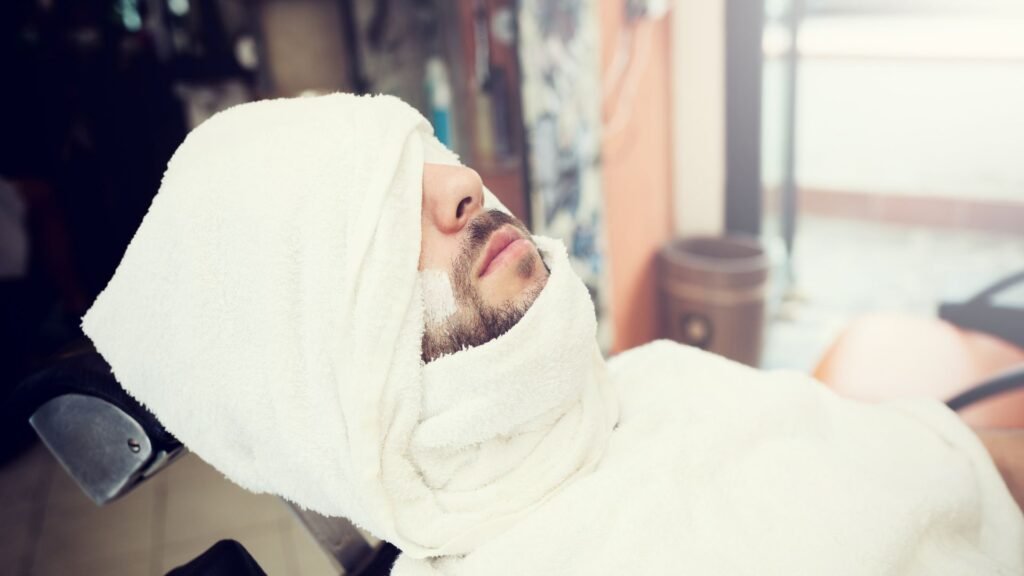
Few sensory combinations are as tied to the grooming ritual as the smell of warm talc rising off a straight razor shave.
The Science of the Hot Towel
Heat opens pores and softens hair, but it also amplifies scent. A hot towel infused with even a trace of eucalyptus or mint releases vapor that hits the sinuses directly, creating an almost spa-like sensory jolt.
Talc’s Unique Chemical Signature
Talc itself is nearly odorless in its raw form, but the fragrance blended into shaving powders, usually a mix of musk and light florals, has become so iconic that “smelling like a barbershop” is often shorthand for smelling like talc.
Why This Combination Builds Trust
The ritual of hot towel, razor, and powder unfolds slowly and deliberately. That pacing, paired with familiar scent cues, signals craftsmanship. Clients report feeling more relaxed and more likely to return when a shop invests in this full sensory sequence rather than rushing through it.
How Does Scent Affect Whether a Customer Returns?
Sensory branding research consistently shows that scent influences repeat business more than most owners assume.
Scent and Perceived Time
Studies in retail environments, including work published through the Journal of Retailing, have found that pleasant ambient scent can make customers perceive their wait or service time as shorter, increasing overall satisfaction even when actual time spent doesn’t change.
Scent and Price Perception
A well chosen fragrance environment can also raise perceived value. Clients are more willing to pay premium prices in spaces that smell intentional and well curated rather than sterile or synthetic.
Building Scent Memory Into Brand Loyalty
When a specific shop’s scent becomes distinct enough, clients start associating that smell exclusively with that business. This is the same principle luxury hotels use with signature lobby fragrances, and it translates directly to grooming spaces.
What Ingredients Make Up the Most Popular Grooming Products?
Understanding what’s actually in the bottle helps explain why certain products smell and perform the way they do.
Aftershave Ingredient Breakdown
| Ingredient | Purpose | Common Source |
| Alcohol (denatured) | Disinfects, closes pores | Synthetic or grain derived |
| Witch hazel | Soothes, mild astringent | Plant extract |
| Bay oil | Primary scent note | Distilled bay leaves |
| Glycerin | Moisturizes, offsets alcohol dryness | Plant or synthetic |
| Menthol | Cooling sensation | Mint extract or synthetic |
Pomade Ingredient Breakdown
| Ingredient | Purpose | Common Source |
| Beeswax or petroleum | Hold and shine base | Natural or petroleum derived |
| Lanolin | Softness and slip | Sheep wool derived |
| Fragrance oil | Scent layer | Natural essential oils or synthetic compounds |
| Castor oil | Sheen and flexibility | Plant based |
Beard Oil Ingredient Breakdown
| Ingredient | Purpose | Common Source |
| Jojoba oil | Mimics natural skin sebum | Plant based |
| Argan oil | Softens coarse hair | Plant based |
| Essential oils | Scent and skin benefits | Concentrated plant extracts |
| Vitamin E | Antioxidant, skin health | Synthetic or natural |
Natural vs. Synthetic Fragrances: Which Should You Choose?
This debate comes up constantly among both product formulators and clients with sensitive skin.
The Case for Natural Fragrance
Natural essential oils offer complex, layered scent profiles that shift subtly over the course of a day. They also appeal to clients concerned about synthetic chemical exposure.
The Case for Synthetic Fragrance
Synthetic compounds are far more stable, consistent from batch to batch, and often cheaper to produce at scale. They can also replicate scents that don’t exist in nature, like a clean linen or a specific “barbershop” accord that blends multiple traditional notes into one bottle.
Direct Comparison
| Factor | Natural Fragrance | Synthetic Fragrance |
| Cost | Higher | Lower |
| Consistency | Varies by harvest and batch | Highly consistent |
| Complexity | Naturally layered, evolves over time | Can be engineered for complexity |
| Skin sensitivity risk | Lower for most, though allergens exist | Varies widely by formulation |
| Sustainability | Dependent on sourcing practices | Generally more resource efficient to produce |
Choose natural fragrance if your clients prioritize clean ingredient lists and you’re willing to pay a premium for sourcing. Choose synthetic if consistency and cost control matter more, especially for high volume shops going through large amounts of product weekly.
How Do You Design a Signature Scent for a Grooming Space?
Building a recognizable scent identity takes more intention than just picking a nice smelling candle.
Start With Your Brand Personality
A shop leaning into rugged, old school Americana should smell different from one positioning itself as sleek and modern. Bay rum and leather suit the former; cedar and citrus suit the latter.
Layer, Don’t Overwhelm
The most memorable shop scents usually combine two or three complementary notes rather than a single overpowering one. A base of sandalwood with a top note of bergamot, for instance, reads as intentional rather than accidental.
Consistency Across Every Touchpoint
The scent used in your hot towels, your finishing products, and your ambient diffuser should all work together rather than compete. Nothing breaks the spell faster than a client catching three conflicting smells in one visit.
Testing Before Committing
Run new scent combinations past regular clients before rolling them out shop wide. What smells great in a small sample can become cloying in a full sized room over an eight hour shift.
How Does Scent Fit Into Traditional Barbering Techniques as a Full Sensory Ritual?
Traditional Barbering Techniques were never just about the cut. They were built around a full sequence of sensory cues designed to slow the client down and signal craftsmanship.
The Sequence Matters
A classic visit moves through distinct scent stages: the ambient shop smell on entry, the shaving cream during the lather, the hot towel steam, and finally the aftershave close. Each stage reinforces the last.
Why Modern Shops Are Reviving This Ritual
As grooming has become more automated and rushed in some chain environments, clients have responded strongly to shops that slow back down and reintroduce these older, more deliberate steps, scent included.
The Emotional Payoff
This ritual sequence creates what sensory marketers call a “peak-end” effect, where the most intense and final moments of an experience shape overall memory far more than the middle. A strong aftershave scent at the very end of a visit can lift the perceived quality of the entire appointment.
What Regional and Cultural Differences Exist in Grooming Scent Preferences?
Scent preference isn’t universal, and smart shop owners account for regional taste.
American Traditional Preferences
Bay rum, tobacco, and leather notes remain dominant across much of the United States, particularly in shops leaning into a classic Americana identity.
European Influences
British and Italian grooming traditions often favor lighter citrus and herbal notes, reflecting a longer history of eau de cologne style fragrances originating in Europe.
Regional Preference Table
| Region | Dominant Preference | Cultural Driver |
| American South and Midwest | Bay rum, tobacco, leather | Traditional Americana grooming culture |
| American Coastal Urban | Sandalwood, citrus, minimalist blends | Modern, upscale grooming trends |
| United Kingdom | Herbal, citrus, light musk | Historic eau de cologne influence |
| Southern Europe | Bergamot, lavender, amber | Mediterranean fragrance traditions |
| East Asia | Green tea, subtle floral, minimal scent | Preference for understated fragrance |
What Are the Most Common Scent Mistakes Shops Make?
Even well meaning owners can undercut their ambience with a few avoidable errors.
Overpowering the Room
Too many diffusers or scented candles running simultaneously can create a headache inducing fog rather than a pleasant background note.
Mixing Conflicting Products
Using a citrus shampoo, a musky pomade, and a spicy cologne in the same visit can clash badly instead of layering well.
Ignoring Ventilation
Poor airflow lets scent build up unevenly, creating stale pockets near the back of the shop while the entrance smells overwhelming.
Common Mistakes Table
| Mistake | Why It Hurts the Experience | Simple Fix |
| Too many scent sources at once | Creates confusing, heavy air | Limit to one or two ambient sources |
| Clashing product notes | Undermines intentional branding | Standardize product lines by scent family |
| Poor ventilation | Uneven, stale smell | Install proper airflow and regular cleaning |
| Ignoring client sensitivities | Alienates allergy prone clients | Offer unscented alternatives |
| Neglecting towel and linen freshness | Musty smell overrides good product scent | Launder frequently, use light scent boosters |
How Should You Choose Products Based on Your Skin and Hair Type?
Scent preference should never override practical skin and hair compatibility.
Matching Products to Skin Sensitivity
Clients with sensitive skin often react poorly to high alcohol aftershaves, regardless of how good the scent is, making balm based alternatives a smarter pick.
Matching Products to Hair Texture
Coarse or curly hair generally benefits from heavier, oil based products, while fine hair does better with lighter, water based formulas that won’t weigh it down.
Skin and Hair Type Recommendation Table
| Type | Recommended Product Style | Scent Considerations |
| Sensitive skin | Alcohol free balm | Milder, low alcohol scent bases |
| Oily skin | Lightweight, oil free formulas | Fresh citrus or herbal notes cut through oiliness well |
| Dry or mature skin | Rich, moisturizing balms | Warmer, woody notes pair well with heavier textures |
| Fine hair | Water based pomade | Lighter scent load to avoid overwhelming thin hair |
| Coarse or curly hair | Oil based pomade or cream | Can handle stronger, richer scent profiles |
Alcohol Based Aftershave vs. Aftershave Balm: Which Is Right for You?
This is one of the most practical decisions a client makes after every single shave.
The Case for Alcohol Based Aftershave
It disinfects quickly and delivers that classic sharp scent burst many associate with a proper shave. It’s also generally cheaper and longer lasting per bottle.
The Case for Balm
Balm skips the sting entirely and hydrates skin that alcohol tends to dry out over repeated use. It’s the better long term choice for anyone shaving several times a week.
Comparison Table
| Factor | Alcohol Based Aftershave | Aftershave Balm |
| Sensation on application | Sharp sting, cooling | Smooth, no sting |
| Skin hydration | Can dry skin over time | Hydrating and soothing |
| Scent intensity | Usually stronger and sharper | Usually softer and subtler |
| Best for | Occasional shavers, classic scent lovers | Frequent shavers, sensitive skin |
What Should You Expect to Pay for Quality Scented Grooming Products?
Price often reflects far more than just fragrance quality.
Factors That Drive Cost
Ingredient sourcing, packaging, and brand positioning all factor heavily into price beyond the actual scent formulation itself.
Entry Level vs. Premium Product Lines
Entry level lines typically rely on synthetic fragrance blends and simpler packaging, while premium lines invest in natural oils, refined bottles, and more elaborate scent development.
Pricing Tier Table
| Tier | Typical Price Range | What You’re Paying For |
| Budget | Low cost per unit | Basic synthetic scent, functional packaging |
| Mid range | Moderate cost per unit | Balanced natural and synthetic blend, better packaging |
| Premium | Higher cost per unit | Natural essential oils, refined scent layering, boutique branding |
| Luxury or craft | Highest cost per unit | Small batch production, rare ingredients, artisan branding |
How Do You Find a Great Local Shop Based on Its Scent Reputation?
Scent has become a searchable, reviewable part of the grooming experience, which changes how people shop for services today.
Reading Reviews for Sensory Clues
Client reviews increasingly mention ambience and scent alongside haircut quality, giving prospective clients a sense of what to expect before booking.
Checking Product Lines Used
Many shops now list the specific product brands they use, which lets scent conscious clients research fragrance profiles ahead of time.
Using Local Search Effectively
Typing barbershop near me into a search engine now often surfaces photos, reviews, and even video walkthroughs that hint at the sensory environment, not just star ratings and pricing.
The Full Sensory Experience Is the Real Product
A haircut grows out in a few weeks. The memory of how a visit felt tends to stick around much longer, and scent is doing more of that heavy lifting than most people give it credit for. Whether a shop leans into old school bay rum or a modern sandalwood blend, the smartest owners treat fragrance as a deliberate part of the service, not an afterthought. The best move for any client is simple: pay attention to how a place smells the next time you sit down for a cut. It might explain why you keep coming back.
Frequently Asked Questions
Does the smell of a grooming shop actually affect how good a haircut feels?
Yes. Scent triggers the brain’s emotional and memory centers faster than sight or sound, which means a pleasant, well curated fragrance can make the entire visit feel more relaxing and higher quality, even if the technical haircut itself is identical to a less pleasant smelling environment.
Why does bay rum smell so strongly associated with old school grooming spaces?
Bay rum has been used in grooming since the 1800s, originating from Caribbean sailors infusing bay leaves in rum. Its spicy, citrus forward scent became a staple of American shops throughout the 20th century, cementing its place as the classic scent of the trade.
Are natural fragrance products actually better than synthetic ones?
Not necessarily. Natural fragrances offer complex, evolving scent profiles and appeal to clients avoiding synthetic chemicals, but synthetic fragrances offer more consistency and can be engineered for specific effects. The better choice depends on individual skin sensitivity and personal preference rather than one being universally superior.
Can strong cologne or aftershave scents cause skin irritation?
Yes, particularly alcohol based aftershaves used on sensitive or freshly shaved skin. Clients prone to irritation should look for balm based, alcohol free alternatives that still deliver scent without the drying or stinging effect.
How can I tell if a shop’s scent will match my personal preference before booking?
Checking recent client reviews for mentions of ambience, asking about the specific product brands used, or visiting during off peak hours to experience the space firsthand are all effective ways to gauge scent before committing to a full appointment.
Is it unusual for a shop to offer unscented product options?
Not at all. Many shops now offer fragrance free or lightly scented alternatives specifically for clients with allergies or sensitivities, and asking about these options is completely normal.
Why do some shops smell different depending on the time of day?
Ventilation, product buildup, and even humidity levels can all affect how ambient scent behaves throughout the day. A shop with proper airflow and consistent cleaning routines should maintain a more stable scent profile from open to close.
Does a more expensive product always smell better than a budget option?
Not always, but higher priced lines typically use more natural ingredients and undergo more refined fragrance development, which often results in a more complex and longer lasting scent compared to budget synthetic alternatives.
What is the difference between a shop’s ambient scent and the scent from the actual grooming products used?
Ambient scent refers to the background fragrance of the space itself, often from diffusers or candles, while product scent comes directly from what’s applied to your hair and skin. The best experiences align both so they complement rather than compete with each other.