
The Cut Is Only Half the Story
The Same Cut, Three Different Men Walking Out
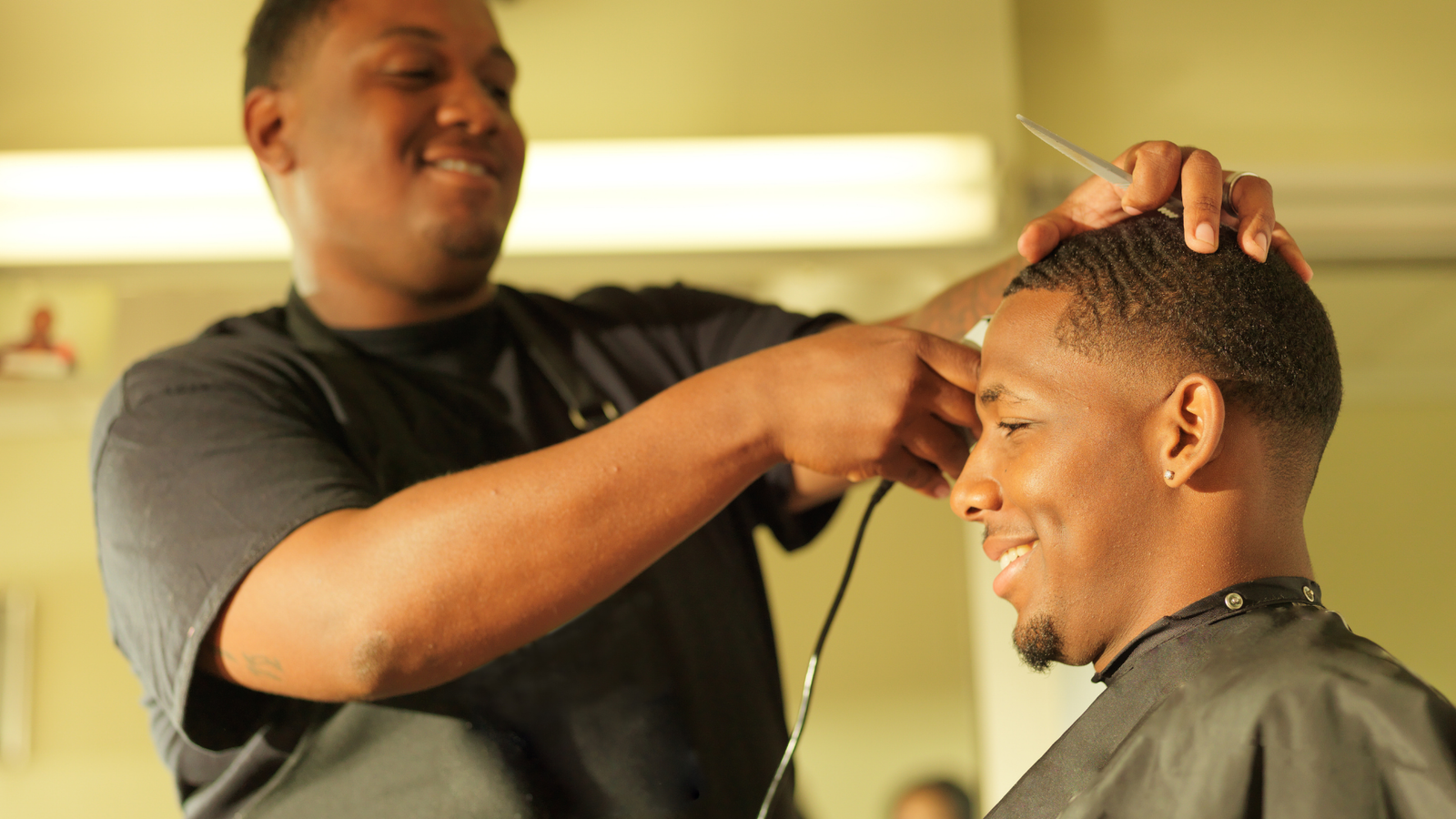
A few Saturdays ago, something happened in the shop that I still think about. Three men sat in my chair, one after another, between nine and noon. Each one asked for nearly the same thing: short tapered sides, about three and a half inches on top, cut with scissors so it would move.
I gave all three the same cut. Same guard on the sides, same blend, same point cutting through the top. If you’d lined up their heads the moment the clippers stopped buzzing, you’d have had trouble telling the cuts apart.
Then each man styled it his own way.
The first, a graphic designer, rubbed a little clay between his palms and ran his fingers through damp hair. He walked out with a loose, lived-in texture that looked like he’d just come back from the beach. The second, a young attorney with a court date on Monday, asked me to comb in a side part with a soft pomade. He left looking like he’d stepped out of a 1960s magazine ad. The third, a wedding guest, wanted height. I blow-dried his top up and back, set it with a light paste, and he walked out with a full, confident quiff.
One haircut. Three completely different men walking out the door.
I noticed the smell of talc still hanging in the air after the third one left, and I remember thinking: perhaps the cut is only the canvas. The styling is the painting.
Why We Blame the Cut
When a man is unhappy with his hair, his first instinct is almost always to blame the cut. “It’s too long.” “It’s too short.” “It just doesn’t look like the photo.”
Sometimes he’s right. A cut can miss the mark. But over the years, I’ve noticed that far more often, the cut is fine. The problem is what happens after the cape comes off.
Think about it like a good steak. A great butcher can hand you a perfect cut of ribeye. But if you throw it in a cold pan and walk away, it’s not going to taste like the one at the steakhouse. The butcher did his job. The cooking is on you.
It seems many men have never been shown that their hair can look several different ways without changing the cut at all. Nobody taught them, and why would anyone? Most dads hand their sons a comb and a jar of something and say, “Just put a little in.” That’s about as far as the lesson goes.
So when the hair doesn’t look right on Wednesday morning, the cut takes the blame. Perhaps it’s worth asking a different question: is it the cut, or is it what I did with it?
The Three Outcomes We’ll Follow
In this guide, we’ll take one versatile haircut and follow it down three different roads:
- The Natural, Air-Dried Texture: relaxed, matte, effortless, with movement
- The Polished Side Part or Slick Back: clean, controlled, with a soft shine
- The Blow-Dried Volume: lifted, full, structured, with real height
Along the way, we’ll look at the history of men’s styling, the science of why hair holds a shape, the products and tools that steer each result, and how your hair type, face shape, and daily life change the picture. We’ll talk about mistakes, money, and a few stories from the chair.
You won’t need to master all three looks. Perhaps you’ll find that one feels like home and another feels like a special-occasion suit. Either way, I hope you’ll start to see your haircut as something with more range than you gave it credit for.
Before we style anything, though, we need to meet the cut itself.
Meet the Haircut: Our Shared Starting Point
The Blueprint: Lengths, Weight and Shape
Every outcome in this guide begins with the same haircut. Here’s its blueprint.
| Area | Length | Technique | Purpose |
| Top (front) | About 3.5 to 4 inches | Scissor cut, point cut | Room to lift, sweep, or part |
| Top (crown) | About 2.5 to 3 inches | Scissor cut, light texturizing | Lies flatter, avoids a bump at the back |
| Sides | #3 blending to #2 | Clipper and clipper-over-comb | Clean, but enough to comb if needed |
| Back | #3 at the occipital bone to #1.5 at the nape | Tapered blend | Follows head shape |
| Neckline | Natural taper | Trimmer, light edging | Grows out softly |
| Transition | Scissor-over-comb blend | Soft connection | Allows a part or a slick back |
The key detail is the length difference between the front and the crown. The front stays longer so it can lift or sweep. The crown is shorter so it doesn’t stick up when you push hair back. It’s a small thing, the kind you might not notice from the outside. But it’s a bit like the slope on a driveway. You don’t see it until it rains, and then you’re glad it’s there.
Why This Cut Is Built to Flex
Not every haircut can become three different looks. A buzz cut, for example, has one outcome. A tight skin fade with an inch on top has maybe two. This cut works because it leaves options open.
It has enough length on top to lift into volume, enough to lie flat and slick, and enough texture removed so it can fall naturally without looking heavy. The sides aren’t so short that a side part looks disconnected, and the blend between sides and top is soft enough that the hair can be pushed in different directions.
I sometimes describe it to clients as a utility player on a baseball team. He’s not the flashiest guy on the roster. But he can play second base, shortstop, or center field, and the manager loves him for it.
What a Versatile Cut Needs From the Chair
A cut built to flex asks a few things of the person cutting it.
First, texturizing in the right places. Point cutting into the ends of the top lets hair separate naturally for the air-dried look, while still holding together for a polished one.
Second, a soft disconnection or none at all. A hard disconnection, where the sides and top don’t blend, limits your options. A slick back can look great over it, but a natural texture might reveal an awkward shelf.
Third, attention to your natural part. A good cutter will find where your hair wants to split and leave the length so a part can sit there cleanly. Fighting your natural part is like rowing against the current. You’ll get there, but you’ll be tired.
If you’re in the chair and want this kind of range, it helps to say so. “I’d like something I can wear a few different ways” tells your barber far more than a single photo ever could.
With the cut in place, it’s worth looking back at how men learned to style their hair in the first place.
A Short History of Styling Men’s Hair
Grease, Tonic and the Brilliantine Years
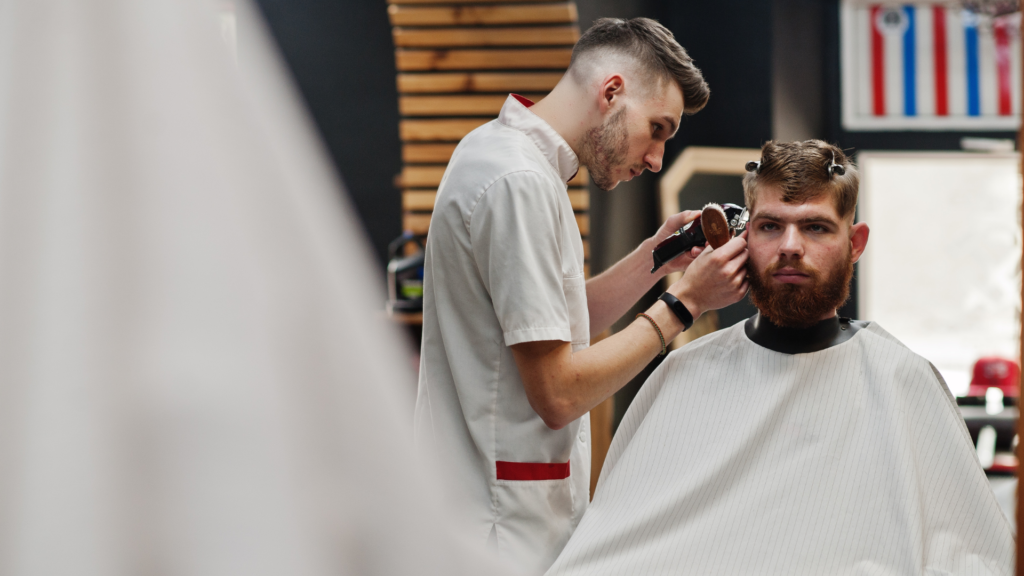
Men have been coaxing their hair into shape for a very long time. Early pomades were often made with animal fats, sometimes bear grease, scented with flowers or spices to cover the smell. Imagine sitting next to a gentleman on a warm afternoon in 1850. Perhaps not the most romantic thought.
By the early twentieth century, brilliantine and hair tonics had taken over. The shops of that era smelled of bay rum, witch hazel, and something faintly floral from tall glass bottles lined up on the counter. In 1925, Murray’s Superior Pomade launched in Chicago, becoming a staple for decades, especially for men who wanted to train waves and hold shape. In 1928, Brylcreem appeared in Birmingham, England, and its slogan, “A little dab’ll do ya,” became one of the best-known lines in men’s grooming.
That era leaned almost entirely toward one outcome: polished, combed, and shiny. A man’s hair was expected to stay exactly where he put it.
Blow-Dryers, Feathered Hair and the Big Shift
The hair dryer has been around since the late 1800s, when French stylist Alexandre Godefroy introduced a seated version for salons. Handheld dryers became household items over the following decades. But it wasn’t until the 1960s and 1970s that men really embraced them.
Longer hair changed everything. Suddenly men wanted volume, movement, and feathered layers. The heavy grease of the 1950s gave way to blow-dryers, round brushes, and hairspray. If you’ve ever seen your father’s high school yearbook, you probably know exactly what I mean.
Matte, Texture and the Modern Shelf
| Era | Dominant Look | Key Products | Main Outcome |
| 1800s | Combed, oiled | Animal-fat pomades, oils | Polished |
| 1900s to 1920s | Slick side parts | Brilliantine, tonics | Polished |
| 1925 to 1950s | Pompadours, slick backs | Murray’s, Brylcreem, oil pomades | Polished and volume |
| 1960s to 1970s | Longer, feathered hair | Blow-dryers, hairspray | Volume |
| 1980s | Big, structured styles | Mousse, gel, spray | Volume |
| 1990s | Spiked and crunchy | Strong gels | Structured texture |
| 2000s | Messy, piecey | Waxes, pastes | Texture |
| 2010s | Undercuts and slick backs | Water-based pomades | Polished |
| 2020s | Natural texture, soft polish | Clays, sea salt, creams | Texture and soft polish |
Today’s shelf is the widest it’s ever been. Matte clays, water-based pomades, creams, sea salt sprays, and pre-styling tonics all sit side by side. It seems men have more freedom now than ever before to wear the same cut in different ways, depending on the day.
History tells us what men reached for. Science tells us why any of it works.
The Science of Why Styling Works
Hydrogen Bonds and Hair’s Short Memory
Your hair is made mostly of a protein called keratin. Inside each strand, keratin is held together by different types of chemical bonds. Two matter most for styling.
Disulfide bonds are strong and permanent. They give hair its natural shape, straight or curly, and only chemical treatments like perms or relaxers can change them.
Hydrogen bonds are weak and temporary. They break when hair gets wet and reform as it dries. That’s the secret behind every blow-dry and every comb-through. When you shape damp hair and let it dry in place, the hydrogen bonds lock it there, at least until the next shower or a humid afternoon.
It’s a bit like wet sand at the beach. While it’s damp, you can mold it into any shape you like. Once it dries, it holds. Add water, and it slumps back down.
Water, Heat and Humidity
According to Clarence Robbins’ widely used textbook, Chemical and Physical Behavior of Human Hair, hair can absorb roughly 30 percent of its own weight in water. As it absorbs moisture, each strand swells, and the hydrogen bonds you set during styling begin to loosen.
That’s why a perfect morning style can fall apart in a humid summer afternoon. It’s also why curly hair often frizzes in damp weather: the hair is pulling moisture from the air and changing shape as it goes.
Heat speeds up drying, which helps lock in shape faster. A 2011 study by Lee and colleagues in the Annals of Dermatology found something many men find surprising: hair dried with a blow-dryer held about 15 centimeters away and kept moving showed less surface damage than hair left to air-dry, while very close, very hot drying caused more damage. The researchers suggested that leaving hair wet for long periods can stress the inner structure of the strand.
Whorls, Cowlicks and Growth Direction
Every head has at least one whorl, the spiral point near the crown where hair changes direction. In a 2003 paper in the journal Genetics, biologist Amar Klar reported that most people’s crown whorls spiral clockwise, though a meaningful minority run counterclockwise or have two.
Many men also have a cowlick near the front hairline, a patch of hair that grows in its own direction no matter what you do. These patterns decide which styles come easily and which take effort. A cowlick at the front can make a side part stubborn on one side and effortless on the other. A strong whorl can make a slick back stick up at the crown.
I noticed early on that the best styling doesn’t fight these patterns. It listens to them. Perhaps that’s true of more than hair.
With the science in mind, let’s follow our first outcome.
Outcome One: The Natural, Air-Dried Texture
What It Looks Like and Who It Suits
The natural texture look is relaxed and touchable. Hair falls slightly forward or to the side, with separated pieces and a matte finish. There’s no visible part, no shine, and no obvious sign that you spent time on it. Of course, there’s a quiet skill to making hair look like you didn’t try.
It suits men with natural wave or body, men who want low effort, and men whose work doesn’t call for a formal look. It’s also forgiving for men who don’t love the feeling of product in their hair.
Step by Step: Building Easy Texture
- Towel-dry gently. Pat, don’t rub. You want hair damp, not dripping.
- Mist a pre-styler if you like, such as sea salt spray, a few sprays through the top.
- Rough-dry with your fingers or let it air-dry, pushing hair loosely in the direction you want it to fall.
- Warm a pea-sized amount of clay or paste between your palms until it nearly disappears.
- Work it in from the back to the front, so the front doesn’t get too much.
- Twist a few pieces with your fingertips to add definition.
- Leave it alone. The more you touch it, the less natural it looks.
Strengths, Limits and the Weekend Factor
| Factor | Strength | Limit |
| Time | 2 to 5 minutes | Air-drying can take 20 minutes or more |
| Products | One light product | Too little can look flat |
| Skill | Low | Takes practice to look intentional |
| Formality | Casual, modern | Can look underdone in formal settings |
| Hold through the day | Moves naturally, forgives wind | Can flatten by late afternoon |
I call this the weekend look, though plenty of men wear it Monday through Friday. It’s the haircut equivalent of a broken-in pair of boots. Comfortable, honest, and always a little better with age.
If the natural look is a pair of boots, the next outcome is a pair of polished oxfords.
Outcome Two: The Polished Side Part or Slick Back
What It Looks Like and Who It Suits
The polished outcome comes in two close relatives: the side part, where hair is combed neatly to one side along a clean line, and the slick back, where hair is combed straight back from the forehead. Both have a soft sheen and a sense of order.
It suits men in client-facing work, men who appreciate classic style, and anyone headed to an event where first impressions matter. It works best on straight to wavy hair with enough length on top to comb over or back.
Step by Step: Building Clean Polish
- Start with damp hair, a little wetter than for the natural look.
- Find your natural part by combing hair straight back and pushing it forward gently. It will split where it wants to.
- Apply a nickel-sized amount of pomade or cream evenly through the hair, roots to ends.
- Comb the part in with the fine teeth of a comb, then sweep the top over or back.
- Use a blow-dryer on low if you want more control, combing as you dry.
- Finish with the comb to smooth any stray pieces.
| Factor | Side Part | Slick Back |
| Best face shapes | Most, especially round and square | Oval, oblong, strong jawlines |
| Best product | Light to medium pomade or cream | Medium to strong pomade |
| Hairline needs | Works with mild recession | Shows the full hairline |
| Formality | Classic, professional | Bold, confident |
| Effort | Moderate | Moderate |
Strengths, Limits and When Polish Pays Off
The polished look photographs beautifully and reads as deliberate. Its limit is that it can feel stiff if overdone, and a slick back exposes the hairline completely. For men with a receding hairline, a side part is often kinder.
Perhaps the real strength is how it makes you feel. I’ve noticed men sitting up a little straighter when the comb finishes that clean part. It’s hard to explain, but you can see it in the mirror.
Polish keeps hair close to the head. The third outcome does the opposite.
Outcome Three: The Blow-Dried Volume
What It Looks Like and Who It Suits
The volume outcome lifts the hair up and back from the forehead, creating height and fullness. Think of a modern quiff or a softer pompadour. It has shape and presence without the grease-heavy look of the 1950s.
It suits men with round or square faces who benefit from height, men with fine hair who want more fullness, and anyone who enjoys a little drama.
Step by Step: Building Height That Lasts
- Start with towel-dried hair.
- Apply a volumizing pre-styler, such as mousse or a light tonic, at the roots.
- Blow-dry on medium heat, lifting hair up and back with a round or vent brush. Aim the airflow from the roots toward the ends.
- Focus on the front, where height matters most.
- Hit the cool shot button for a few seconds to set the shape.
- Apply a small amount of paste or matte pomade, working it into the roots and lifting with your fingers.
- Shape the final silhouette with a comb or your fingertips.
Strengths, Limits and the Upkeep of Volume
| Factor | Strength | Limit |
| Visual impact | Strong, confident | Can feel like a lot for some men |
| Face balance | Adds height, slims round faces | Can lengthen long faces too much |
| Time | 8 to 15 minutes | The longest of the three |
| Tools | Dryer, brush | Requires a dryer |
| Hold | Strong with the right products | Humidity and wind can collapse it |
Volume asks for the most effort of the three. Some men find it a small daily ritual they enjoy, like brewing coffee the slow way. Others find it a chore. Neither answer is wrong. Which feels more like you?
Now that we’ve walked all three roads, let’s set them side by side.
Side by Side: The Three Outcomes Compared
The Master Comparison
| Feature | Natural Texture | Polished Part or Slick | Blow-Dried Volume |
| Finish | Matte | Soft to medium shine | Matte to natural |
| Shape | Loose, forward or tousled | Flat, combed, ordered | Lifted, structured |
| Primary product | Clay or paste | Pomade or cream | Mousse plus paste |
| Heat needed | Optional | Optional | Yes |
| Daily time | 2 to 5 minutes | 4 to 7 minutes | 8 to 15 minutes |
| Skill level | Low | Moderate | Moderate to high |
| Best occasion | Weekends, casual work | Office, interviews, formal | Nights out, events |
| Face effect | Softens | Frames, structures | Adds height |
Time, Products and Skill
What I find interesting is how much the same cut asks of you depending on the outcome. The natural look needs patience and restraint. The polished look needs a steady hand with a comb. The volume look needs a dryer and a little practice with angles.
It’s like the same pickup truck driven three ways: around town, on the highway, and off-road. Same engine. Different skills behind the wheel.
How Each Look Holds Up Through the Day
| Time of Day | Natural Texture | Polished Part or Slick | Blow-Dried Volume |
| Morning | Fresh, defined | Sharp, clean | Full, high |
| Midday | Slightly softer | Holds well | Some drop at the front |
| After a hat | Recovers with fingers | Shows hat line | Often collapses |
| Humid afternoon | Gets fuller, may frizz | Holds with oil-based pomade | Loses height |
| Evening | Relaxed, still wearable | Slightly loosened | Noticeably lower |
The polished look tends to last longest. The natural look recovers easiest. The volume look demands the most protection. Perhaps the best outcome for you depends less on how it looks at 7 a.m. and more on how it looks at 4 p.m.
The products you choose decide much of that staying power.
Products, Heat and Tools That Steer the Result
Pomade vs. Clay
| Factor | Pomade | Clay |
| Finish | Low to high shine | Matte |
| Hold | Light to strong | Medium to strong |
| Texture | Smooth, slick | Thick, dry |
| Best outcome | Polished | Natural, volume |
| Washes out | Water-based easy, oil-based harder | Usually easy |
| Best hair type | Straight to wavy | Fine to thick |
Pomade smooths. Clay separates. If you want your hair to look combed, reach for pomade. If you want it to look lived in, reach for clay.
Gel vs. Cream
| Factor | Gel | Cream |
| Hold | Strong, often firm | Light to medium |
| Feel | Can harden or crunch | Soft, flexible |
| Shine | Wet look | Natural |
| Best outcome | Defined curls, sharp slick back | Soft polish, natural curls |
| Risk | Flaking, stiff look | Too little hold for fine hair |
Gel had its big moment in the 1990s, when spiked hair looked like it could survive a hurricane. Modern gels are softer, and they’re still excellent for defining curls. Cream is perhaps the most underrated product on the shelf, especially for men who want control without the feeling of product.
Pre-Stylers: Sea Salt, Mousse and Tonic
Pre-stylers go on damp hair before drying. They don’t finish a look. They build its foundation.
- Sea salt spray adds grit and texture, perfect for the natural outcome.
- Mousse adds lift and body at the roots, ideal for volume.
- Grooming tonic adds light control and smoothness, great before a polished style.
It’s like priming a wall before painting. You can skip it, but the paint won’t sit as well.
Blow-Dryer vs. Air-Drying
| Factor | Blow-Dryer | Air-Drying |
| Control over shape | High | Low to moderate |
| Time | 3 to 8 minutes | 15 to 45 minutes |
| Volume | Strong | Minimal |
| Damage risk | Low if moving, medium heat, held back | Hair stays wet longer |
| Best outcome | Volume, polish | Natural texture |
The American Academy of Dermatology recommends using the lowest effective heat setting and limiting how often you apply high heat to your hair. Holding the dryer a few inches away and keeping it moving makes a real difference.
Ingredients Worth Knowing
| Ingredient | Found In | What It Does |
| Kaolin or bentonite clay | Clays | Absorbs oil, adds matte texture |
| Beeswax | Oil-based pomades, pastes | Adds flexible hold |
| PVP (polyvinylpyrrolidone) | Gels, mousses | Film-forming hold |
| Sea salt (magnesium or sodium salts) | Texture sprays | Adds grit and separation |
| Panthenol | Creams, tonics | Conditions and adds softness |
| Shea butter | Creams | Moisturizes curly and coily hair |
| Lanolin | Classic pomades | Smooth hold and shine |
You don’t need to memorize these. But reading a label and knowing why a product feels the way it does can save you money and frustration.
Products matter, but your natural hair type matters even more.
Hair Type Changes Every Outcome
Straight and Fine
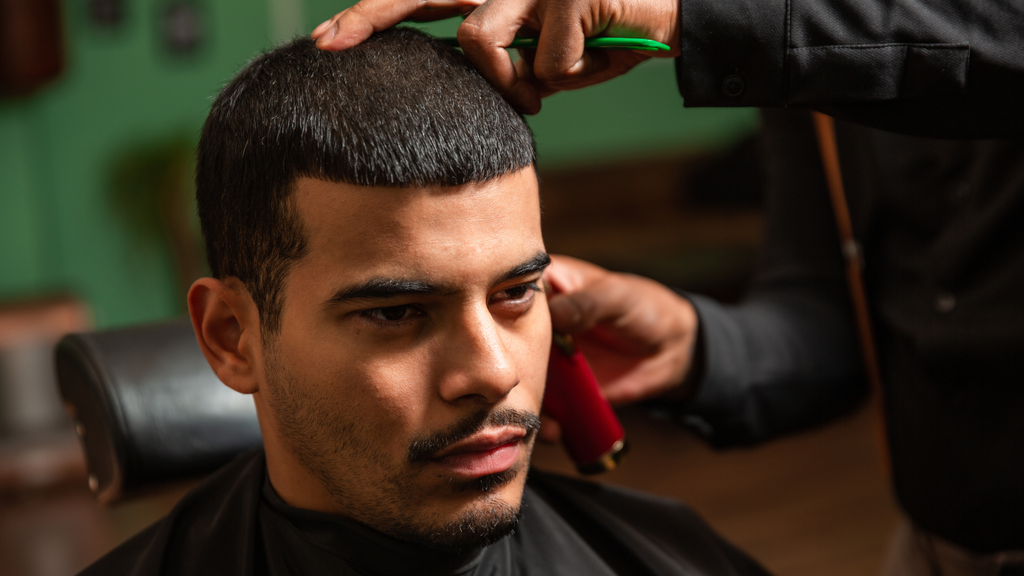
Straight, fine hair lies flat easily, which makes the polished outcome simple and the volume outcome challenging. For volume, mousse at the roots and a blow-dryer are close to essential. For natural texture, sea salt spray and a light clay add the grip fine hair lacks. Heavy pomades tend to weigh it down.
Thick and Wavy
This hair type is perhaps the most flexible of all. Thick, wavy hair holds volume naturally, shows texture beautifully, and can slick back with a medium to strong pomade. The challenge is control. Without the right product, it puffs up by noon.
Curly and Coily
Curly and coily hair brings a beautiful natural texture, and the outcomes shift accordingly. The natural outcome might mean defined curls with a curl cream or soft gel. The polished outcome might mean brushed waves or a neat, sculpted shape. The volume outcome might mean a fuller, rounded top or a blown-out shape.
Andre Walker’s hair typing system, introduced in the 1990s, gave many people a vocabulary for curl patterns, from type 2 waves to type 4 coils. Curly hair also shrinks a great deal as it dries, so its true length is often hidden. Moisture matters more than almost anything else. Shea butter, creams, and leave-in conditioners help curls stay soft and defined.
Thinning and Receding
According to the American Hair Loss Association, about two-thirds of American men experience some noticeable hair loss by age 35. So if you’re noticing more scalp, you’re in good company.
| Hair Type | Natural Texture | Polished | Volume | Main Tip |
| Straight and fine | Good with sea salt | Very easy | Needs mousse and heat | Avoid heavy products |
| Thick and wavy | Excellent | Good with medium hold | Natural fit | Control puffiness |
| Curly | Beautiful | Works with creams | Fuller, rounded shape | Moisture first |
| Coily | Defined shape | Brushed waves | Rounded volume | Gentle handling |
| Thinning crown | Very forgiving | Side part helps | Can reveal thin spots | Matte finishes hide scalp |
| Receding hairline | Forward texture helps | Side part over slick back | Moderate height only | Avoid exposing the temples |
For thinning hair, matte finishes tend to be kinder than shiny ones, since shine reflects light off the scalp. Texture pushed slightly forward can soften a receding hairline. It’s not about hiding. It’s about choosing what the eye lands on first.
Hair type sets the possibilities. Your face and your life help you choose among them.
Face, Occasion and the Life You Lead
Face Shape and the Right Outcome
| Face Shape | Natural Texture | Polished | Volume |
| Oval | Excellent | Excellent | Excellent |
| Round | Good with some height | Side part slims | Very flattering |
| Square | Softens angles | Strong, classic | Good, adds height |
| Oblong | Excellent, adds width | Side part over slick back | Keep height moderate |
| Diamond | Fringe softens forehead | Works well | Moderate height |
| Heart | Forward texture balances | Side part works | Avoid too much top height |
This is where Haircut balance comes into the conversation. The goal isn’t to follow rules, but to create a proportion between the height on top, the width at the sides, and the shape of the face that feels right when you look in the mirror.
Office Hair vs. Weekend Hair
| Factor | Office Hair | Weekend Hair |
| Most common outcome | Polished | Natural texture |
| Product | Pomade or cream | Clay, sea salt, or nothing |
| Shine | Soft | Matte |
| Hold priority | All-day hold | Easy recovery |
| Time spent | 4 to 7 minutes | 1 to 5 minutes |
What I love about a versatile cut is that you don’t have to choose one identity. You can be the polished professional on Tuesday and the relaxed dad at the soccer field on Saturday. Same cut. Different outcome.
Weddings, Interviews and Big Days
For big days, many men choose polish or volume. A side part is classic for interviews. Volume works beautifully for weddings and evening events.
One gentle tip: don’t try a new style for the first time on the big day. Do a practice run a week earlier. It’s like breaking in new dress shoes before the wedding instead of during it.
Even with the right outcome chosen, a few common mistakes can undo it.
Styling Mistakes That Undo a Good Cut
Using Too Much Product
The most common mistake I see is too much product. A man scoops out a big fingerful, rubs it in, and his hair turns heavy, greasy, or stiff.
Start with a pea-sized amount for short hair and a dime-sized amount for medium hair. You can always add more. Taking it out means another shower.
Styling at the Wrong Moment
| Factor | Styling Damp Hair | Styling Dry Hair |
| Best for | Polish, volume with heat | Natural texture touch-ups, matte finishes |
| Product spread | Even, easy | Can clump |
| Shape memory | Strong, as hair dries | Weak, mostly product-driven |
| Common mistake | Too wet, product slides off | Too dry, hair resists |
Timing matters more than most men think. Hair that’s dripping wet dilutes product. Bone-dry hair resists shaping. Most outcomes work best on damp, towel-dried hair, when the hydrogen bonds are ready to be reset.
Fighting the Cut Instead of Working With It
Sometimes a man tries to force an outcome his cut, cowlick, or hair type resists. A slick back on hair with a strong front cowlick. Volume on hair that’s too short at the front. A side part against the natural split.
It seems the most frustrating mornings come from fighting. The most effortless ones come from listening. What is your hair trying to tell you?
Mistakes teach a lot. Stories teach more.
Stories From the Chair
The Interview Candidate
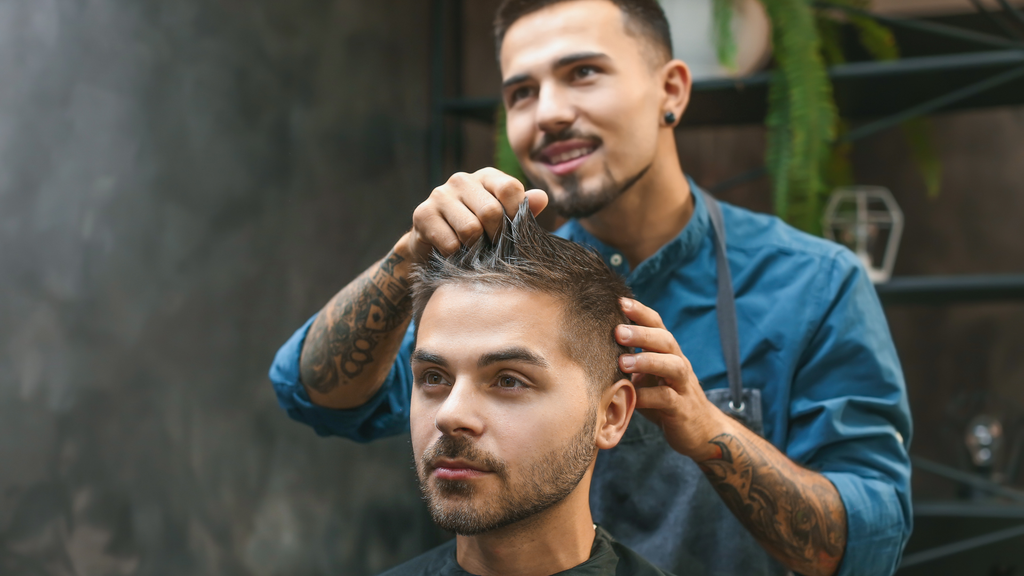
He was twenty-four, nervous, and heading to his first big job interview. He’d worn the natural texture look since college, and he worried it looked “too relaxed.”
We didn’t change his cut at all. I simply showed him a soft side part with a light cream. He watched in the mirror as the comb drew the line, and something in his shoulders loosened. “I didn’t know it could do that,” he said.
He came back a month later with good news and a new question: “Can you show me the weekend version too?”
The Father and Son Before a Wedding
A father and his sixteen-year-old son came in the week before a family wedding. Both got the same versatile cut. The father wanted polish. The son wanted volume.
I styled the dad first, a classic side part. Then the son, blow-dried up and back. They stood side by side at the mirror, same cut, very different looks. The son grinned. “We look like we went to different shops.”
His father laughed, but I noticed he kept glancing over, like a man quietly proud that his boy was becoming his own person.
The Man Who Thought He Needed a New Cut
He sat down and said, “I hate this cut. Let’s try something totally different.”
I asked how he styled it. He’d been using a heavy gel on dry hair, combing it flat every morning. His hair was thick and wavy. It wanted to move.
We kept the cut almost the same, just a light trim. I showed him how to use sea salt spray on damp hair and a little clay. He looked in the mirror and was quiet for a while. “So it was never the cut,” he said. Perhaps not. Perhaps it just needed a different conversation.
Stories like these often lead to a practical question: what does all this cost?
What Versatility Really Costs
The Price of a Cut Built to Flex
| Factor | Basic Clipper Cut | Versatile Scissor Cut |
| Typical price | $20 to $35 | $35 to $60 |
| Time in the chair | 15 to 25 minutes | 35 to 50 minutes |
| Techniques | Clippers, quick blend | Scissors, point cutting, blend, detailing |
| Styling outcomes possible | One or two | Three or more |
| Styling lesson often included | Rarely | Often, if you ask |
A cut built for range takes more time and skill, so it often costs more. When you’re searching for a barber near me, it’s worth asking whether the shop offers scissor work on top and a quick styling walkthrough. Those few extra minutes can change every morning that follows.
The Product Shelf Budget
| Item | Approximate Cost | How Long It Lasts | Best Outcome |
| Matte clay | $15 to $30 | 2 to 3 months | Natural, volume |
| Water-based pomade | $15 to $25 | 2 to 3 months | Polished |
| Styling cream | $15 to $25 | 2 to 3 months | Soft polish, curls |
| Sea salt spray | $12 to $25 | 2 to 4 months | Natural |
| Mousse | $10 to $20 | 2 to 3 months | Volume |
| Blow-dryer | $30 to $100 | Several years | Volume, polish |
| Comb and vent brush | $10 to $30 | Years | All |
A basic three-outcome kit might cost around $60 to $120 to start, then about $15 to $30 every couple of months. Spread across a year, that’s often less than a single dinner out per month.
Thoughtful Gifts for Sons, Dads and Friends
For gift-buyers, a styling kit can be a meaningful present:
- A clay and sea salt set for the man who loves a natural look
- A quality pomade and a fine comb for the man who likes polish
- A good blow-dryer and vent brush for a son starting to experiment
- A prepaid cut with a styling lesson for a graduate, groom, or new hire
One of my favorite moments was a mother who booked her son’s cut before his first day at a new job, along with a quiet request: “Can you show him how to do it himself?” He left with a small jar of cream and a new kind of confidence.
Costs reflect choices. And those choices keep shifting with the times.
Trends and Insights From Behind the Chair
How Texture Took Over
Over the past decade, I’ve noticed matte textures replacing shine for many men. Clays and sea salt sprays have become everyday tools. The natural outcome has moved from “didn’t bother” to “chose this on purpose.”
The Quiet Return of Polish
At the same time, polish is coming back, but softer. Instead of heavy, wet-look slick backs, men are asking for gentle side parts with a natural sheen. It seems they want structure without stiffness.
Men Asking for Lessons, Not Just Cuts
The biggest change I’ve seen is curiosity. Men want to understand their hair. They ask, “How do I do this at home?” “Why does it fall flat by lunch?” “What’s the difference between pomade and paste?”
Market research firms such as Grand View Research have tracked steady growth in men’s grooming products over recent years, and I see that reflected in the questions men bring to the chair. They aren’t just buying a haircut. They’re buying understanding.
With that curiosity in mind, here are the questions I hear most often.
Frequently Asked Questions
Can one haircut really be styled in three different ways?
Yes, if the cut is built for it. A cut with about three to four inches on top, a soft blend, and texturizing through the ends can become a natural texture, a polished part, or a blow-dried volume look. Very short or heavily disconnected cuts offer fewer options.
How long does my hair need to be on top for all three outcomes?
Around three to four inches at the front usually gives enough length for volume and a slick back, while still falling naturally. Shorter than about two inches limits polish and volume.
Do I need a blow-dryer?
For the natural and polished outcomes, not necessarily. For volume, a blow-dryer makes a big difference. A 2011 study in the Annals of Dermatology found that drying from a moderate distance with constant movement caused less surface damage than air-drying, so a dryer used gently isn’t something to fear.
What’s the difference between pomade and clay?
Pomade smooths hair and usually adds shine, making it ideal for polished looks. Clay adds matte texture and separation, making it ideal for natural and volume styles. Many men keep both on hand.
Why does my style fall apart by afternoon?
Usually it’s humidity, too little product, or styling hair that was too wet or too dry. Hair absorbs moisture from the air, which loosens the shape you set in the morning. A stronger hold product or a quick touch-up can help.
Can curly hair be styled three ways too?
Absolutely. The outcomes simply look different: defined natural curls, a sculpted or brushed polished shape, and a fuller rounded volume. Moisture and gentle handling matter most.
How do I find my natural part?
Comb damp hair straight back, then gently push it forward with your palm. It will usually split on its own. That line is where your part wants to live.
Should I ask for a styling lesson when I get a haircut?
Yes. Most stylists are happy to show you how to recreate a look at home. Ask them to talk you through the product amount, the drying direction, and the final shaping.
With those answers in hand, let’s put it all into a plan.
Your Styling Plan and a Final Word
A Two-Week Practice Plan
| Days | Focus | What to Try |
| Days 1 to 3 | Natural texture | Sea salt plus clay, air-dry |
| Days 4 to 6 | Polished | Find your part, cream or pomade, comb through |
| Days 7 to 9 | Volume | Mousse, blow-dry up and back, light paste |
| Days 10 to 12 | Your favorite | Refine the one that felt best |
| Days 13 to 14 | Switch it up | Try two outcomes in one week |
The Morning Self-Check
Before you style, take a moment with these questions:
- What’s my day asking of me? Meetings, outdoor work, a night out?
- How’s the weather? Humid, windy, dry?
- How much time do I really have?
- What’s my hair doing naturally this morning?
- Which outcome feels like me today?
There’s no wrong answer. These questions simply help you choose with intention.
Conclusion
At the end of a cut, I like to brush the talc across a man’s neck, warm a little product between my palms, and turn the chair toward the mirror. The leather creaks. The steel scissors rest on the counter. And a man looks at himself, tilting his head, deciding whether he likes what he sees. So, how does styling change the final result? More than most men ever imagine. The cut gives you the shape. Styling gives you the outcome. One haircut can be relaxed on Saturday, polished on Monday, and bold on Friday night. Perhaps the deeper idea is that a haircut isn’t a fixed thing. It’s a set of possibilities, waiting to see which one you choose. If any of this rings true, try one new outcome this week. If it doesn’t feel right, that’s fine too. Your hair resets with every shower, and the chair will be here whenever you’d like to explore another way.