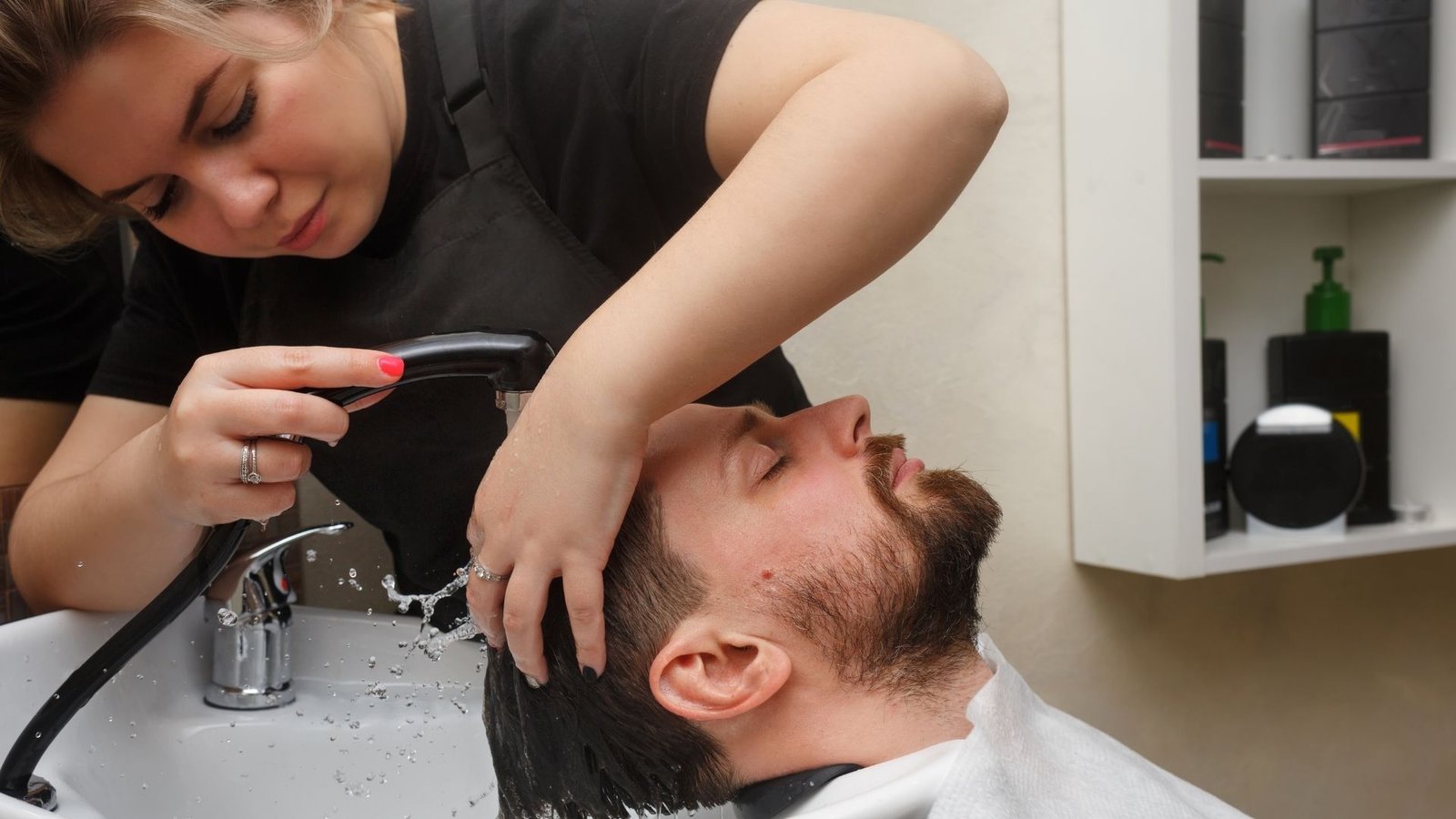
Your hair needs professional treatment when you notice persistent scalp irritation, sudden shedding beyond the normal 50 to 100 strands a day, texture changes that won’t respond to a new shampoo, visible patches, or a haircut that no longer holds its shape no matter how much product you use. If home remedies haven’t worked after two to three weeks, or if you’re seeing flakes, redness, or bald spots, it’s time to sit in a professional chair rather than keep guessing in your bathroom mirror.
I’ve been cutting hair for over two decades. In that time, I’ve seen every kind of head walk through my door: guys who show up every four weeks like clockwork, dads dragging in reluctant teenagers for their first real haircut, and fellas who haven’t sat in a chair since their wedding day and now can’t figure out why their hair looks like a bird’s nest. Here’s what twenty years behind the chair has taught me: your hair talks to you long before it screams. The trick is learning to listen. This guide walks you through exactly what to look for, what you can handle at home, and when it’s time to stop messing around with drugstore fixes and get yourself into a real barber’s chair.
Key Takeaways
- Scalp changes, such as persistent flaking, redness, or itching that lasts more than two weeks, are the clearest sign you need professional attention, not just a new shampoo.
- Sudden or patchy hair loss is different from normal shedding and should be evaluated by a professional as soon as you notice it.
- Texture changes, like hair that suddenly feels brittle, waxy, or unmanageable, often point to product buildup, heat damage, or an underlying health issue that a trained eye can catch faster than you can.
- DIY treatments work fine for maintenance and mild dryness, but they can’t fix structural damage, diagnose scalp conditions, or correct a bad haircut foundation.
- Regular visits to a barber (every 4 to 6 weeks for most men) let a professional catch small issues before they become big, expensive problems.
Why Your Hair Sends Warning Signals Before It’s Too Late
Hair doesn’t just fall apart overnight. It gives you notice. Think of it like the check engine light in your truck. Ignore it long enough, and you’ll be stranded on the side of the road instead of paying for a simple oil change.
The Three-Stage Warning System Most Men Ignore
Every barber I know can tell you the same thing: hair problems move through three stages. Stage one is subtle, a little extra shedding in the shower drain, a bit of flakiness you brush off as dry winter air. Stage two gets harder to ignore, patches thinning out, scalp itching enough to distract you during meetings, hair that won’t hold a style no matter what you put in it. Stage three is when guys finally show up in my chair, usually saying some version of “this just happened overnight.” It didn’t. It’s been building for months.
According to the American Academy of Dermatology, most men lose between 50 and 100 hairs per day as part of the natural growth cycle. Anything significantly above that, especially if you’re finding clumps rather than single strands, is your body telling you something’s off.
Why Men Wait Too Long to Get Help
Pride plays a bigger role here than most guys admit. There’s a stubbornness baked into a lot of men when it comes to grooming, like admitting you need help with your hair is somehow admitting defeat. I get it. But waiting doesn’t make the problem smaller. It makes the fix harder, and often more expensive.
What Counts as “Too Late” in Hair Care
There’s a point where a treatable issue becomes a permanent one. Hair follicles that go dormant too long can stop producing hair altogether. Scalp conditions left untreated can lead to scarring, which blocks follicles for good. The window for easy fixes is wider than most people think, but it does close.
The Difference Between a Bad Hair Day and a Real Hair Health Problem
Every guy has a bad hair day. Humidity, sleeping wrong, using the wrong pomade. That’s not what we’re talking about here. We’re talking about patterns.
Frequency Is the Tell
One bad hair day means nothing. A bad hair week, every week, for a month? That’s a pattern, and patterns mean something is going on beneath the surface.
Table: Bad Hair Day vs. Hair Health Problem
| Signal | Bad Hair Day (Normal) | Hair Health Problem (See a Pro) |
| Frequency | Happens once, resolves itself | Recurs daily or weekly for 2+ weeks |
| Cause | Weather, sleep, product | No clear external cause |
| Scalp feel | Normal | Itchy, tight, burning, or tender |
| Hair texture | Slightly off | Consistently brittle, greasy, or dry |
| Shedding | Normal amount in brush/drain | Clumps or thinning patches |
| Response to fix | New product or restyle fixes it | Nothing seems to help |
The “Restyle Test” Every Barber Uses
Here’s a trick I use with clients who aren’t sure if something’s wrong. I’ll restyle their hair three different ways in one sitting. If healthy hair, it holds up fine no matter how I part it, comb it, or texture it. Damaged or struggling hair fights you at every angle. It won’t sit right, won’t hold product, and looks lifeless under the lights. That’s diagnostic information, not just a bad cut.
Scalp Signs That Say You Need a Professional, Not Just a Bottle of Shampoo
The scalp is skin. People forget that. It sweats, it produces oil, it can get inflamed, infected, or irritated just like the skin on your face or hands. And just like you wouldn’t try to treat a rash on your arm with random drugstore creams indefinitely, you shouldn’t ignore your scalp either.
Flaking That Won’t Quit
A little dry skin in winter is normal. Flaking that persists no matter what shampoo you use, especially if the flakes are large, oily, or accompanied by redness, could be seborrheic dermatitis, not just dandruff. A barber or dermatologist can tell the difference in seconds. You, staring in a foggy bathroom mirror, probably can’t.
Redness, Burning, or Tenderness
Your scalp should not hurt. If touching it, brushing it, or even just wearing a hat causes discomfort, that’s inflammation, and inflammation left alone tends to get worse, not better.
Table: Common Scalp Conditions and Their Signs
| Condition | Key Signs | Home Treatable? |
| Dry Scalp | Small white flakes, mild itch | Yes, with moisturizing shampoo |
| Dandruff | Larger flakes, oily scalp, itching | Often, with medicated shampoo |
| Seborrheic Dermatitis | Red, greasy, scaly patches | Rarely, needs professional treatment |
| Psoriasis | Thick, silvery scales, well-defined patches | No, needs dermatologist |
| Folliculitis | Small red bumps, sometimes pus-filled | No, needs professional/medical care |
| Contact Dermatitis | Redness and itching after product use | Sometimes, if product is identified and removed |
Excessive Oil Production
If your hair looks greasy within hours of washing it, no matter what shampoo you use, that’s worth a professional look. It could be hormonal, product-related, or a sign your scalp’s oil glands are working overtime for reasons worth understanding.
Reading Your Hair Texture and Damage Level Like a Barber Does
Every barber develops a sixth sense for hair texture. We can tell within seconds of running a comb through it whether hair is healthy or struggling. You can train your own eye to catch a lot of this before your next appointment.
The Snap Test
Take a single strand of hair (one you’ve already shed, not one you pull out) and gently stretch it. Healthy hair has some elasticity, it stretches slightly and springs back. Damaged hair either doesn’t stretch at all and snaps immediately, or stretches too much and doesn’t return to shape. Either extreme means the hair’s internal structure, called the cortex, is compromised.
The Shine Test
Healthy hair reflects light because the outer layer, the cuticle, lies flat and smooth. Damaged hair looks dull because the cuticle is roughed up, scattering light instead of reflecting it. If your hair has looked matte and lifeless for weeks despite trying different products, that’s structural damage, not a styling problem.
Table: Hair Texture Signals and What They Mean
| Texture Signal | Likely Cause | DIY Fix Possible? |
| Straw-like, brittle | Heat damage, over-washing | Sometimes, with deep conditioning |
| Waxy, heavy | Product buildup | Yes, clarifying shampoo |
| Frizzy, won’t lay flat | Dryness, humidity, damage | Sometimes |
| Sudden curl pattern change | Chemical damage, medication, health change | No, needs professional evaluation |
| Thinning strand diameter | Age, hormones, nutrition | No, needs professional diagnosis |
Dandruff vs. Dermatitis vs. Dry Scalp: Telling Them Apart
This is one of the most common mix-ups I see in the chair. Guys walk in convinced they have dandruff, and half the time it’s something else entirely.
Dandruff Explained
Dandruff is caused by an overgrowth of a yeast called Malassezia, which lives on everyone’s scalp but can flare up and speed up skin cell turnover, leading to visible flaking. It’s common. The American Academy of Dermatology estimates it affects about half of the adult population at some point.
Dry Scalp Explained
Dry scalp is simpler. It’s just a lack of moisture, often from over-washing, harsh shampoos, or cold weather. The flakes tend to be smaller and the scalp itself feels tight rather than oily.
Seborrheic Dermatitis Explained
This is the one that needs professional attention. It’s a chronic inflammatory condition that causes red, greasy, scaly patches, and it tends to come back even after treatment unless managed properly.
Dandruff vs. Dry Scalp Comparison
| Factor | Dandruff | Dry Scalp |
| Flake size | Larger, oily-looking | Small, dry-looking |
| Scalp condition | Often oily | Tight, flaky |
| Itch level | Moderate to high | Mild to moderate |
| Best fix | Anti-fungal shampoo | Moisturizing shampoo |
Hair Loss Patterns: When It’s Normal and When It’s Not
Losing hair scares men. I’ve watched grown men go quiet in my chair the moment I mention their hairline is moving. But not all hair loss is the same, and not all of it needs the same response.
Pattern Baldness vs. Sudden Shedding
Male pattern baldness, medically called androgenetic alopecia, follows a predictable pattern, receding at the temples, thinning at the crown, gradual over years. According to the American Hair Loss Association, by age 35, two-thirds of American men will experience some degree of appreciable hair loss. That’s common and, while it benefits from professional guidance on treatment options, it’s not usually an emergency.
Sudden, patchy, or diffuse shedding is different. That can signal stress, illness, nutritional deficiency, or a condition called telogen effluvium, and it needs a professional look sooner rather than later.
Table: Hair Loss Types Compared
| Type | Pattern | Speed | Needs Immediate Professional Care? |
| Male Pattern Baldness | Receding hairline, crown thinning | Gradual, years | No, but benefits from early guidance |
| Telogen Effluvium | Diffuse thinning all over | Sudden, weeks to months | Yes |
| Alopecia Areata | Round, well-defined bald patches | Sudden | Yes |
| Traction Alopecia | Thinning at pull points (hairline, part) | Gradual | Yes, if caught early it’s often reversible |
Gradual Thinning vs. Sudden Patches Comparison
Gradual thinning gives you time to explore options, from shampoos to prescription treatments to simply adjusting your haircut to work with what you’ve got. Sudden patches are a different animal entirely and usually point to something your body is reacting to, whether that’s stress, autoimmune activity, or a medical condition that needs a doctor’s input, not just a barber’s.
At-Home Fixes vs. Professional Treatments: When Each One Works
I’m not going to tell you that every hair problem needs a professional appointment. That would be bad advice and, frankly, a waste of your money. Plenty of issues respond fine to good home care.
What Home Care Handles Well
Mild dryness, occasional flaking, minor buildup, and general maintenance are all things a solid shampoo and conditioner routine can manage. If your issue is mild and responds to a product change within a week or two, you’re probably fine.
What Needs a Professional
Structural damage, scalp conditions, sudden hair loss, and anything that persists despite your best home efforts needs trained eyes. A professional can see things you can’t, literally, since you can’t get a clear view of the back of your own head or scalp.
Table: DIY vs. Professional Treatment Decision Guide
| Issue | Try at Home First | Go to a Professional |
| Mild dryness | Yes | If it persists 2+ weeks |
| Product buildup | Yes | If clarifying shampoo doesn’t help |
| Occasional dandruff | Yes | If it’s persistent or spreading |
| Sudden bald patches | No | Yes, immediately |
| Scalp pain or burning | No | Yes, immediately |
| Uneven haircut growth | Maybe | Yes, for correction |
| Chemical damage | Sometimes | Yes, for repair treatment |
The Role of a Barber in Diagnosing Hair and Scalp Issues
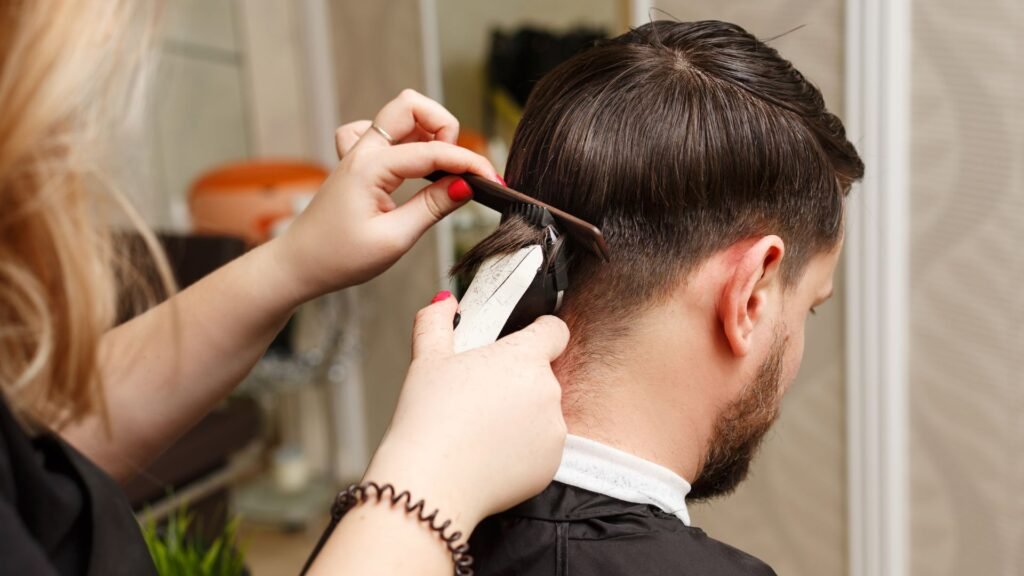
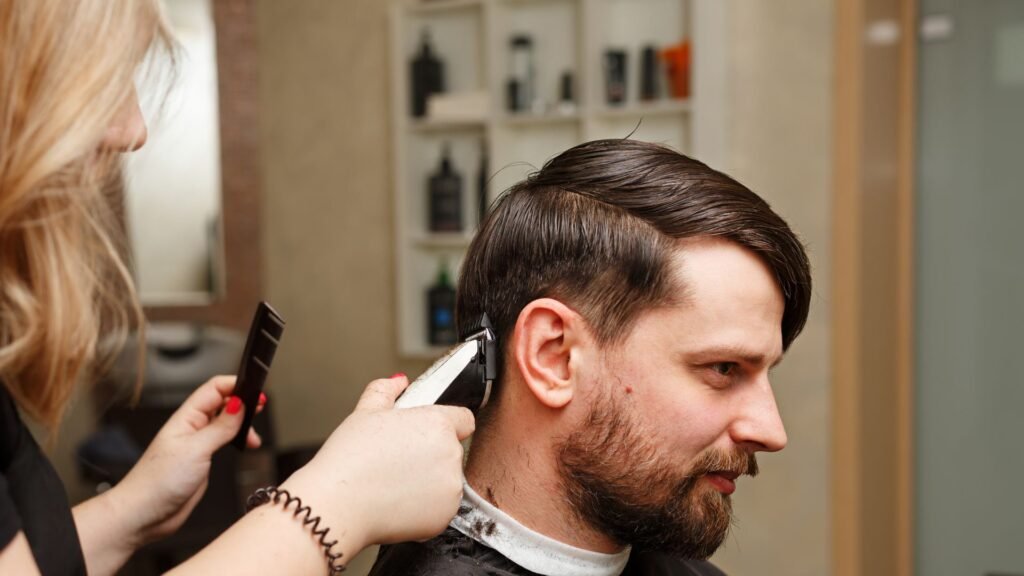
People think of a barber as someone who just cuts hair. That’s part of it, sure, but a good barber is running a diagnostic every single time you sit in the chair. We’re looking at your scalp under bright lights, running our fingers through your hair, feeling texture, checking density. We see more heads in a week than most people see in a year.
What a Barber Notices That You Might Miss
We catch the early stuff. A thinning patch at your crown you can’t see without three mirrors. A dry patch behind your ear you’ve never noticed. Uneven growth that suggests something’s affecting one side of your scalp differently than the other. These small observations, made consistently over regular visits, are often the earliest warning system you have.
When a Barber Refers You to a Dermatologist
A good barber knows the limits of the job. If I see something that looks like it needs medical attention, an unusual rash, a mole that’s changed, signs of infection, I’ll tell you straight and point you toward a dermatologist. That’s not passing the buck. That’s doing right by you.
Common Hair Types and Their Professional Treatment Needs
Not all hair behaves the same way, and treatment needs shift depending on what you’re working with.
Table: Hair Type Breakdown and Treatment Needs
| Hair Type | Common Issues | Recommended Professional Frequency |
| Straight, fine | Flat, oily quickly | Every 3 to 4 weeks |
| Wavy | Frizz, uneven texture | Every 4 to 5 weeks |
| Curly | Dryness, shrinkage | Every 5 to 6 weeks, deep conditioning |
| Coily/Kinky | Dryness, breakage, shrinkage | Every 6 to 8 weeks, moisture-focused treatment |
| Thinning/Fine (age-related) | Reduced density, scalp visibility | Every 3 to 4 weeks, scalp-focused |
Why Texture Changes the Treatment Plan
Curly and coily hair types need more moisture-focused treatment because the natural oils from the scalp have a harder time traveling down the twists and turns of the hair shaft. Straight hair gets oily faster because there’s a direct highway for that oil to travel. Your barber should be adjusting recommendations based on this, not giving everyone the same generic advice.
Product Ingredients That Signal You Need Expert Help
Sometimes the problem isn’t your hair. It’s what you’re putting on it.
Sulfates and Over-Stripping
Sulfates are the ingredient responsible for that satisfying lather, but they’re also aggressive at stripping natural oils. If your hair feels dry and stripped no matter how much conditioner you use, check your shampoo label first.
Silicones and Buildup
Silicones make hair feel smooth instantly, but over time they build up and block moisture from actually penetrating the hair shaft. This creates a cycle where your hair looks fine short-term but gets progressively drier underneath.
Table: Ingredients to Watch and What They Signal
| Ingredient | Effect | Warning Sign |
| Sodium Lauryl Sulfate | Strips oils | Persistent dryness despite conditioning |
| Dimethicone (silicone) | Coats hair, blocks moisture | Hair feels smooth but looks dull over time |
| Alcohol (in styling products) | Dries out strands | Brittleness after styling product use |
| Fragrance/Parfum | Common irritant | Unexplained scalp itching or redness |
Cost Breakdown: DIY Care vs. Professional Treatment
Let’s talk money, because that’s usually the real reason guys avoid the chair.
Table: Estimated Cost Comparison
| Approach | Estimated Monthly Cost | What You Get |
| DIY drugstore products | $15 to $40 | Basic maintenance, trial and error |
| Salon/barbershop retail products | $40 to $80 | Higher quality, tailored to your hair type |
| Professional scalp treatment | $50 to $150 per session | Targeted treatment, professional diagnosis |
| Ignoring the problem | $0 upfront | Potentially higher long-term cost if issue worsens |
The math here isn’t complicated. Ignoring a problem feels free in the short term, but a scalp condition that turns chronic, or hair loss that progresses past the point of easy reversal, ends up costing far more in time, money, and confidence than catching it early would have.
A Short History of Professional Hair Treatment
Understanding where professional hair care came from helps explain why it still matters.
Table: Timeline of Professional Hair Treatment
| Era | Development |
| Ancient Egypt (3000 BCE) | Early barbers used oils and scalp treatments, often tied to religious and social status |
| Medieval Europe | Barber-surgeons handled cutting, shaving, and basic medical procedures including bloodletting |
| 1800s | Barbering separates from surgery, becoming a distinct trade focused on grooming |
| Early 1900s | Rise of barbershops as community hubs, with basic scalp and hair treatments introduced |
| Mid-1900s | Introduction of chemical treatments, tonics, and early dandruff shampoos |
| Modern Era | Barbershops integrate scalp analysis, specialized treatments, and product science into standard service |
Barbering has always straddled the line between grooming and health. That dual role hasn’t disappeared, it’s just modernized.
How Often Should You See a Professional?
This depends on your hair type, your goals, and honestly, your age.
Table: Recommended Visit Frequency by Age and Concern
| Age Group | General Maintenance | If Experiencing Hair Loss or Scalp Issues |
| 18 to 25 | Every 4 to 6 weeks | Every 3 to 4 weeks |
| 26 to 40 | Every 4 to 5 weeks | Every 2 to 3 weeks |
| 41 to 55 | Every 3 to 4 weeks | Every 2 to 3 weeks, with scalp treatment |
Regular visits, even when nothing seems wrong, are how small issues get caught before they become big ones. This is also when a fresh Line Up Haircut does double duty, sharpening your edges while giving your barber a close-up look at your hairline’s health.
Warning Signs During a Haircut That Your Barber Will Catch
There’s a lot that surfaces during an actual haircut that you’d never catch on your own.
Uneven Density Across the Scalp
We see this constantly. One side thicker than the other, a thin patch near the crown, density that doesn’t match the rest of your head. This kind of asymmetry often points to something worth monitoring.
Resistance to Cutting
Healthy hair cuts cleanly. Damaged hair sometimes resists the blade, frays instead of cutting sharp, or feels different under the comb in certain sections. That tactile feedback is something only a trained hand notices.
What to Expect During a Professional Hair Consultation
If you’ve never had a real consultation, here’s how it should go.
The Visual Scalp Check
A good consultation starts with a close look at your scalp under bright light, checking for redness, flaking, density, and any irregular patches.
The Texture and Elasticity Check
Your barber should be running fingers through different sections, checking how your hair responds to touch, stretch, and styling.
The Conversation Part
This is where you talk through your history: recent stress, medication changes, product switches, family history of hair loss. This context matters more than people realize.
Special Situations: Booking for Sons and Buying Gifts
A lot of my clients aren’t just booking for themselves.
What Fathers Should Watch For in Their Sons
Kids’ scalps and hair go through changes too, especially around puberty when oil production ramps up. If your son’s hair has suddenly gone from manageable to greasy and flaky, that’s normal hormonal shift, not necessarily a problem, but it’s worth a professional’s input on adjusting his routine.
Gift-Buying: Treatments as Presents
A gift certificate for a scalp treatment or a proper consultation makes a genuinely useful present, especially for the guy in your life who’s been putting off dealing with a hair issue for months. It’s a low-pressure way to get someone into the chair who might not book the appointment themselves.
Frequently Asked Questions
How do I know if my hair loss is normal or a sign of a problem?
Normal shedding is about 50 to 100 strands a day, spread evenly across your scalp, and it doesn’t create noticeable thinning over time. If you’re seeing clumps, distinct bald patches, or a rapidly receding hairline within a short period, that’s outside the normal range and worth a professional evaluation.
Can a barber actually diagnose scalp conditions, or do I need a dermatologist?
A trained barber can spot warning signs and make an educated call on whether something looks like a common issue (dandruff, dryness, buildup) or something that needs medical attention (dermatitis, psoriasis, infection). Barbers aren’t doctors, but a good one knows when to refer you out rather than guess.
How long should I try home remedies before seeing a professional?
Give a product change or home treatment about two to three weeks to show results. If there’s no improvement, or if things are getting worse rather than better, that’s your signal to stop experimenting and get professional input.
Is dandruff the same thing as a dry scalp?
No. Dandruff involves an overgrowth of yeast on the scalp and tends to produce larger, sometimes oily flakes, while dry scalp is simply a lack of moisture producing smaller, drier flakes. They need different treatments, so identifying which one you have matters.
How often should I get a professional hair or scalp treatment?
Most men benefit from a professional check-in every 4 to 6 weeks as part of a regular haircut, with more frequent visits (every 2 to 3 weeks) if you’re actively managing a scalp issue or hair loss concern.
Does stress really affect hair health?
Yes. Significant physical or emotional stress can trigger a condition called telogen effluvium, where hair shifts into the shedding phase earlier than normal, causing noticeable thinning a few months after the stressful event.
What’s the difference between hair damage and a scalp problem?
Hair damage refers to the actual strands, dryness, breakage, split ends, usually caused by heat, chemicals, or over-washing. Scalp problems refer to the skin itself, involving inflammation, flaking, or irritation. They can occur together but require different fixes.
Can changing my shampoo fix everything?
Sometimes, especially with mild dryness or buildup. But shampoo alone can’t fix structural hair damage, diagnose an underlying scalp condition, or reverse hair loss. Think of shampoo as maintenance, not treatment.
Should I be worried if my hair texture suddenly changes?
A sudden, unexplained texture change, especially without a change in your routine, weather, or products, can point to hormonal shifts, medication side effects, or nutritional deficiencies. It’s worth mentioning to both your barber and your doctor.
Conclusion
Your hair and scalp are always giving you information. The flaking, the shedding, the texture changes, none of it happens for no reason. The real skill isn’t in noticing that something’s off, most guys eventually notice that much. It’s in knowing the difference between something you can handle with a product swap and something that needs a trained professional’s attention.
Twenty years in this chair has taught me that the men who take care of small issues early are always better off than the ones who wait until it’s a crisis. If you’re searching “barber near me” right now because something about your hair or scalp has been bothering you for weeks, that instinct is correct. Trust it. Book the appointment, sit in the chair, and let someone with trained eyes actually look at what’s going on. Your future self, and your hairline, will thank you.