

If you have ever caught your reflection in a shop window and thought, “when did my hair get like this,” you already know the answer before you finish reading this sentence. Waiting too long between cuts does not just mean longer hair. It means split ends multiplying along the shaft, bulk piling up until your style loses its edges, and the shape your stylist built with real intention slowly dissolving back into formlessness. This piece walks through what is actually happening to your hair on a biological and structural level when you skip your trim window, how that process differs by hair type, and what it takes to bring a cut back from the edge. By the end, you will know exactly how to read your own hair, how to time your next visit, and what a correction cut really involves.
Key Takeaways
- Split ends (trichoptilosis) are permanent damage that cannot be repaired, only removed through cutting.
- Hair grows roughly half an inch per month, but how fast your cut “falls apart” depends on style, texture, and density, not just length.
- Bulk buildup weighs hair down, flattens curl and wave patterns, and makes fine or thick hair look unintentionally heavy.
- Shape loss happens fastest in precision cuts like fades, crops, and tapers, which is why those styles need tighter trim schedules than longer cuts.
- A correction cut can usually restore 70 to 90 percent of a style in one visit, but severely overgrown hair sometimes needs two sessions spaced a few weeks apart.
The Moment You Know You’ve Waited Too Long
There is a specific moment, and you know it when it hits. Maybe it is running your fingers through your hair and feeling a strange roughness near the ends that was not there a month ago. Maybe it is noticing your part line has drifted, or that your once-crisp fade now looks like a gradient with no real definition. That moment is your hair sending you a message, and it is worth learning to read it.
What your hair is actually telling you
Overgrown hair communicates through texture, weight, and shape before it ever becomes visually obvious. The ends feel drier and catch on fabric. The crown starts to puff rather than lay flat. A side part that used to sit cleanly begins to shift because there is simply more hair weight pulling it in a new direction. These are not random annoyances. They are the predictable result of hair accumulating length and losing the structural support a recent cut provides.
The point of no return vs. the point of recovery
Here is something worth understanding clearly: there is a difference between hair that has gone too long and hair that is unsalvageable. The point of recovery is the window where a skilled cut can bring your shape back in a single session, usually anywhere from two to six weeks past your ideal trim date depending on your style. The point of no return, structurally speaking, almost never applies to the whole head. Even severely overgrown hair can be corrected. What changes is how much length has to be sacrificed to get there, and how many visits it takes to rebuild the shape properly.
A barber’s first look: what we see when you sit in the chair
When you sit down after waiting too long, a barber reads your hair before touching a single tool. We look at the ends for splitting and fraying. We check the crown and nape for density buildup. We run a comb through dry hair to see where it resists, which tells us where the old shape has collapsed. I have had clients apologize the second they sit down, like they are confessing something. There is nothing to apologize for. Hair grows. The job is simply to figure out how far it drifted and what it takes to bring it home.
Understanding what your hair is telling you is only half the picture. To really understand why waiting matters, you have to understand how hair grows in the first place.
How Hair Actually Grows (And Why That Timeline Matters)
Haircuts do not fail because scissors stop working. They fail because hair keeps growing on a biological schedule that has nothing to do with your calendar.
The three phases of the hair growth cycle
Every strand of hair on your head cycles through three phases. The anagen phase is active growth, lasting anywhere from two to seven years depending on genetics. The catagen phase is a short transitional stage lasting a few weeks, where the follicle shrinks and growth slows. The telogen phase is the resting stage, lasting around three months, after which the hair sheds and a new strand begins the cycle again. At any given time, roughly 85 to 90 percent of your scalp hair is in the anagen phase, according to data published by the American Academy of Dermatology. This is why hair feels like it never stops growing. It barely does.
Half an inch a month: what that really means for your cut
The commonly cited average growth rate is about half an inch per month, or roughly six inches per year, a figure supported by dermatological research summarized by the American Academy of Dermatology. That sounds slow until you consider what it does to a precision shape. A fade with a crisp line at the temple only needs an eighth of an inch of growth to start looking soft around the edges. A textured crop only needs a quarter inch before the layers that gave it movement start collapsing into a single mass. Half an inch a month is not a small number when your style depends on millimeters of precision.
Why growth rate varies by hair type, age, and health
Growth rate is not uniform across every head. Several studies, including research referenced by the Journal of the American Academy of Dermatology, show that hair growth can be influenced by age, hormonal factors, nutrition, and ethnicity related differences in follicle shape and density. Younger hair generally grows faster than hair in older adults, since follicle activity naturally slows with age. Nutritional deficiencies, particularly in iron, zinc, and protein, can slow growth and weaken the hair shaft, making it more prone to breakage and split ends even at shorter lengths. This is part of why two people with the same haircut can need very different trim schedules.
Table 1: Hair Growth Cycle Overview
| Phase | Duration | What’s Happening |
| Anagen (growth) | 2 to 7 years | Active cell division, hair lengthens continuously |
| Catagen (transition) | 2 to 3 weeks | Follicle shrinks, growth slows sharply |
| Telogen (resting) | About 3 months | Hair is dormant, eventually sheds |
Knowing how hair grows explains why waiting even a few extra weeks changes more than you’d expect. Now let’s talk about the most visible casualty of that wait: split ends.
Split Ends Are Not Just a Women’s Problem
Split ends get talked about like a women’s hair issue, but that is simply not accurate. Any hair, on any head, splits the same way under the same conditions.

What split ends actually are (trichoptilosis explained)
The clinical term for split ends is trichoptilosis, and it describes the physical fraying of the hair shaft’s outer layer, the cuticle, until the inner cortex is exposed and splits apart. Once the cuticle wears away at the tip of a strand, there is nothing holding that end together. It is not an exaggeration to say split ends are a form of structural failure, not just a cosmetic flaw.
How men get split ends and why they ignore them
Men get split ends from the same sources as anyone else: friction from towels and pillows, heat from blow dryers, chemical exposure from products, and simple mechanical wear from brushing and combing. The difference is that shorter hairstyles often hide splitting better, and many men never check their ends closely enough to notice. I have had clients come in convinced their hair is “just rough” or “just thick,” when what I am actually looking at under the light is dozens of split ends scattered through the last inch of growth.
The different types of splits and what each one means
Not all splits look the same, and the type tells you something about the cause.
Table 2: Types of Split Ends
| Split Type | Appearance | Common Cause |
| Basic split | Single fork at the tip | Natural aging of the hair shaft |
| Double or triple split | Multiple forks along one end | Prolonged neglect, heat damage |
| Tree split | Branching pattern up the shaft | Severe chemical or heat damage |
| Feather split | Thin, wispy fraying | Fine hair under constant friction |
| Knot split | A literal knot forms at the break point | Curly or coily hair with tight curl patterns |
Why trimming is the only real fix
Here is the part that disappoints people every time: there is no product, serum, or treatment that repairs a split end. Conditioners and oils can temporarily smooth the cuticle and make a split less visible, but the structural damage is permanent. The only real fix is cutting the hair above the split point. This is not a sales pitch. It is simple material science. Hair is dead keratin once it leaves the follicle, and dead tissue does not heal.
Split ends are a symptom you can feel with your fingers. Bulk is one you can see across the whole head, and it tells its own story.
Bulk Buildup: When More Hair Means Worse Hair
More hair is not always better hair. Past a certain point, extra length and density start working against the shape instead of for it.
What bulk actually is and why it happens
Bulk refers to the cumulative weight and density of hair as it grows past its intended cutting length. Every strand that grows adds mass, and because hair grows roughly in unison across the scalp, that added mass compounds. A style cut to sit with light, airy movement at six weeks can feel noticeably heavier and denser by week ten, purely from accumulated growth.
How bulk affects different hair textures differently
Bulk behaves differently depending on your hair’s natural pattern. On straight hair, it often shows up as unwanted volume and a “poofy” silhouette. On wavy or curly hair, bulk tends to pull the pattern down and straighten it under its own weight. On coily or very curly textures, bulk can paradoxically make hair look both bigger and more compressed at the same time, because shrinkage and density interact in ways straight hair never experiences.
The weight-down effect: volume, curl, and wave loss
This is one of the more counterintuitive effects of overgrown hair. You would think more hair means more volume, but often the opposite happens. As strands lengthen, gravity pulls harder on each one. Waves relax into straighter lines. Curls lose their spring and start to droop. Volume at the root collapses because the added weight above it pulls everything downward. If your curls looked bouncier a month ago than they do today, bulk weight is very likely the reason.
Bulk vs. thickness: knowing the difference
People often confuse bulk with thickness, but they are not the same thing. Thickness refers to the diameter of an individual strand, which is largely genetic and does not change with growth. Bulk refers to the collective mass of all your hair together, which absolutely does change as hair grows longer. You can have naturally thin strands and still develop heavy bulk if you let the length run unchecked for long enough.
Table 3: Bulk Buildup by Hair Texture
| Hair Texture | Bulk Effect | Visible Result |
| Straight | Volume increase at crown and sides | Unintentional poofiness, loss of sleekness |
| Wavy | Weight pulls pattern straighter | Waves flatten, less movement |
| Curly | Curl definition loosens under weight | Curls elongate and lose spring |
| Coily | Density compounds with shrinkage | Shape becomes rounder, harder to style |
Understanding bulk explains why your hair can feel “too much” even when it is not objectively that long. Next, let’s look at how all of this, splitting and bulking together, dismantles the actual shape of your cut.
Shape Loss and Why Your Haircut Stops Working
A haircut is not just length removal. It is architecture. And like any structure, it degrades over time if nothing maintains it.
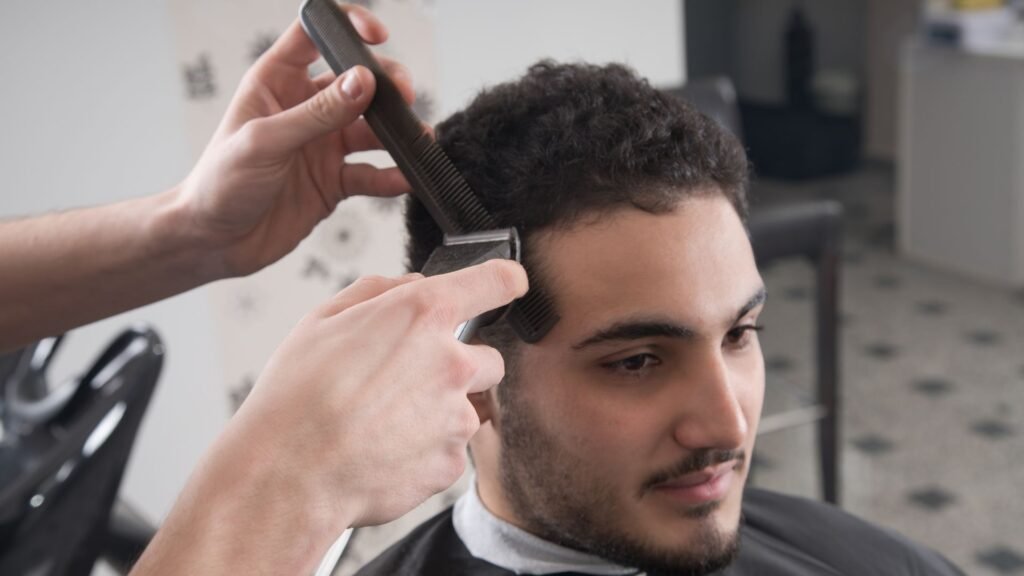
What ‘shape’ means in a professional haircut
When a barber cuts your hair, we are not just shortening strands. We are building a three dimensional shape designed to interact with your head shape, hair density, and growth pattern. A good taper fade, for example, relies on a precise gradient between skin and length. A crop relies on layered weight distribution to create texture on top while staying tight on the sides. Shape is the relationship between all those cut lengths working together, not any single length on its own.
How long before a fade, crop, or taper falls apart
Fades are the most fragile shape in barbering, full stop. Because a fade relies on extremely short graduated lengths near the skin, even a week or two of growth can blur the transition zone and make the fade look muddy instead of crisp. Crops and tapers have a bit more forgiveness, typically holding a clean shape for three to five weeks before the layering starts to lose definition. Longer, looser styles can sometimes stretch past six weeks and still look intentional, simply because there was less precision built into the original cut to begin with.
The architecture of a cut and how it erodes over time
Think of a fresh haircut like a freshly poured concrete structure. It has clean edges and defined transitions. As hair grows, every section grows at roughly the same rate, but because the original cut had different lengths at different points, uniform growth actually distorts the proportions. A section that was meant to be short relative to the section above it becomes proportionally longer as both grow by the same half inch. The ratios that created the shape shift, and the shape erodes even though, technically, nothing has been cut or removed.
Styles & Fades and why they demand the tightest schedule
This is exactly why shops built around precision work, including ones branded around concepts like Styles & Fades, push clients toward tighter rebooking windows than a general salon might recommend. A skin fade or a sharply defined style is a perishable product in a way a basic trim is not. If you want that crisp look to stay crisp, the schedule has to be tighter, typically every two to three weeks, not stretched out to six or eight.
Table 4: Shape Degradation Timeline by Style
| Style | Holds Sharp Shape For | Starts Visibly Degrading At |
| Skin fade | 1 to 2 weeks | 2 to 3 weeks |
| Taper | 3 to 4 weeks | 5 weeks |
| Textured crop | 3 to 5 weeks | 6 weeks |
| Longer layered cut | 6 to 8 weeks | 9 to 10 weeks |
Shape loss hits every head differently depending on hair type, which brings us to a breakdown worth sitting with carefully.
Hair Type Breakdown: Who Gets Hit Hardest by Waiting
Not every hair type degrades at the same pace or in the same way. Knowing yours tells you exactly what to expect when you skip a cut.
Straight hair and the poof-out problem
Straight hair tends to grow outward rather than curling back on itself, which means added length often shows up as width rather than drape. This is the “poof-out problem,” where a cut that looked tidy and close to the head starts expanding sideways as it grows, especially at the crown and temples. Straight hair also shows split ends more visibly, since there is less natural texture to disguise fraying tips.
Wavy and curly hair: when waiting becomes a triangle situation
Wavy and curly hair have a particular failure mode worth naming directly: the triangle. As curly or wavy hair grows past its intended length without a trim, the sides often do not keep pace proportionally with the top, creating a silhouette that widens at the bottom and narrows at the top, forming a literal triangle shape. This happens because curl pattern causes hair to expand outward as it lengthens, rather than falling with gravity the way straight hair does.
Type 4 coils and the shrinkage-bulk cycle
Type 4 coily hair experiences something unique called shrinkage, where the actual strand length can appear 50 to 75 percent shorter than its true measured length due to the tightness of the curl pattern. This creates a confusing cycle: hair is growing and adding real length and bulk, but visually appears to stay the same size, which tricks people into waiting far longer between trims than they should. Meanwhile, the bulk is very real, and split ends accumulate just as fast as any other hair type, sometimes faster due to the mechanical stress of tight curl patterns.
Comparison table: how each hair type degrades over time without a trim
Table 5: Hair Type Degradation Comparison
| Hair Type | Primary Degradation Issue | Visible Timeline | Risk Level Without Trim |
| Straight | Poof-out, width expansion | 3 to 4 weeks | Moderate |
| Wavy | Triangle shape forming | 4 to 5 weeks | Moderate to High |
| Curly | Pattern loosening, triangle effect | 4 to 6 weeks | High |
| Coily (Type 4) | Shrinkage masking real bulk growth | 6 to 8 weeks (deceptive) | High |
Hair type tells you how your style degrades on the surface. But there’s a deeper layer to this story happening underneath, right at the scalp.
The Scalp Side of the Story
Overgrown hair does not just affect what you see. It changes the environment your scalp is working in every single day.
How overgrown hair affects scalp health
As hair grows longer and denser without a trim, it creates more surface area and more insulation over the scalp. This can trap heat, moisture, and sweat closer to the skin, creating conditions that are less breathable than a freshly cut style. For people prone to scalp sensitivity or oiliness, this extra insulation can aggravate existing issues.
Sebum buildup, follicle stress, and product overload
Sebum, the natural oil your scalp produces, has a harder time distributing evenly across longer hair. Instead of coating strands lightly from root to tip the way it does on shorter hair, sebum tends to concentrate near the roots on overgrown hair, leading to a greasier appearance faster after washing. People often respond by adding more product, dry shampoo, pomade, gel, which can compound the buildup rather than solving it. Over time, this cycle of buildup and over-application can contribute to follicle stress and clogged pores at the scalp level.
The connection between a clean cut and a healthy scalp
A recent trim does more than reset your style. It reduces the overall hair mass the scalp has to support and manage, which in turn makes cleansing more effective and reduces the environment where buildup thrives. This is not a replacement for good scalp hygiene, but it is a genuinely underrated piece of the puzzle that most people never connect to their haircut schedule.
The scalp story is often invisible until it becomes a problem. The cost story, on the other hand, is something you can actually calculate.
The Real Cost of Skipping Your Cut
Skipping a haircut appointment feels like it saves money and time in the moment. The math tells a different story.
What you spend trying to fix overgrown hair at home
When hair starts looking unmanageable, most people do not immediately book an appointment. They buy products instead: extra pomade to control the poof, a trimmer to “clean up” the neckline, dry shampoo to manage the oil buildup, maybe a new brush to deal with increased tangling from split ends. These small purchases add up quickly, often exceeding the cost of the haircut they were trying to avoid.
Barbershop pricing vs. the cost of neglect
A standard visit to a barbershop typically runs between 20 and 60 dollars depending on your region and the complexity of the cut. Compare that to the cumulative cost of home fixes, extra products, a rushed emergency appointment at a premium rate, and potentially a longer correction cut once you finally do book, and the math rarely favors waiting.
Table 6: Direct Comparison, Regular Maintenance vs. Delayed Correction
| Factor | Regular Maintenance (every 3-4 weeks) | Delayed Correction (after 8+ weeks) |
| Average cost per visit | $20 to $60 | $40 to $90 (often requires extra time) |
| Appointment length | 20 to 40 minutes | 45 to 75 minutes |
| Product spend between cuts | Minimal | Higher, due to styling workarounds |
| Shape consistency | High | Requires rebuilding from scratch |
Time cost: how long a correction cut actually takes
A routine maintenance cut on a style that has not grown out much can take as little as 15 to 20 minutes. A correction cut on severely overgrown hair, where the barber has to rebuild gradients, fix uneven growth, and remove significant bulk, can easily run 45 minutes to over an hour. That is real time out of your day, often more than you would have spent on two or three regular visits combined.
The confidence cost nobody talks about
This one is harder to put a number on, but it is real. I have watched clients visibly relax the moment they see a clean shape again in the mirror. There is a quiet confidence that comes from knowing your hair looks intentional, not just long. Waiting too long chips away at that feeling slowly enough that you may not notice it happening until the haircut brings it back and you remember what you had been missing.
Cost, time, and confidence all point to the same conclusion: a consistent schedule beats reactive fixing. So let’s talk about what that schedule should actually look like.
Straight Talk on Haircut Frequency
There is no single correct answer to “how often should I get a haircut.” But there is a correct way to figure out your personal number.
The 2-week, 4-week, 6-week, and 8-week schedules compared
Table 7: Haircut Frequency by Schedule
| Schedule | Best For | What You Maintain |
| Every 2 weeks | Skin fades, high fashion styles | Maximum sharpness, crisp lines |
| Every 4 weeks | Tapers, crops, textured cuts | Clean shape with slight natural growth |
| Every 6 weeks | Longer layered styles, looser cuts | General shape, less precision needed |
| Every 8 weeks | Very long hair, low maintenance styles | Overall length control only |
How to figure out your personal ideal trim window
Start by asking yourself three questions. How precise is your current style? More precision means a tighter window. How fast does your hair grow, and how quickly have past cuts visibly degraded? And how much shape loss are you personally willing to tolerate before it bothers you? Some people are comfortable letting a cut drift for six weeks. Others notice and feel off after ten days. Neither is wrong. The right schedule is the one that matches your actual tolerance, not someone else’s.
Signs you need to move to a shorter cycle
If you find yourself reaching for extra product more often, if your part keeps shifting, if you are noticing split ends when you run your fingers through your hair, or if your fade has gone from “crisp” to “fuzzy” faster than you expected, these are all signs your current schedule is too loose for your hair and style combination. Tightening the cycle by even a week can make a noticeable difference.
Once you’ve found your rhythm, the next question becomes what happens when you’ve already fallen off it. Let’s walk through what a correction visit actually looks like.
What Happens Inside a Correction Cut Appointment
If you have waited longer than you meant to, walking into a correction appointment can feel intimidating. It does not need to be.
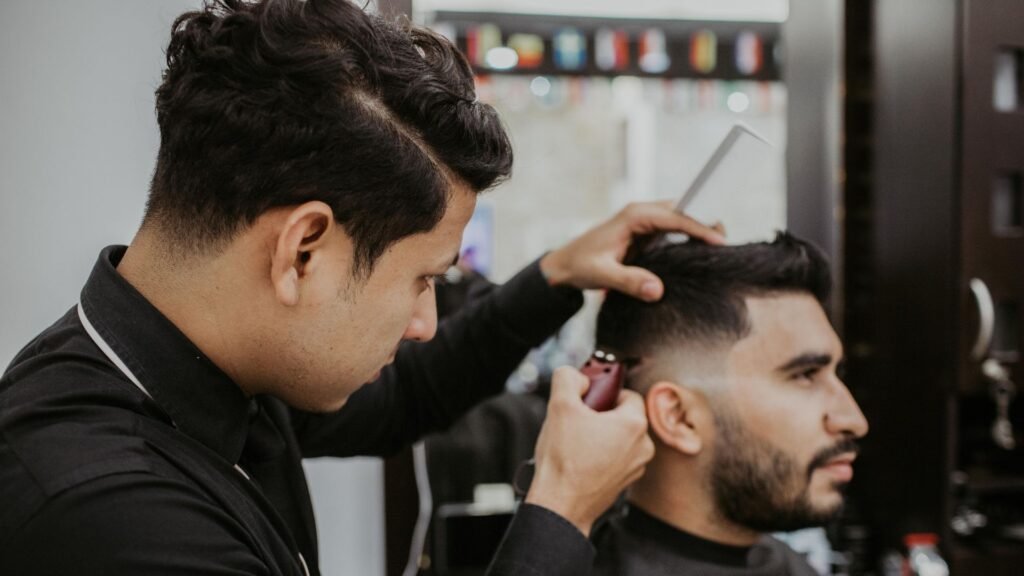
How a barber assesses overgrown hair
The first few minutes of any correction cut are diagnostic. A barber will look at the overall growth pattern, check where splits have accumulated, assess how much the original shape has shifted, and figure out a plan for removing the least amount of length necessary to rebuild a clean structure. This assessment matters because rushing straight into cutting without a plan often leads to removing more length than was actually needed.
The tools and techniques used to restore shape
Restoring an overgrown shape often involves a combination of techniques: point cutting to soften harsh buildup, texturizing shears to remove bulk without sacrificing length, clippers to rebuild clean fade gradients, and precise scissor work to reset layering. The specific combination depends entirely on your hair type and how far the shape has drifted.
What you can realistically expect after one visit
For most moderately overgrown hair, one correction visit can restore 70 to 90 percent of the original shape and sharpness. You may not walk out with the exact cut you had eight weeks ago, especially if significant length needs to come off to fix uneven growth, but you should walk out with a clean, intentional shape rather than a patched up version of what you came in with.
When one cut is not enough
Severely overgrown hair, particularly hair that has gone multiple months without any trim, sometimes needs a two stage approach. The first visit removes bulk and rebuilds a rough shape. A follow up visit two to four weeks later refines that shape once the hair has settled and any unevenness from the first cut has grown out slightly. This is not a failure of the first cut. It is simply the most reliable path back to precision when the starting point is far from ideal.
A correction cut gets you back on track in the chair. What you do between visits matters just as much, so let’s talk about products.
Products That Help (and the Ones That Just Mask the Problem)
Not every product on a shelf earns its price tag, and knowing the difference matters more between cuts than during them.
Hold products, serums, and oils: what they actually do for overgrown hair
Lightweight serums and oils can smooth the cuticle temporarily, reducing the appearance of frizz and split ends without actually repairing them. Hold products like clay, pomade, and light gels can help manage bulk by weighing hair down intentionally or adding texture to disguise shape loss. Used correctly, these products buy you a bit of extra time between cuts without making your hair’s underlying condition worse.
The product trap: using more product to hide more hair
The trap happens when product use escalates to compensate for a haircut that should have happened weeks ago. More pomade to control poof. More dry shampoo to manage oil buildup. More serum to smooth splits that keep multiplying. Eventually you are spending more time and money managing the symptoms than it would have cost to just get the cut.
A barber-approved product protocol for between-cut maintenance
Table 8: Between-Cut Product Protocol
| Need | Product Type | How Often |
| Frizz and split end smoothing | Lightweight hair oil or serum | Daily, small amount |
| Bulk control | Light clay or matte paste | As needed for styling |
| Scalp buildup management | Clarifying shampoo | Once or twice a week |
| Shape hold between trims | Flexible hold gel | Daily styling |
Products can extend a shape’s life, but they cannot replace a cut. That brings us to the mistakes men make when they let things slide too far.
Common Mistakes Men Make When Hair Gets Long
Waiting too long tends to trigger a predictable set of responses, and most of them make the eventual fix harder, not easier.
DIY trimming disasters
The at-home trim is almost always a mistake born of good intentions. Trimming your own split ends or cleaning up your own neckline without professional tools or a mirror set up properly often leads to uneven results that a barber then has to correct, sometimes requiring more length removal than if you had just left it alone and waited for your appointment.
Wearing hats to hide the problem
Hats are a fine styling choice, but using them specifically to hide overgrown hair creates its own issues. Constant hat wear on already overgrown hair increases friction and heat, which can actually accelerate split end formation and scalp buildup, compounding the exact problems you were trying to hide.
Waiting until a special event to finally book the cut
Booking your cut three days before a wedding, interview, or big event because that is finally when you noticed how overgrown you’d gotten puts unnecessary pressure on both you and your barber. Severely overgrown hair sometimes needs more than one visit to correct properly, and a rushed single appointment right before an important event rarely gives room for that.
Table 9: Mistake vs. Better Alternative
| Mistake | Why It Backfires | Better Alternative |
| DIY trimming | Uneven results, often needs correction | Book a short cleanup appointment |
| Hiding under hats | Increases friction and scalp buildup | Book sooner, style through it |
| Last-minute event booking | No room for correction if needed | Book 1 to 2 weeks ahead of events |
Avoiding these mistakes starts with simply picking up the phone sooner. Here’s exactly how to do that right.
How to Book the Right Fix at a Barbershop Near Me
Finding the right appointment starts with communicating clearly, not just showing up and hoping for the best.
What to tell your barber when you’ve let it go too long
Be upfront. Tell your barber exactly how long it has been since your last cut and what specifically has been bothering you, whether that is the shape falling apart, visible split ends, or unmanageable bulk. The more specific you are, the more targeted the correction plan can be. There is no need to over explain or apologize. We have seen every version of overgrown hair there is.
Questions to ask before the cut starts
Ask how much length will realistically need to come off to fix the shape. Ask whether the correction can be done in one visit or whether a follow up will be needed. And ask what maintenance schedule the barber recommends going forward based specifically on your hair type and style, not a generic answer.
Setting a realistic maintenance schedule going forward
Before you leave the chair, lock in a rebooking plan. Whether that means scheduling your next visit on the spot or setting a calendar reminder, committing to a schedule while the clean shape is still fresh in your mind makes it far more likely you will actually stick to it. If you’re searching for a barbershop near me right now because you have finally hit that breaking point, that search itself is a good sign you are ready to get back on a real schedule.
Getting yourself sorted is one thing. Teaching the next generation to avoid this cycle entirely is another conversation worth having.
Father and Son: Teaching the Next Generation About Haircut Timing
If you have a son, this cycle of waiting too long often starts earlier than you’d think, and it is worth getting ahead of.
Why boys’ hair grows and degrades faster than adults expect
Kids’ hair often grows at a comparable or even slightly faster rate than adult hair, and because boys’ styles tend to be shorter and more precision dependent, like fades and crops, shape loss can happen within just one to two weeks. Parents often underestimate how quickly a clean back-to-school cut turns shaggy.
How to build the barbershop habit early
Bringing kids in regularly, even for simple cleanups, builds a habit that carries into adulthood. It also takes the anxiety out of the barbershop chair early, turning it into a normal routine rather than an occasional event tied only to special occasions.
Practical scheduling tips for busy parents
Table 10: Suggested Kids’ Haircut Schedule by Style
| Style | Recommended Frequency |
| Skin fade | Every 2 weeks |
| Crew cut or crop | Every 3 to 4 weeks |
| Longer natural styles | Every 5 to 6 weeks |
Building good habits early sets kids up to avoid the exact cycle this whole article has been walking through. Now, let’s answer the questions people ask most often but rarely say out loud.
Expert FAQ, Every Question You Were Afraid to Ask Your Barber
How do I know if I have split ends or just dry hair?
Dry hair feels rough and dull along the whole strand, while split ends specifically show visible forking or fraying at the very tip. If you twist a section of hair and see small white or light colored dots branching off the ends, that is trichoptilosis, not just dryness.
Can trimming my own split ends at home actually work?
Technically yes, if done with sharp, dedicated hair shears and good lighting, but most at home attempts are uneven and risk removing more length than intended. A professional trim achieves the same goal with far more precision and consistency across the whole head.
How much hair will I lose in a correction cut?
This varies widely depending on how overgrown your hair is and what style you’re returning to, but a typical correction removes somewhere between a quarter inch and a full inch more than a routine maintenance trim would, specifically to rebuild clean gradients and remove accumulated split ends.
Is it true that curly hair hides overgrowth better than straight hair?
In some ways yes, since curl pattern can disguise length and bulk visually longer than straight hair does. However, the underlying degradation, including split ends and shape loss, happens just as fast or faster, which is why curly haired clients are often surprised by how much correction is needed once they finally sit in the chair.
What’s the actual cost difference between staying on schedule and letting it go?
Staying on a consistent schedule typically costs less overall due to shorter appointment times and lower product spend, even though you’re paying for more individual visits. Letting hair go too long often leads to longer, pricier correction appointments plus extra spending on products used to manage the overgrown period.
Will waiting too long between cuts damage my scalp?
Indirectly, yes. Overgrown hair traps more heat and sebum closer to the scalp, which can contribute to buildup and irritation over time, especially for those already prone to oily or sensitive scalps. A regular cutting schedule supports easier, more effective scalp cleansing.
How many haircuts a year does the average man actually need?
Based on the frequency ranges discussed earlier in this piece, most men maintaining a precision style need 12 to 24 cuts per year, while those with looser, longer styles may only need 6 to 10. The right number depends entirely on your specific style and hair type.
Can products really extend the life of a haircut?
To a degree, yes. Lightweight serums, oils, and the right hold products can manage frizz, bulk, and minor shape drift for an extra week or two. They cannot, however, repair split ends or rebuild a shape that has genuinely lost its structure.
Is it worth bringing kids to the barbershop on a regular schedule?
Absolutely. Beyond the practical benefit of keeping their hair looking sharp, regular visits build comfort with the barbershop environment early, which tends to carry into healthier haircare habits as they get older.
What should I say to my barber if it’s been months since my last cut?
Just say exactly that. Barbers see this constantly and would rather know the real timeline so we can plan the right approach, whether that means one longer correction appointment or a two visit plan spaced a few weeks apart.
The questions above cover the moments that trip people up most. Now let’s turn all of this into an actual plan you can start today.
Your Action Plan, Getting Back on Track Starting Today
Everything in this piece points toward one simple truth: a consistent cutting schedule prevents nearly every problem discussed here before it starts.
The 30-day reset plan for overgrown hair
Week one, book your correction cut and be upfront with your barber about how long it has been. Week two, start a lightweight product routine focused on managing frizz and bulk rather than hiding it. Week three, evaluate how the shape is holding and note any early signs of drift. Week four, book your next appointment based on how your specific hair type and style actually held up, not a generic recommendation.
Building a cut schedule that actually sticks
The schedules that stick are the ones booked in advance, not the ones left to memory or intention. Before you leave your next appointment, book the one after it. Set a phone reminder a few days before. Treat it the same way you’d treat any other recurring commitment that matters to you.
The final word from the chair
Hair grows whether you plan for it or not. The only real choice you have is whether you stay ahead of that growth with a schedule that works for you, or you let it drift until you’re staring at the mirror wondering where your shape went. Either path leads back to the same chair eventually. One just gets you there with a lot less frustration along the way. If you’ve been putting it off, consider this your sign to finally walk into a barbershop and get back on track.