

Your hair grows roughly half an inch every month, according to the American Academy of Dermatology, which means that “overdue” haircut creeping up on you isn’t some mystery. It’s math, biology, and a little bit of neglect. This guide breaks down exactly how fast hair grows, the warning signs your cut has passed its prime, how often different styles and ages need trims, and what you can (and can’t) handle at home between barbershop visits. By the end, you’ll know your own personal haircut calendar instead of guessing every time you catch your reflection and wince.
Key Takeaways
- Hair grows about half an inch per month on average, but genetics, age, and hair type shift that number for everyone.
- Most men need a cut every 3 to 6 weeks depending on style, with fades and buzz cuts on the short end and longer styles on the long end.
- Visual signs like lost shape, flopping over the ears, or a hairline that’s lost its crispness mean you’ve already passed “due” and landed on “overdue.”
- Good at-home maintenance (proper washing, light trims, quality products) stretches time between visits but never replaces a professional cut.
- A consistent relationship with one barber produces better results over time than bouncing between shops, because he learns your head, your cowlicks, and your habits.
How Fast Does Hair Actually Grow? The Science Behind Your Timeline
Hair grows from follicles buried in your scalp, cycling through growth, rest, and shedding phases on a loop that’s been running since you were a toddler. The growth phase, called anagen, is the one that matters for haircut planning, and it moves at a fairly predictable pace for most healthy adults.
Average Growth Rates by Hair Type
The American Academy of Dermatology puts average scalp hair growth at about half an inch (1.25 cm) per month, which works out to roughly 6 inches a year. That’s the baseline every barber uses when he tells you “come back in four weeks.” But averages hide a lot of variation underneath.
| Hair Type | Average Monthly Growth | Typical Texture Behavior |
| Straight, fine | 0.5 to 0.6 inches | Grows fastest, shows growth quickly at the nape and temples |
| Straight, thick | 0.4 to 0.5 inches | Grows steadily, holds shape longer on top |
| Wavy | 0.4 to 0.5 inches | Growth masked somewhat by natural wave pattern |
| Curly | 0.3 to 0.4 inches | Appears to grow slower due to coil shrinkage, though strand length is similar |
| Coily/tightly coiled | 0.3 inches | Shrinkage can hide 30 to 50 percent of true length |
What Affects Your Personal Growth Speed
A handful of factors push your number up or down from that half-inch average:
- Age. Growth peaks in your late teens and twenties, then gradually slows after 40.
- Diet. Protein and iron deficiencies can stall the growth cycle, while a balanced diet supports it.
- Hormones. Thyroid function and testosterone levels both influence follicle activity.
- Season. Many men notice slightly faster growth in summer months, tied to increased blood flow to the scalp.
- Scalp health. A clean, well-circulated scalp grows hair more efficiently than one clogged with product buildup or dry skin.
Genetics vs. Lifestyle: The Real Drivers
Here’s the honest answer: genetics set the ceiling, lifestyle determines how close you get to it. You can’t out-shampoo a slow-growing follicle, but you absolutely can stunt a fast-growing one with poor nutrition, chronic stress, or rough handling. Think of genetics as the engine you were issued and lifestyle as how well you maintain it. A Honda Civic with great maintenance will outlast a neglected sports car, and the same logic applies to your scalp.
Understanding your own growth rate is step one. Step two is learning to read the signs that tell you your cut has outlived its usefulness.
The Telltale Signs Your Haircut Is Overdue
A haircut doesn’t go bad overnight. It erodes gradually, the same way a sharp crease in a pair of trousers softens after a few wears. By the time most guys notice, they’re already a week or two past the point where a fresh cut would have been easy.
Visual Cues You Can’t Ignore
- The fade has grown into a blur, with no clean line separating skin from hair.
- Hair over the ears starts curling or flopping instead of sitting flat.
- The hairline at the neck looks fuzzy rather than crisp, like a photo losing focus.
- Hair on top loses its shape and starts flattening or puffing unpredictably.
- You start wearing hats more often, which is usually a man’s subconscious way of hiding an overdue cut.
The “Shape Memory” Problem
A good haircut is built on shape, and shape is the first thing to go. Picture a fresh crew cut: every strand is trained to sit in formation, like soldiers on a parade ground. Three weeks later, those same strands have gone AWOL, drifting out of line one by one. Once enough hair breaks formation, no amount of product or comb work puts it back. That’s shape memory loss, and it’s one of the clearest signals that you’re overdue.
When Styling Takes Twice as Long
Here’s a practical test: time how long your morning routine takes. If a cut that used to take you ninety seconds with a comb and some pomade now takes five minutes of fighting with cowlicks and flyaways, your hair has outgrown its style. The extra time isn’t a styling failure on your part. It’s a length and shape problem that only a fresh cut solves.
Spotting these signs early saves you from the “overdue spiral,” where one missed appointment turns into three. Next, let’s look at how often you actually need to be in the chair, broken down by style.
How Often Should You Really Get a Haircut? A Breakdown by Style
There’s no universal answer here, and any barber who gives you one number for every client isn’t paying attention. Haircut frequency depends almost entirely on how short the style is and how much it relies on crisp lines.
Buzz Cuts and Fades
These styles live and die by sharp edges. A skin fade looks incredible on day one and noticeably softer by day ten, simply because new growth blurs the transition zone. Most guys running fades or buzz cuts need a refresh every 2 to 3 weeks to keep that clean line alive.
Medium Length and Textured Crops
Styles with more length on top (think textured crops, pompadours, or classic side parts) have more forgiveness built in. The sides and back still need upkeep, but the top can grow out a bit without ruining the look. These styles typically run on a 4 to 6 week cycle.
Long Hair and Growing-Out Phases
If you’re growing your hair out or wearing it long, you’re not chasing sharpness, you’re managing health and shape. A trim every 8 to 10 weeks keeps split ends in check without sacrificing the length you’re working toward.
| Style Type | Recommended Haircut Frequency | Why |
| Skin fade / buzz cut | Every 2 to 3 weeks | Relies on a sharp line that blurs fast |
| Taper fade | Every 3 to 4 weeks | Slightly more forgiving transition zone |
| Textured crop / quiff | Every 4 to 5 weeks | Top length hides early regrowth |
| Classic side part | Every 4 to 6 weeks | Structured but not dependent on a hard line |
| Pompadour | Every 4 to 6 weeks | Needs length control on top, less on sides |
| Long layered style | Every 8 to 10 weeks | Focused on health, not sharp lines |
| Man bun / tied back | Every 10 to 12 weeks | Only trims for split ends and shape |
| Curly top, short sides | Every 3 to 5 weeks | Curl shrinkage hides some growth |
| Bald fade with design | Every 1 to 2 weeks | Designs grow out fastest of all |
| Business professional short | Every 3 to 4 weeks | Workplace expectations demand consistency |
Buzz Cut vs. Fade: Which Needs More Upkeep?
These two often get lumped together, but they’re not the same commitment. A buzz cut is uniform length all over, so regrowth looks even and less jarring, even at the three-week mark. A fade depends on contrast between skin and hair, and that contrast is the first thing to disappear. If you want the lowest-maintenance short style, the buzz cut wins. If you want the sharpest look on day one and don’t mind more frequent visits, the fade is worth the extra trips to the chair.
Style dictates frequency, but so does the man wearing it. That brings us to age, which changes the whole conversation.
Age Changes Everything: Haircut Timelines From Boyhood to Gray Hair
A ten-year-old’s hair behaves nothing like a fifty-year-old’s hair, and your haircut schedule should reflect that reality instead of fighting it.
Kids and Teens
Young hair grows fast and thick, often hitting the upper end of that half-inch monthly average. Add in sports, sweat, and the general chaos of childhood, and most boys need a cut every 3 to 4 weeks just to stay presentable for school photos and everything in between.
Men in Their 20s and 30s
This is peak growth territory. Testosterone and overall follicle health are typically at their strongest, which means styles grow out faster and require the most disciplined schedule, usually every 3 to 4 weeks for most cuts.
Men 40+ and Thinning Hair
Growth rate slows gradually after 40, and thinning can change how a cut behaves entirely. Interestingly, some men in this stage can stretch to 5 or 6 weeks between visits, not because they’re being lazy, but because slower growth and finer hair hold shape longer. A skilled barber will also adjust technique here, cutting in ways that create the illusion of density rather than just trimming length.
| Age Range | Typical Growth Speed | Recommended Frequency | Special Considerations |
| Under 12 | Fast | Every 3 to 4 weeks | Active lifestyles wear down style quickly |
| 13 to 19 | Fast | Every 3 to 4 weeks | Style experimentation is common, frequent check-ins help |
| 20 to 39 | Peak | Every 3 to 4 weeks | Strongest growth, most demanding schedule |
| 40 to 54 | Moderate | Every 4 to 6 weeks | Gradual slowdown, texture may change |
| 55 and up | Slower | Every 5 to 7 weeks | Thinning may require density-focused cutting techniques |
Age shifts the clock, but so does what happens (or doesn’t happen) between visits. Let’s talk about the real cost of waiting too long.
The Hidden Cost of Waiting Too Long Between Cuts
Skipping a haircut feels like saving money and time in the moment. In reality, it often costs more on both fronts down the line.
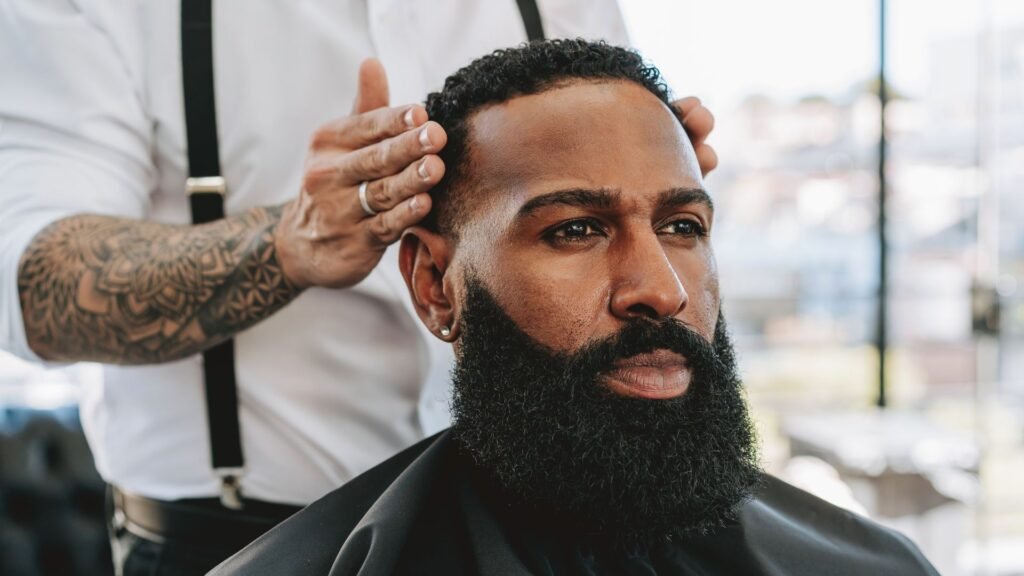
Split Ends and Damage
Hair that goes too long without a trim starts splitting at the ends, and once a strand splits, it keeps traveling up the shaft like a run in a sweater. What would have been a simple trim turns into cutting off more length just to remove the damage.
Looking Unkempt for Work and Dating
Like it or not, people make snap judgments based on grooming. A sharp cut signals attention to detail, whether you’re walking into a job interview or a first date. An overdue cut sends the opposite message, even if everything else about your appearance is dialed in.
The Financial Trap of “Saving Money” by Skipping Cuts
Here’s the math most guys miss: stretching a 4-week cycle to 7 or 8 weeks doesn’t save you money, it just delays the expense while making the eventual cut harder to execute. Overgrown hair takes longer to fix, which sometimes means a higher service charge or additional time in the chair. You’re not skipping the cost. You’re just paying interest on it.
Barbershop Visits vs. Skipping Appointments: What’s the Real Tradeoff?
On one side, regular visits mean consistent cost, consistent appearance, and a barber who knows your head well enough to work fast and accurately. On the other side, skipping appointments saves money short-term but creates longer, harder-to-manage sessions later, plus the self-esteem hit of walking around looking rough for weeks at a time. For most men, the consistent route wins on both value and confidence.
Knowing the cost of waiting is motivation enough, but it helps to understand what you’re actually paying for when you sit down in that chair.
What Happens at the Barbershop: A Walkthrough of a Proper Cut
Walking into a shop smelling of talc and hot lather, hearing the buzz of clippers layered under conversation, there’s a rhythm to a proper visit that’s worth understanding.
The Consultation
Before a single tool touches your hair, a good barber asks questions. How short do you want the sides? Do you want to keep length on top? Any cowlicks or problem areas he should know about? This thirty-second conversation prevents ninety percent of haircut regrets.
The Cut Itself
Clippers handle the bulk work on the sides and back, guards swapped out as the barber blends one length into the next. Scissors come in for detail work on top, where precision matters more than speed. A skilled hand moves like a conductor, section by section, checking symmetry against a mirror the whole way through.
The Finishing Touches
This is where a barbershop earns its reputation. A hot towel softens the skin before a straight razor cleans up the neckline and sideburns with surgical precision. Talc sets the finish, cooling the skin and locking in that just-cut feel. Then comes the product, worked through with fingers to set the final style before you’re handed a mirror for the reveal.
Scissors vs. Clippers: Which Tool Matters More?
Neither tool wins outright, because they do different jobs. Clippers deliver speed and uniformity, essential for fades, buzz cuts, and clean sides. Scissors deliver precision and texture, essential for blending length on top and creating natural movement. The best cuts almost always use both, clippers for structure and scissors for finesse.
Knowing what happens in the chair helps you appreciate why DIY maintenance has limits. Let’s look at what you can safely handle at home.
DIY Maintenance Between Visits: What You Can and Can’t Do at Home
Stretching time between professional cuts is smart. Replacing professional cuts entirely with home maintenance is a gamble that rarely pays off.
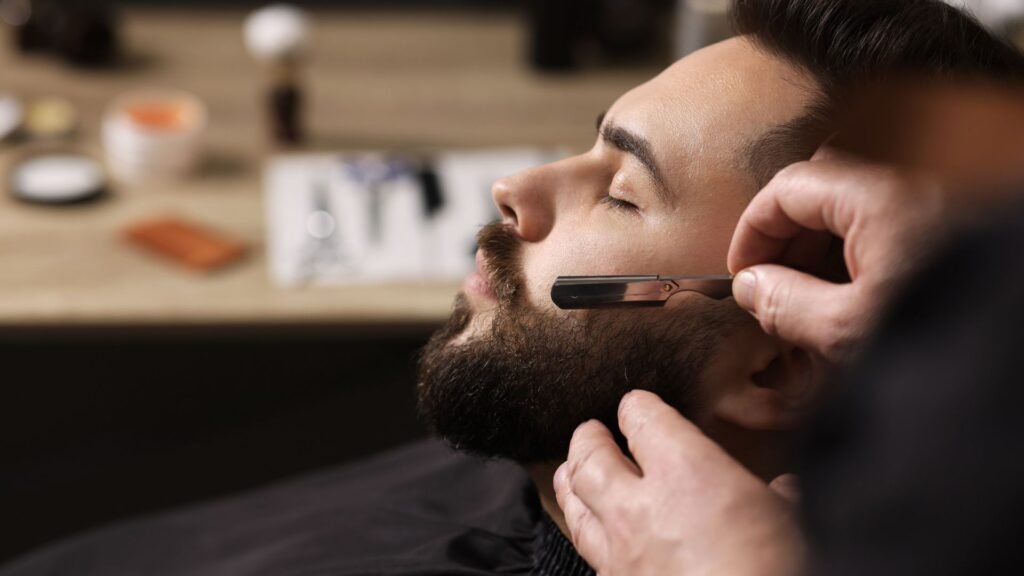
Trimming Neck and Sideburns
A basic trimmer can clean up the neckline and sideburns between visits, especially if you’re running a short, structured style. Go slow, use good lighting, and never try to recreate a full fade on yourself. That’s a recipe for an uneven mess that your barber then has to fix.
Washing and Hair Care Products
How you Wash Your Hair matters more than most men realize. Over-washing with harsh shampoo strips natural oils and can leave hair brittle, while under-washing lets product and sebum build up, weighing hair down and dulling its appearance. Most men do well washing two to three times a week with a sulfate-free shampoo, following up with a light conditioner on longer styles. Clean hair holds shape longer, which indirectly stretches the time before your cut starts looking overdue.
When to Stop DIYing and Book an Appointment
If you find yourself reaching for scissors to fix something clippers made worse, that’s the signal to stop and book an appointment. Home maintenance should clean up small details, not reshape the cut. The moment you’re altering length or structure rather than tidying edges, you’ve crossed from maintenance into territory best left to a professional.
| Maintenance Task | Safe to DIY? | Notes |
| Neckline cleanup | Yes | Use a trimmer with a guard, go slow |
| Sideburn trimming | Yes | Match both sides carefully in good light |
| Full fade refresh | No | Blending requires practiced hand skills |
| Washing routine | Yes | 2 to 3 times weekly with sulfate-free shampoo |
| Product application | Yes | Light hold for day-to-day, firmer hold for events |
| Top length trimming | No | Easy to over-cut and hard to reverse |
| Beard line cleanup | Yes, with caution | Define edges only, don’t reshape fully |
| Cowlick taming | Yes | Product and blow-drying technique, not cutting |
Good home habits extend the life of a cut, but they work best when paired with understanding your specific hair type, which we’ll break down next.
Hair Type and Texture: Why One-Size-Fits-All Advice Fails
Generic haircut advice assumes everyone’s hair behaves the same way, and that assumption falls apart the moment you compare a straight-haired guy to a tightly coiled one.
How Texture Changes Maintenance Needs
Straight hair shows regrowth quickly because there’s nothing to disguise it, which means tighter maintenance windows for sharp styles. Curly and coily hair, on the other hand, can mask weeks of growth thanks to natural shrinkage, buying extra time between visits even though the strands are technically growing at a similar rate.
| Hair Type | Shows Growth Quickly? | Best Maintenance Approach | Typical Cut Window |
| Fine straight | Yes | Light products, frequent light trims | 3 to 4 weeks |
| Thick straight | Somewhat | Texturizing techniques to reduce bulk | 4 to 5 weeks |
| Wavy | Somewhat | Diffusing, lightweight cream products | 4 to 6 weeks |
| Curly | No | Moisture-focused routine, shape-based cuts | 5 to 7 weeks |
| Coily | No | Deep conditioning, length checks over visual checks | 6 to 8 weeks |
Straight Hair vs. Curly Hair: Different Clocks, Same Discipline
Straight hair demands a tighter visual check because regrowth is obvious fast. Curly hair demands a different kind of discipline: checking actual length and health rather than relying on appearance, since shrinkage hides the truth. Neither type is “easier,” they just require different signals to know when it’s time to go back in.
Hair type sets the baseline, but outside factors like weather add another layer worth understanding.
Does Weather Affect How Often You Need a Haircut?
Seasonal shifts influence both growth rate and how your style holds up day to day.
Summer Growth and Humidity
Warmer months often bring slightly faster growth thanks to increased scalp circulation, and humidity can cause certain styles, especially those with length on top, to lose shape faster than they would in drier conditions. Expect to shave a few days off your usual cycle during peak summer heat.
Winter Dryness and Static
Cold, dry air pulls moisture from both skin and hair, sometimes making hair appear thinner or more prone to static and flyaways. Growth may slow slightly, but styling challenges can increase, which means more product and careful drying technique rather than necessarily more frequent cuts.
| Season | Growth Impact | Styling Impact | Adjustment Needed |
| Spring | Slight increase | Generally manageable | Standard schedule |
| Summer | Increase | Humidity affects hold, sweat increases washing needs | Shorten cycle by a few days |
| Fall | Slight decrease | Transitional, generally stable | Standard schedule |
| Winter | Slight decrease | Static and dryness increase | Add moisturizing products, no change to cycle needed |
Weather nudges the schedule, but understanding where modern haircuts even came from adds appreciation for the ritual itself.
The History of the Haircut: From Straight Razors to Modern Fades
Barbering is one of the oldest professions still practiced largely the same way it was centuries ago, and tracing its path shows why the barbershop chair still matters.
Ancient Origins to the Barber Pole
Barbers in ancient Egypt and Greece were trusted figures, often handling grooming alongside basic medical tasks. By the medieval era, barbers performed surgery and bloodletting alongside haircuts, which is actually where the red and white barber pole comes from: red for blood, white for bandages.
The Rise of the Modern Barbershop
The 20th century transformed barbershops into social hubs, places where straight razor shaves, hot towels, and conversation became as much a part of the service as the haircut itself. Military styles like the high and tight became cultural touchstones, influencing civilian fashion for decades.
Fades, Clippers, and the Digital Age
Electric clippers, widely adopted in the mid-1900s, made precise fades and tapers possible in ways scissors alone never could. Today, fades dominate men’s grooming trends worldwide, and social media has turned skilled barbers into recognized artists with massive followings.
| Era | Key Development | Lasting Impact |
| Ancient Egypt/Greece | Barbers as trusted grooming and medical figures | Established barbering as a respected trade |
| Medieval Europe | Barber-surgeons perform bloodletting and haircuts | Origin of the red and white barber pole |
| Early 1900s | Barbershops become social gathering spaces | Cemented the shop as a community hub |
| Mid 1900s | Electric clippers widely adopted | Made precise fades and tapers possible |
| Late 1900s | Military and pop culture styles cross over | Popularized high and tight, flat tops |
| 2000s to present | Social media showcases barber artistry | Elevated barbers to recognized craftsmen |
History explains the ritual. Now let’s compare some of the practical choices you’ll face as a client.
Classic Comparisons Every Client Should Understand
A few head-to-head comparisons come up constantly in barbershop conversations, and knowing the tradeoffs helps you make smarter choices.
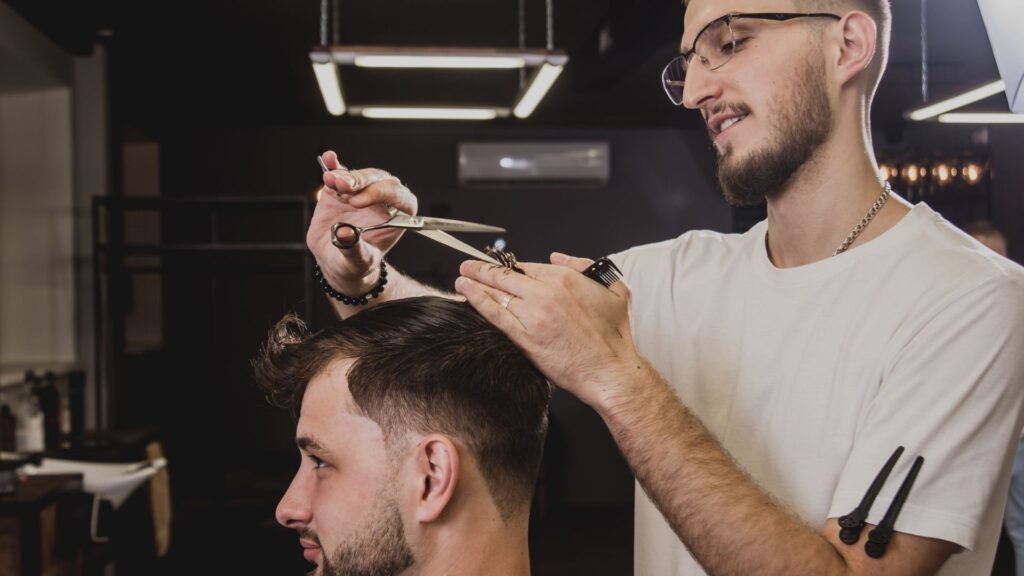
Scheduled Appointments vs. Walk-Ins
Scheduled appointments guarantee you a specific time slot and often the specific barber you prefer, which matters if you’ve built a relationship with someone who knows your hair well. Walk-ins offer flexibility but come with unpredictable wait times and occasionally mean seeing whoever’s available rather than your usual guy. If consistency matters to you, book ahead.
Classic Pomade vs. Modern Clay
Pomade delivers shine and a flexible, often slicked finish, historically tied to classic side parts and pompadours. Clay delivers a matte, textured finish with strong hold, favored for modern crops and messier, natural looking styles. Choose pomade for polished, old-school looks and clay for textured, low-shine modern styles.
One Barber vs. Switching Shops Regularly
Sticking with one barber means he learns your cowlicks, your preferred length, and your face shape over time, which translates into faster, more accurate cuts. Switching shops regularly means re-explaining your preferences every visit and accepting inconsistent results. For most men, loyalty to one skilled barber pays off more than shop-hopping ever does.
Straight Razor Neckline vs. Trimmer Neckline
A straight razor delivers the cleanest, sharpest neckline possible, gliding against lathered skin for a finish that lasts longer before looking fuzzy. A trimmer is faster and gentler on sensitive skin but produces a slightly softer line that grows out visibly sooner. If you want maximum sharpness, ask for the razor.
These comparisons highlight how much small decisions shape your overall grooming experience, including the cost side of things, which we’ll break down next.
Cost Considerations: What Actually Affects Haircut Pricing
Haircut pricing isn’t random, and understanding the variables helps you budget realistically.
| Pricing Factor | Impact on Cost | Why It Matters |
| Barber experience level | Higher experience, higher price | Skilled barbers command premium rates |
| Shop location | Urban shops often cost more | Rent and demand drive pricing up |
| Service add-ons | Hot towel shaves, razor lines add cost | Extra time and tools increase the bill |
| Style complexity | Designs and intricate fades cost more | Additional time and precision required |
| Membership/subscription | Can lower per-visit cost | Bulk pricing rewards frequent clients |
| Product usage | Premium products may add a small fee | Quality ingredients cost the shop more |
A membership model, where you pay a flat monthly fee for unlimited or scheduled visits, often works out cheaper for men who stick to a tight 3 to 4 week cycle anyway. Pay-per-visit works better for men on longer, more flexible schedules.
Understanding cost naturally leads to the most important long-term decision: who’s actually cutting your hair.
Building a Relationship With Your Barber: Why Consistency Matters
A skilled barber isn’t just someone with clippers and a license. He’s part craftsman, part confidant, and part historian of your own head of hair.
Why Your Barber Remembers More Than You Think
A good barber tracks details most clients forget they mentioned: the wedding you’ve got coming up, the cowlick that fights him every third visit, the length you liked three cuts ago that you want to return to. That institutional memory saves time and prevents miscommunication.
The Trust Factor
Handing someone a straight razor near your neck, or trusting them to execute a style you can’t fully see as it happens, requires trust built over repeated visits. First-time appointments are inherently more conservative because that trust hasn’t been established yet.
How to Communicate What You Want
Bring reference photos if you’re unsure how to describe a style verbally. Use specific language: guard numbers for clipper length, “taper” versus “fade” for how the blend should behave, “textured” versus “blunt” for how the top should finish. Clear communication shortens the learning curve dramatically.
Trust and communication make every future visit better, but none of it matters if you can’t find a skilled professional nearby in the first place.
Finding the Right Barber Near You
Searching “barber near me” is the easy part. Finding the right fit takes a bit more effort.
What to Look for in a Shop
Check for consistency in reviews, not just star ratings but specific comments about communication, timeliness, and skill with the style you want. A shop that specializes in fades isn’t necessarily the best choice if you’re growing out a longer, layered style, and vice versa.
Trial Visits and Realistic Expectations
Treat your first visit as a trial. Bring clear reference photos, communicate openly, and judge the result after it settles over a day or two, since fresh cuts sometimes look slightly different right after styling products are applied versus how they sit the next morning.
Red Flags to Watch For
- Rushed consultations with no questions asked
- Visible discomfort or hesitation with the style you’ve requested
- Inconsistent results compared to photos or reviews you saw beforehand
- Unclean tools or stations
Finding the right shop is an investment that pays dividends every single visit afterward. With all these pieces in place, growth rate, style frequency, age factors, home maintenance, and a trusted barber, you’ve got everything you need to build your own personal haircut calendar.
Frequently Asked Questions
How often should I really get a haircut?
Most men need a cut every 3 to 6 weeks depending on style. Short, sharp styles like fades need attention every 2 to 3 weeks, while longer, more forgiving styles can stretch to 6 to 10 weeks between visits.
How can I tell my haircut is overdue without looking in a mirror constantly?
Pay attention to your styling routine. If your usual products and techniques stop producing the same result, or your morning routine takes noticeably longer, that’s a strong sign your cut has outgrown its shape.
Does hair really grow faster in summer?
Yes, slightly. Warmer weather increases scalp circulation, which can modestly speed up growth. It’s not dramatic, but many men notice their cuts need refreshing a few days sooner during peak summer months.
Is it bad to wait too long between haircuts?
Waiting too long leads to split ends, lost shape, and often a longer, more complex (and sometimes pricier) appointment to fix the overgrowth. It doesn’t save money long-term, it just delays and sometimes increases the eventual cost.
Can I maintain my haircut entirely at home without visiting a barber?
Basic upkeep like neckline trims and sideburn cleanup is fine at home. Full style maintenance, especially fades and precise blending, requires professional tools and experience that are difficult to replicate safely on yourself.
Does hair type affect how often I need a trim?
Yes. Straight hair shows regrowth quickly and often needs tighter maintenance windows. Curly and coily hair can mask growth through natural shrinkage, allowing slightly longer stretches between visits.
What’s the best way to communicate what haircut I want?
Bring reference photos and use specific language, like clipper guard numbers and clear terms such as “taper” or “textured.” Specificity prevents miscommunication far better than vague descriptions.
Should I stick with one barber or try different shops?
Sticking with one skilled barber generally produces better, more consistent results over time, since he learns your hair’s quirks, your face shape, and your preferences. Switching shops regularly means re-explaining everything each visit.
Is a membership plan worth it for haircuts?
If you’re on a tight, predictable schedule (every 3 to 4 weeks), a membership often saves money compared to paying per visit. If your schedule is irregular or stretches longer between cuts, pay-per-visit usually makes more financial sense.
Conclusion
Hair growth isn’t mysterious, and neither is knowing when you’re overdue. Half an inch a month, adjusted for your age, hair type, and style, gives you a reliable window to plan around instead of reacting after the damage is already done. Pay attention to the visual cues, respect what your hair type actually needs, maintain smart habits between visits, and build a real relationship with a barber who knows your head as well as you do. Do that, and “overdue” becomes a word you rarely have to think about again.